
.parent {
display: inline; position: relative; line-height: 30px; float: left; color: #82be41;
}
.parent a{
margin: 10px;color: #82be41;text-decoration: none;
}
.parent:hover > ul {
display:block;position:absolute;
}
.child {
display: none;
}
.child li {
line-height: 30px;width:115%;text-align:left;
}
.child li a{
color: #82be41;
}
ul{
list-style: none;margin: 0;padding: 0px; min-width:10em;text-align: center;float: right; font-weight: 550;
}
ul ul ul{
left: 100%;top: 0;margin-left:1px;
}
li:hover {
background-color: white;
}
.parent li:hover {
background-color: white;
}
.expand{
font-size:10px;float:right;margin-right:5px;
}
.parent a p{
display: inline; margin: 10px;color: #6e706b;text-decoration: none;
}
Why Now Could Be the Perfect Time to Educate Yourself on Sustainable Tourism
written by Meagan McRoberts | August 14, 2020
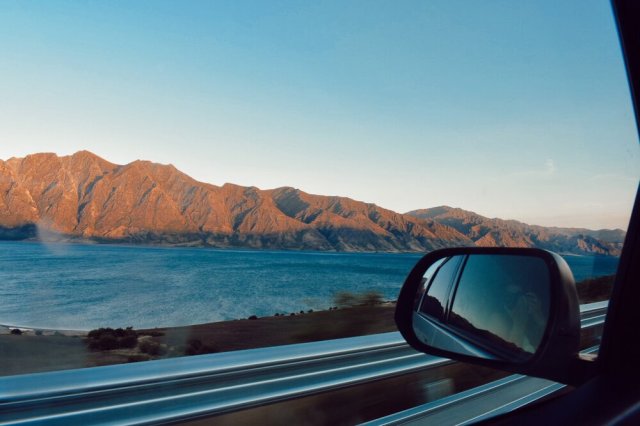
Sustainable tourism aims to solve a wide range of issues, where overtourism, plastic pollution, wildlife protection, and improving community development are merely an introduction. But take into account carbon emissions and it immediately becomes a tricky topic. Flying 3,000 miles to engage in ecotourism opens up a can of ambiguity.
Defined by the World Tourism Organization, sustainable tourism is ‘tourism that takes full account of its current and future economic, social and environmental impacts, addressing the needs of visitors, the industry, the environment and host communities.’
The tourism ecosystem involves transportation, accommodations, recreation, eateries and shopping. This topic is one that can’t be completely understood or solved in just one article, but with a pause on travel, it is one that we have time to dig into before planning and engaging in the next big trip.
Time for Reflection
Coronavirus has (temporarily) returned cities to the locals. Some tourist hotspots have emptied, and across the world, policies have been put in place to protect locals from travelers who may be carrying the virus. Coronavirus has also reduced greenhouse gas emissions and allowed mother nature some time to heal. While this may be negligible when further analyzed long term, at the very least it’s given us some inspiration on what changing our habits can look like. For example, in India, air pollution has cleared allowing people to view the Himalayas from Punjab for the first time in 30 years. In Phuket, Thailand, the deserted beaches are seeing the most nests of leatherback sea turtles in 20 years and dugongs have been seen in Trang’s waters.
Intense travel restrictions remain worldwide, and leave us with time to reflect.
Have we been taking too much? The click of a button, release of funds, and we’re booked on an airplane, and a 4 night stay, potentially very disconnected from the impacts of our decisions. Does the hotel I am staying at employ locals? Did I offset the impact of my flight? What does that mean again? Is the tour I booked actively protecting wildlife and resources? Does the money I am spending at restaurants and shops contribute to the local economy?
Reality Check: Tourism accounts for 8% of global CO2 emissions.
Raise Your Awareness
A 2019 National Geographic survey of 3,500 adults, showed strong support for sustainability. However, it’s still a challenge to change the actions of consumers. In the survey 42% of U.S. travelers are willing to prioritize sustainable travel in the future but only 15% of these travelers are familiar with what sustainable travel means.
Breaking down sustainable tourism becomes a bit easier when you think of three different categories of impact– environmental, social, and economic. Learning about the many stories and issues that intersect when sustainability meets tourism is not only interesting but will help raise your awareness about the impacts of your decisions and help inform you to make better ones in the future. It’s also inspiring to see how much of a positive difference making those changes can have.
Attention to Worldly issues
As many of us continue to browse and dream about our next trip, we now have time to properly research potential destinations. I recommend picking a place and reading to understand the culture, social issues, environmental issues, and how tourism factors into the local economy. Mass tourism can cause loss of cultural authenticity. Committing to understanding culture before you visit is not only the responsible thing to do, but will help you to spot authentic versus inauthentic experiences. Learning about sustainable tourism can raise your attention to worldly issues. Diving deeper, aim to research and understand how racial inequality plays out in tourism and how tourism affects indigenous cultures. What responsibilities do we carry when jetting off to a new place?
Another part of sustainable tourism is tourism dispersal – where tourists visit less popular destinations which can help combat overtourism. Finding an off-the-beaten-path experience is more sustainable than going to mass tourist attractions and will likely improve your experience. With this extra time to research and gather information you might be surprised how much you can learn about the world before you even leave your house.
It’s Trending
The way coronavirus has changed the travel industry thus far has pushed us in a more sustainable direction. We are forced to answer the question like never before, is this ‘essential travel’? The less travel, the less impact we make– which is a step in the right direction. But as a travel obsessed person myself, it’s a hard thing to do. What’s trending now is→ slow travel, local travel, road trips, and camping. These are some of the many alternatives to hopping on a plane for a weekend trip. Consider exploring closer to home or (if it’s safe) spending a whole month in one destination.
Your Next Trip Will Be Even Better
After understanding sustainable tourism on a deeper level, your next trip will be so much better. You will be more educated on the specific destination, culture, language, social and environmental issues and of course the businesses that you want to book with. Getting away from tourist traps will be much more simple and speaking of the future? Your trip can help preserve our earth for generations to come.
Our favorite resources to get started —>
Tourism Cares: Meaningful Travel Platform Free Online Course
How to save tourism from itself | Doug Lansky TED Talk
meet the author

Meagan McRoberts
Meagan holds an MA in Creative Writing and is passionate about travel and sustainable living. When she’s not working, she’s either in the ocean, on her yoga mat, or in transit to somewhere new.
 ecomadic