.parent {
display: inline; position: relative; line-height: 30px; float: left; color: #82be41;
}
.parent a{
margin: 10px;color: #82be41;text-decoration: none;
}
.parent:hover > ul {
display:block;position:absolute;
}
.child {
display: none;
}
.child li {
line-height: 30px;width:115%;text-align:left;
}
.child li a{
color: #82be41;
}
ul{
list-style: none;margin: 0;padding: 0px; min-width:10em;text-align: center;float: right; font-weight: 550;
}
ul ul ul{
left: 100%;top: 0;margin-left:1px;
}
li:hover {
background-color: white;
}
.parent li:hover {
background-color: white;
}
.expand{
font-size:10px;float:right;margin-right:5px;
}
.parent a p{
display: inline; margin: 10px;color: #6e706b;text-decoration: none;
}
The Benefits of Supporting Local Business
written by Giuliana Gentile | January 28, 2021
📷 @socialcut
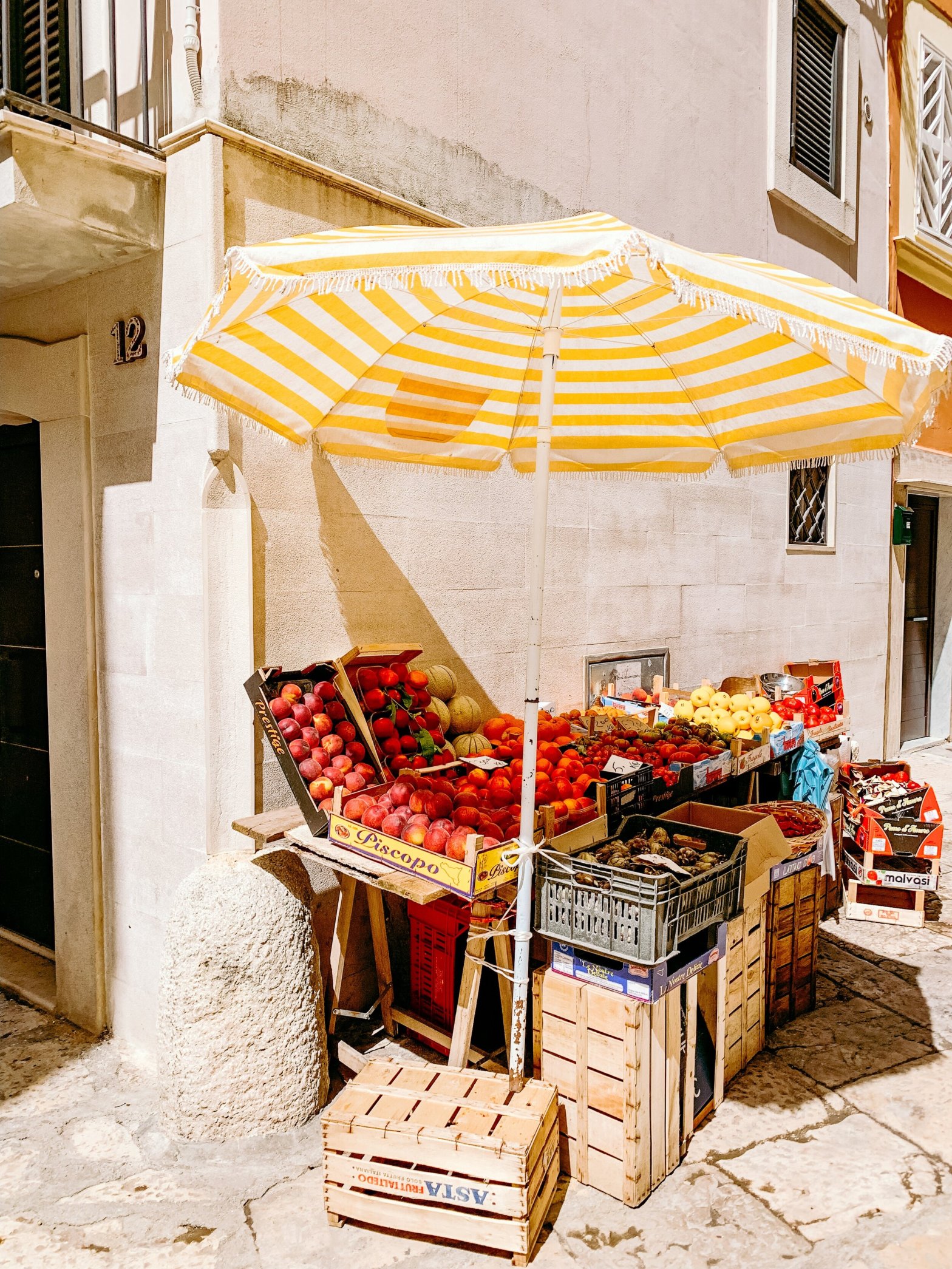
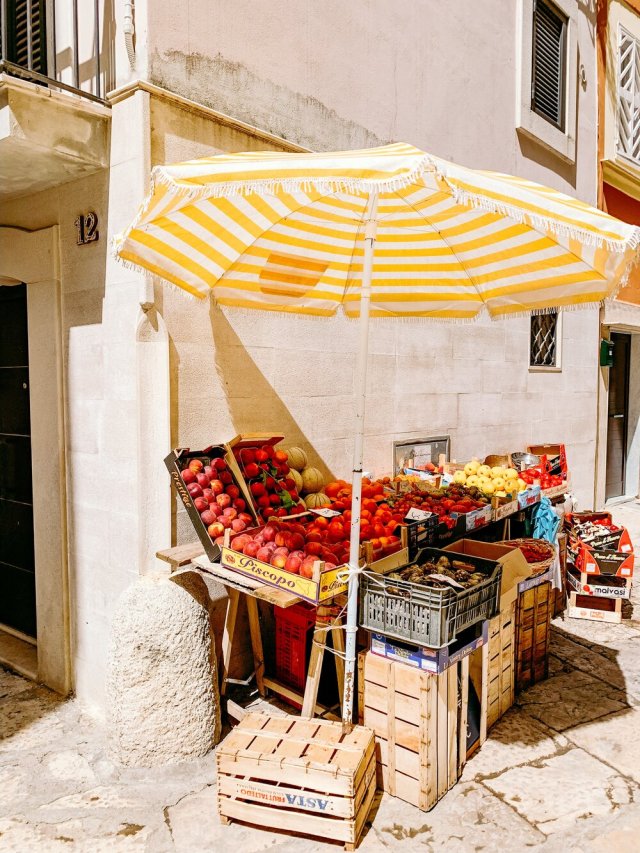
When planning a trip and during our travels we’re presented with various choices: taking a flight or going on a road trip? Booking a hotel or staying at an Airbnb? Finding an organized tour or exploring on our own? Packing light or bringing our whole closet? All these kinds of choices will make a huge difference on the nature of our trip, they will define which kind of tourist we’re going to be. But one specific choice we should always make without question is supporting local businesses for various reasons.
Reason #1: Tourism Leakage
Recent research shows that the revenue going back to the local economy of “standard” all-inclusive package tours is only 20%. That means that visiting a country, a city, or an island with these kinds of packages barely benefits the local economy. Additionally, it was found that a great percentage of the profits generated by tourism in developing countries ends up benefitting foreign entities. The percentage varies from country to country – but for reference 40% of tourism profits generated in India leave the country, while the percentage reaches 70% in Thailand and 80% in the Caribbean.
This phenomenon known as tourism leakage represents an abuse of the beautiful locations and the local population who welcomes the tourists in their home.
The WTTC states that “local travel means tourism that leaves money in the hands of those living in your tourist destination”. In other words, it means investing our tourist dollars in the wellbeing of the community so that we or others can enjoy the same beautiful experiences.
By choosing small and local restaurants, shops, accommodations, and experiences, as tourists, we are able to support the whole supply chain behind these businesses, which usually rely on other neighboring local businesses and suppliers – alliances that help to keep the community character intact and provide visitors with a more authentic experience.
Furthermore, there’s a clear correlation between the concentration of small businesses in a community and local wellbeing: compared to big-box retailers and shopping centers, they’re proven to employ more people per unit of sales, and retain more employees during economic downturns; they offer higher salaries, therefore contributing to lower levels of poverty; and they generate more tax revenue for their cities, at less of a cost.
Reason #2: Consequences of the Pandemic
Covid-19 has had a devastating impact on local and small businesses all around the world. To put this into perspective, Yelp closure data showed that, in the US, both permanent and temporary closures have risen across the nation. About 97,966 businesses have reported that they will be permanently closed.
Instead, giant empires with already considerable profits, have benefitted from the effects of the lockdown. Let’s take Amazon for example, not only has it survived during the pandemic, but it has tripled its profits. According to former Secretary of Labor, Robert Reich, “Jeff Bezos could give every Amazon employee $105,000 and still be as rich as he was before the pandemic”. And its growth comes at a high price: a study of the economic impact of Amazon’s retail operations, has reported that Amazon has displaced 62,000 stores and 90,000 retail jobs only in the US.
Unfortunately, that is how mass consumerism goes. As consumers, we have gotten used to the convenience and receiving packages in the commodity of our home (especially in the midst of a pandemic) within one day seemingly has no price… or does it?
In 2017, Amazon’s package deliveries emitted about 19 million metric tons of carbon, which is the equivalent of just under five coal power plants. In 2019, the amount of CO2 Amazon emitted was the equivalent of 13 coal-burning power plants running for a year.
Fortunately, during this unpleasant period of time (to say the least), there have been various initiatives aimed to limit the disastrous effects of the pandemic on the local economies. One example can be found in Belize with the Heritage Education Network Belize organization. Their mission is to “facilitate the sustainable development of communities, businesses, and organizations in the cultural, creative, and tourism sectors” through online courses and community engagement. This project supports local businesses by uplifting Belizean cultural heritage.
Choosing to support businesses and organizations with missions like so can create positive benefits from economic, environmental, and socio-cultural perspectives.
Reason #3: The Link with Sustainability
According to the Sustainability Knowledge Group, small-and-medium-sized enterprises are crucial to sustainable development all over the world.
Compared to big-box retailers they:
-
Require less means of transportation, and usually source their supplies within short distances. To put that into perspective, local store deliveries are the most environmentally sound – even without a pandemic in the picture: research shows that greenhouse gas emissions associated with local store deliveries averaged about 0.07 kilograms of CO2 per item, compared with 0.18 kilograms for orders from online retailers and 0.1 kilograms for in-person shopping.
-
They use considerably less packaging and unnecessary plastic.
-
They usually produce handmade or locally grown products, which implies better quality and a cleaner production process.
&
-
They’re more likely to keep the money they earn within the local economy and support other local businesses by relying on their own community.
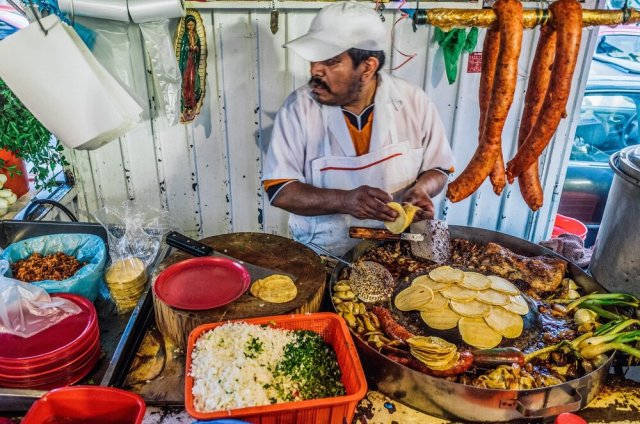
Taco stand in Mexico. Source: Pinterest
Reason #4: The Value of Authenticity
It’s healthy to be reminded of the real value of the products we buy. We’re often drawn to the most convenient option, and we accumulate products we think we need, until we don’t, and then we buy new ones… & the cycle continues…
Meanwhile, there’s a story behind each item in our cart – someone’s work, someone’s time. There are people behind each one of those items. & most commonly, small businesses provide the most ethical treatment to their employees. Which is why we need to be more mindful of the choices we make as consumers.
Supporting Small & Local
Especially when traveling, we must contribute in order to give the opportunity to the local economies to grow and thrive.
What would be left of the localities we visit if we only used them for our enjoyment and didn’t give anything in return? What kind of experience would we have if all the local restaurants were replaced by Starbucks and McDonalds, and all the local eco-accommodations became big multinational corporation hotels?
Our experiences as tourists can only be authentic if we let them be so.
Want to learn more?
Shop small and support local! – Heritage Belize
5 Ways Tourism Can Support Local Economies – World Travel & Tourism Council
Why Buy Local – Moz
Key Studies: Why Independent Matters – ILSR
How Amazon became a pandemic giant – and why that could be a threat to us all – The Guardian
meet the author

Giuliana Gentile
Giuliana was born and raised in Sicily (an Italian island in the middle of the Mediterranean Sea), since then she’s been moving around the world to meet new cultures and discover new places. She has a degree in Political, Social and International Sciences. During her studies she became passionate about environmental protection, gender equality, and cultural identity. She loves traveling, petting dogs on the street, and swimming underwater.
 ecomadic