
.parent {
display: inline; position: relative; line-height: 30px; float: left; color: #82be41;
}
.parent a{
margin: 10px;color: #82be41;text-decoration: none;
}
.parent:hover > ul {
display:block;position:absolute;
}
.child {
display: none;
}
.child li {
line-height: 30px;width:115%;text-align:left;
}
.child li a{
color: #82be41;
}
ul{
list-style: none;margin: 0;padding: 0px; min-width:10em;text-align: center;float: right; font-weight: 550;
}
ul ul ul{
left: 100%;top: 0;margin-left:1px;
}
li:hover {
background-color: white;
}
.parent li:hover {
background-color: white;
}
.expand{
font-size:10px;float:right;margin-right:5px;
}
.parent a p{
display: inline; margin: 10px;color: #6e706b;text-decoration: none;
}
Opinion: The Amazon of Bolsonaro
written by Giuliana Gentile | February 5, 2021
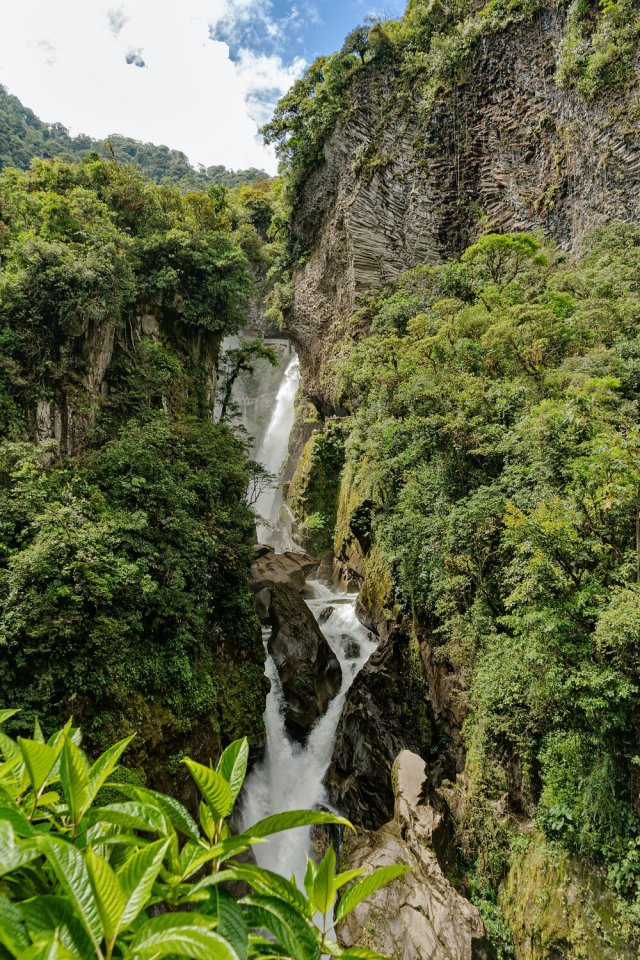
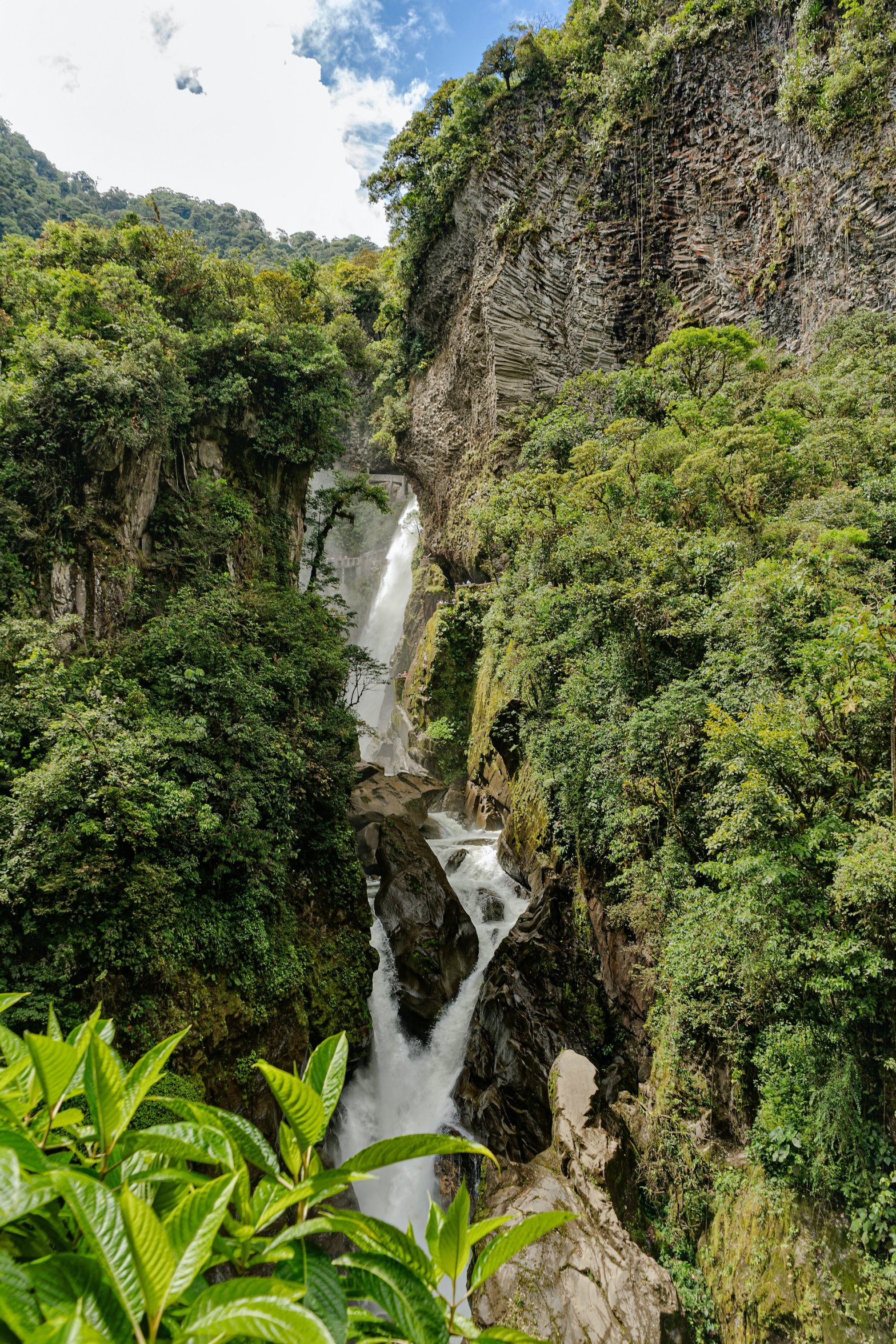
Pailon Del diablo, Baños de Agua Santa, Ecuador. 📷 @kiyoshi_jpg
Bolsonaro’s – current president of Brazil – administration sovereignty claims on the Amazon rainforest have caused major setbacks in the battle against deforestation. Meanwhile the international community can barely intervene. At a time when climate change has become an issue of maximum urgency, we’re all witnesses of “the lungs of the planet” being destroyed irrevocably. The Amazon rainforest made its way to the media’s spotlight during the summer of 2019 due to the raging wildfires that caused extreme damage to the flora and fauna of the area. Societies have seemingly forgotten about it since then, but deforestation is a crucial issue to be discussed now and always. And no, it hasn’t gotten any better.
The Importance of the Amazon Rainforest
The Amazon constitutes around 44% of the South American continent. Although most of the forest is located in Brazil, it extends among seven other states: Bolivia, Colombia, Ecuador, Guyana, Peru, Venezuela, and Suriname; making these countries “the Amazon States”.
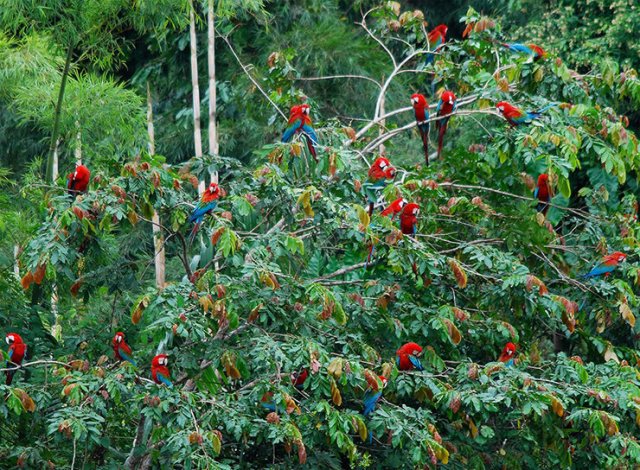
It holds the title of the largest freshwater reserve and forest to cover the planet, hosts an immense variety of flora and fauna, and is home to around 400 indigenous populations. Additionally, it is an exceptional field for scientific research and a fundamental source of food, materials, and medicines for its inhabitants.
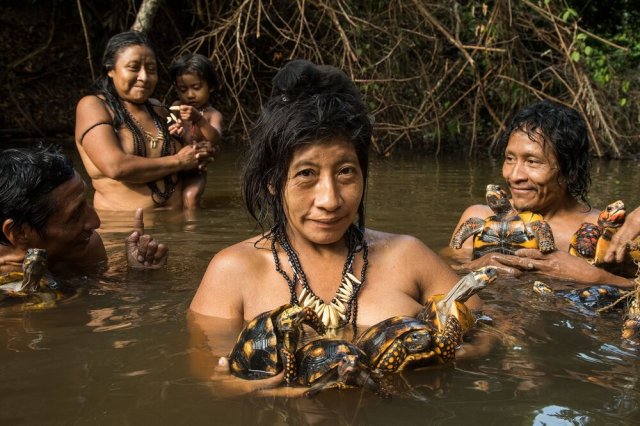
Awá women in Brazil bathe while washing their pet turtles. 📷 @Charlie Hamilton James, National Geographic
But its most crucial role is maintaining the planet’s biodiversity. The Amazon works to support regional hydrology, acts as a terrestrial carbon storage space, and plays a large role in regulating the global temperature.
A Little Background on Deforestation
The Brazilian Amazon has the world’s highest rate of deforestation in the world, averaging millions of hectares per year. Historically the main cause of deforestation has been agriculture for local consumption. But by the 2000s more than three-quarters of forest clearing in the Amazon has been for cattle-ranching – responsible for the release of 340 million tons of carbon to the atmosphere every year. Furthermore, cattle pastures increase the risk of fire, cause significant harm to aquatic ecosystems, and perpetuate soil erosion, river siltation and contamination with organic matter.
In 2004, the Brazilian environmental institute created the project DETER, which is an alert system aimed to keep track of deforestation in the Amazon through live satellite imagery. The reported data shows that the amount of deforestation through the years strictly depends on the political administration of the period taken into consideration.
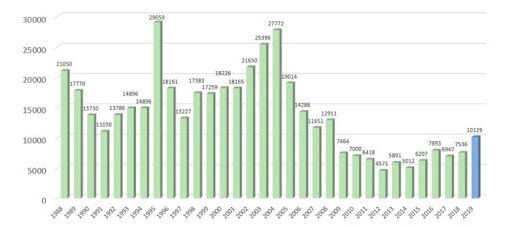
PRODES annual consolidated deforestation rates (in km 2) since 1988 in the Brazilian Legal Amazon.
As seen above, the stunning results achieved by former Environment Minister Marina Silva from 2004 until 2016, have been almost nullified by the last two presidencies: Temer (2016-2019) and Bolsonaro (2019-present day). The data on deforestation shows a complessive decline of 64% between 2004 and 2018, and a dizzying increase of 37% only between 2018 and 2019.
Additionally, a decree issued by the current president Jair Bolsonaro has mostly eliminated the fines imposed by the Brazilian institute for the environment and natural resources (IBAMA), which means that the president of Brazil has explicitly paved the way for illegal deforestation and environmental violation.
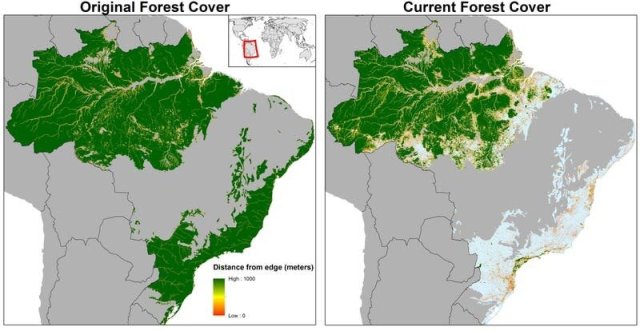
Forest Cover Decline, 2015. Source: Business Insider
What’s Happening During Bolsonaro’s Administration?
Brazilian president Jair Bolsonaro took office in 2019. His stand regarding the topic of the Amazon can be summarized in his opening speech during the 74th General Assembly of the United Nations regarding the recent 2019 events where the rainforest was seen all over the media due to wildfires and significantdeforestation. He affirms the following:
“It is a fallacy to say that the Amazon is the heritage of humankind, and a misconception, as confirmed by scientists, to say that our Amazonian forests are the lungs of the world. Using these fallacies, certain countries instead of helping, embarked on the media lies and behaved in a disrespectful manner and with a colonialist spirit. They even called into question that which we hold as the most sacred value: our own sovereignty”.
In other words: he believes that any scientific data on deforestation is a lie, and his sovereignty right over the rainforest is far more important than the preservation of humankind, which the Amazon is greatly accountable for.
Additionally, while wildfires are common in this region, satellite data from 2019 (the same year Bolsonaro took office) has shown an 84% increase in fires than from previous years. Many of these fires are started deliberately to make room for cattle ranching, and then spread uncontrollably causing enormous damage. Other than the obvious consequence of forest destruction, wildfires cause the release of the carbon stored within the trees, which has a direct impact on climate change. These disastrous developments have also negatively impacted the international relations between Brazil and other countries. One of the most relevant examples is Norway’s choice to suspend the transfer of R$100 million, which was aimed to protect the development of the rainforest.
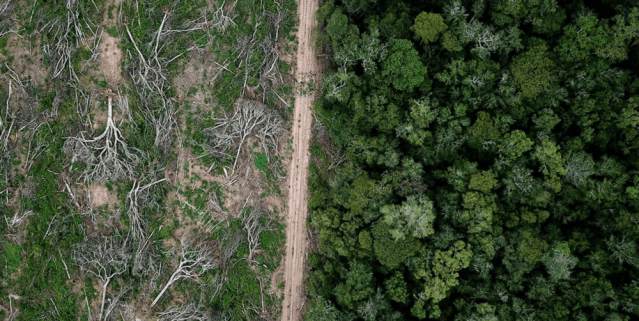
Deforestation in the Bolivian Amazon for soybeans. 📷 Rhett A. Butler
Common Heritage of Humankind and the Role of the International Community
So if the Amazon is so important to all of us, how come all we can do is watch impotently while all this happens?
There’s a very simple explanation: sovereignty. All natural resources within the national territory of a country fall under its jurisdiction and administration. So the Amazon legally belongs to the States in which it is located (mainly Brazil).
According to the Brazilian Constitution of 1988, in fact, the Amazon Forest is part of the national patrimony and its various resources have to be exploited within the law, assuring the preservation of the environment. The fact that it is considered part of the national patrimony, points to the reluctance of the country to give up, in any circumstance, its sovereignty rights over the territory; so the truthful meaning of “preservation of the environment” is really up to the national political administration… and I think we can all see by now how that’s developing.
The international community could hold claim of the Amazon and administrate its preservation if it were considered “Common Heritage of Humankind”. Meaning that, “certain global commons or elements regarded as beneficial to humanity as a whole should not be unilaterally exploited by individual states or their nationals, nor by corporations or other entities, but rather should be exploited under some sort of international arrangement or regime for the benefit of mankind as a whole”.
Unfortunately, legally speaking, that’s not the case of the Amazon, because this notion exclusively applies to resources outside of any country’s territory, for example the Moon or the high seas. The document “Our Own Agenda”, formulated in 1990, affirms that the Amazon cannot be considered exclusively an “ecological treasure” and the regulator of global climate, because it is also a resource that facilitates the developments of the states in which it is located. The Amazon States are indeed convinced that:
“Preservation of the Amazon is of interest to the world community. However, it is of great interest to the Amazonian countries. The issues must therefore be debated by them on their own terms with the support of foreign scientists and enlightened international public opinion”.
The sovereign States’ obstinacy in reaffirming their authority over the Amazon territory, and underlining its economic value, makes the concept of common heritage of humankind inapplicable.
The Future of the Amazon
The main connection between cattle-ranching and deforestation is the production of soy, and Brazil is the world’s biggest supplier. Around 80% of the global soy production is destined to feed the animals, which then go through the industrial farming process.
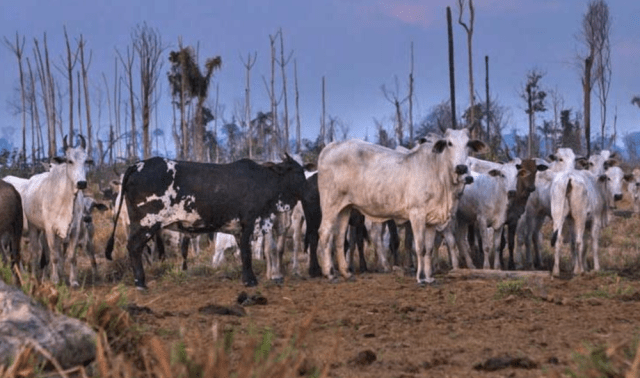
Cows grazing on recently deforested rainforest land in Brazil. 📷: Marcio Isensee, Mongabay
Timidly trying to do some damage control, some governments have already started to implement regulations to only import sustainably-sourced soya. The problem is that there is no internationally-agreed definition of responsibly- or sustainably-sourced soya, so only private certification schemes can provide some kind of parameter. For example, the Roundtable on Responsible Soy states that sustainably sourced soya guarantees zero deforestation and zero conversion. But is that enough?
Anna Jones, head of forests at Greenpeace, states that “the only way supermarkets and fast food companies will actually achieve deforestation-free supply chains is by reducing the amount of meat they sell, not by replacing soya with other feeds, or by paying certification schemes”.
So there you have it, the solution to drastically reduce the levels of deforestation… and CO2 emissions… and species threatened by extinction… and loss of biodiversity… and water waste… and the spread of zoological viruses that can potentially cause a pandemic or even the extinction of humankind: stop eating meat.
Want to learn more?
Soy – WWF
The Burning Amazon – Green is the New Black
Deforestation Increments – INPE
Eat to beat climate change – Vegetarian Society
Unsustainable Cattle Ranching – WWF
The Amazon from an International Law Perspective – Beatriz Garcia
Bolsonaro declares ‘the Amazon is ours’ and calls deforestation data ‘lies’ – The Guardian
meet the author

Giuliana Gentile
Giuliana was born and raised in Sicily (an Italian island in the middle of the Mediterranean Sea), since then she’s been moving around the world to meet new cultures and discover new places. She has a degree in Political, Social and International Sciences. During her studies she became passionate about environmental protection, gender equality, and cultural identity. She loves traveling, petting dogs on the street, and swimming underwater.
 ecomadic