
.parent {
display: inline; position: relative; line-height: 30px; float: left; color: #82be41;
}
.parent a{
margin: 10px;color: #82be41;text-decoration: none;
}
.parent:hover > ul {
display:block;position:absolute;
}
.child {
display: none;
}
.child li {
line-height: 30px;width:115%;text-align:left;
}
.child li a{
color: #82be41;
}
ul{
list-style: none;margin: 0;padding: 0px; min-width:10em;text-align: center;float: right; font-weight: 550;
}
ul ul ul{
left: 100%;top: 0;margin-left:1px;
}
li:hover {
background-color: white;
}
.parent li:hover {
background-color: white;
}
.expand{
font-size:10px;float:right;margin-right:5px;
}
.parent a p{
display: inline; margin: 10px;color: #6e706b;text-decoration: none;
}
Food Deserts and their Impact on Low-Income Communities
written by Raven Steele | February 4, 2021
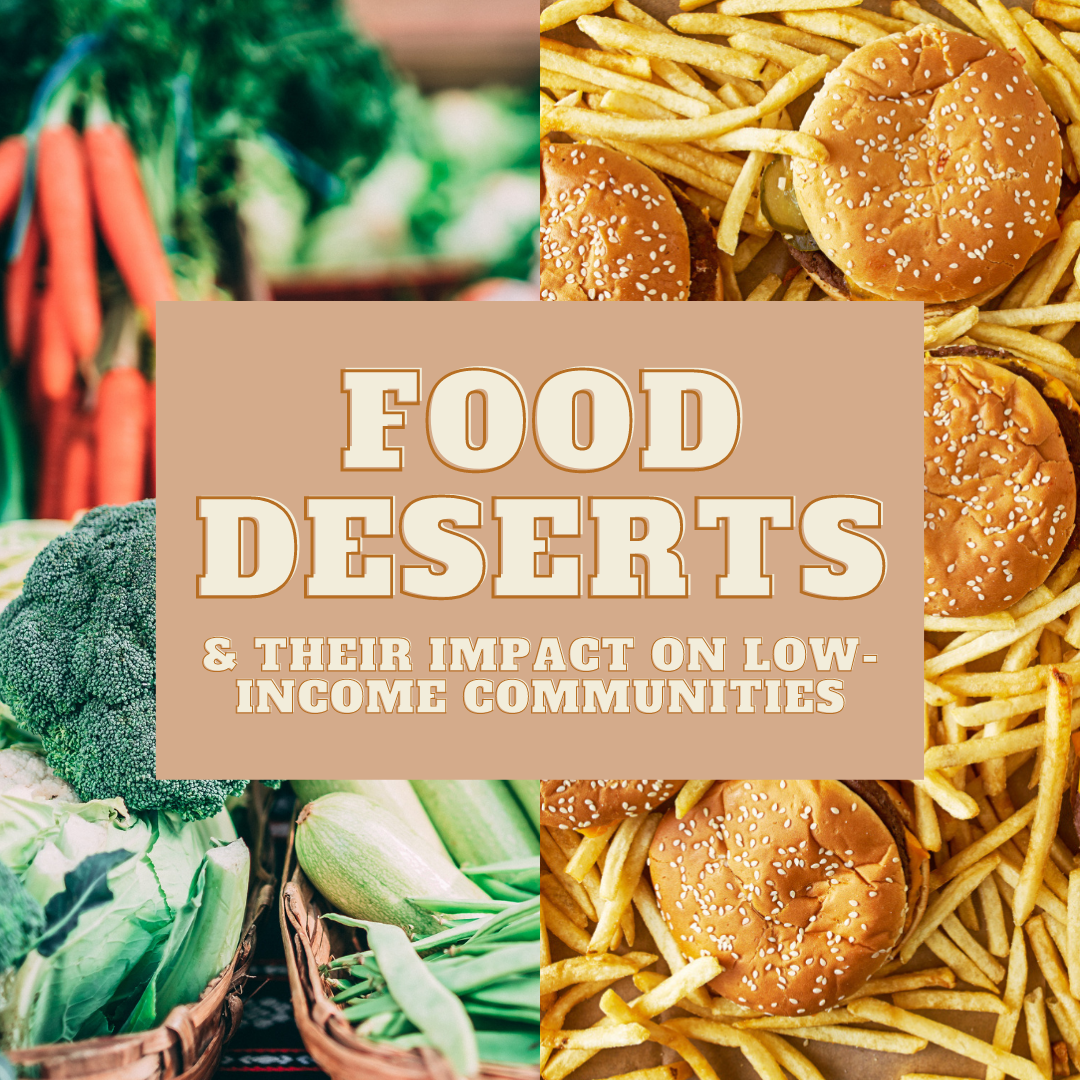
A food desert is an area within a community with limited access to healthy eating and new sustainable resources. The term ‘food desert’ itself is relatively new, but the implication has always been around. These can often be found in impoverished neighborhoods in contrast to an area with higher access to fresh markets. People who live in food deserts are more likely to consume highly processed foods with little to no nutrients. For many people, living in food deserts can lead to diet-related chronic diseases.
Where Are Food Deserts Located?
Food deserts are generally located in Black, Brown, and impoverished communities with low accessibility to resources, such as cars. Two families could live in the same neighborhood, but if one has a vehicle and the other has to rely on public transportation, that can make an enormous difference in how people access their grocery stores.
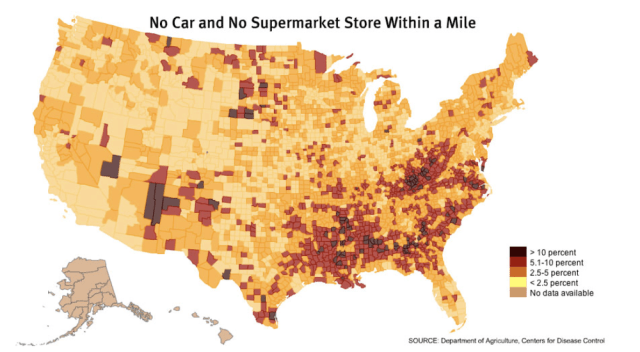
Source: Medium
The rural South and Midwest regions of the United States are more likely to become food deserts as opposed to places in the Northeast. Compared to supermarkets and farmers markets, you will often be met with convenience stores and gas stations in a food desert. However, food deserts aren’t just about access to grocery stores. Food deserts are about needing access to healthy, sustainable foods. Many convenience stores in these neighborhoods get their produce second hand; meaning that it could already be well past the sell-by date when the food is being sold.
Who Lives in Food Deserts?
Rural communities with high unemployment rates are more likely to become food deserts. Without routine access to a car, it can be challenging for people to avoid buying their produce from a place of convenience or nearby location. Oftentimes, people do not realize they live in a food desert because they have never been exposed to alternatives. Yet people who live in food deserts are exposed to more health concerns, such as risk of heart disease, diabetes, and high blood pressure. If there are chances that a local supermarket has healthier produce, they are often too expensive for the average person living in that area. With approximately 23.5 million people living in food deserts and nearly half of them being low-income households, food deserts are more common than one might think.
Why Sustainable Food Consumption Should Be Available to Everyone
Diabetes was ranked as the number 9 top cause of death globally by the World Health Organization. It is no secret that frozen dinners are often quicker, easier, and cheaper to prepare for the average person. Further, food that contains preservatives is put into boxes and cans, which tends to last longer in a standard U.S. household, resulting in a higher overall use from large families.
For example, in January of 2019, Greensboro, North Carolina closed one of its most promising grocery stores – the Greensboro Renaissance Community Co-Op. The store had only been open for three years before closing, and was located in a largely Black and low-income neighborhood. It was the first sustainable grocery store in the community since 1998. For cases like so, surveys have found that there are 17 food deserts in Greensboro alone.
As a society, we can’t ignore the implications of our food production and food consumption and its role in the current climate crisis. With deforestation and the changing weather patterns affecting agriculture growth, food deserts have a drastic negative impact the planet.
What Are People Doing to Help Eradicate Food Deserts?
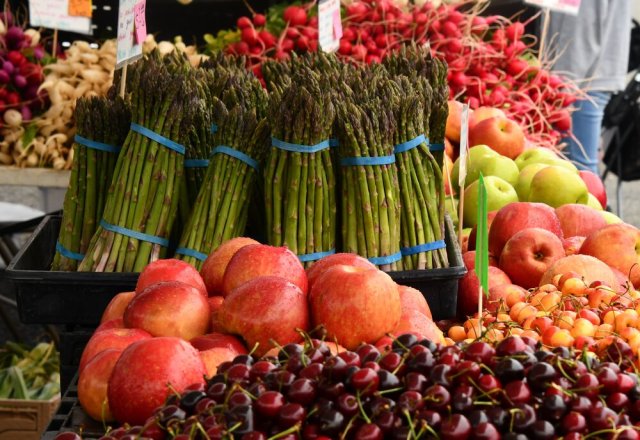
Co-Ops are a great way to shop sustainably and buy from within your community. Compared to larger grocery store chains, co-ops are independently owned by the people residing in the community; they are the best way to find local and fresh food from the surrounding region.
📷 @shelleypauls
Farmers Markets are another excellent way for community members to gather and sell their local goods – which is a great way to promote sustainability too! It can be challenging for local farmers to compete with large corporations, but having a community outlet to sell products allows for local and small farmers to make a living from their goods.
Thankfully, we have seen many initiatives pop up over the years in the fight to eradicate food deserts. In 2017, First Lady Michelle Obama started the “Let’s Move” campaign with the ultimate goal to fight childhood obesity and provide greater access to healthy food. Another example can be found with the Healthy Corner Stores Network, who are on the mission to diversify the quality of food options in bodegas and convenience stores across the United States – including fresh fruits and vegetables.
In the world of social media and online presence, we are in a better position than ever to educate people on the importance of sustainability and healthy consumption. Through education and initiatives that aim to provide widespread accessibility, hopefully we will one day be in a place where all people have the option to choose quality.
Recommended Sources:
11 Facts About Food Deserts – Do Something
Want to Learn More?
Solutions to Help Eradicate Food Deserts – Shareable
The Correlation Between Food Deserts & Climate Change – NCBI
Where to Find Local Co-Ops – Lets Go Co-Op
meet the author

Raven Perkins Steele
Raven is currently a college student residing in Charlotte, NC. Her interests include traveling and exploring the world through different lenses. Having a passport from before the age of walking has instilled the value of different cultures as a part of her identity. She is passionate about spreading awareness on political and social issues in the United States and abroad.
 ecomadic