
.parent {
display: inline; position: relative; line-height: 30px; float: left; color: #82be41;
}
.parent a{
margin: 10px;color: #82be41;text-decoration: none;
}
.parent:hover > ul {
display:block;position:absolute;
}
.child {
display: none;
}
.child li {
line-height: 30px;width:115%;text-align:left;
}
.child li a{
color: #82be41;
}
ul{
list-style: none;margin: 0;padding: 0px; min-width:10em;text-align: center;float: right; font-weight: 550;
}
ul ul ul{
left: 100%;top: 0;margin-left:1px;
}
li:hover {
background-color: white;
}
.parent li:hover {
background-color: white;
}
.expand{
font-size:10px;float:right;margin-right:5px;
}
.parent a p{
display: inline; margin: 10px;color: #6e706b;text-decoration: none;
}
Opinion: A Bit of Advice for Shopping Sustainably
written by Giuliana Gentile | February 11, 2021
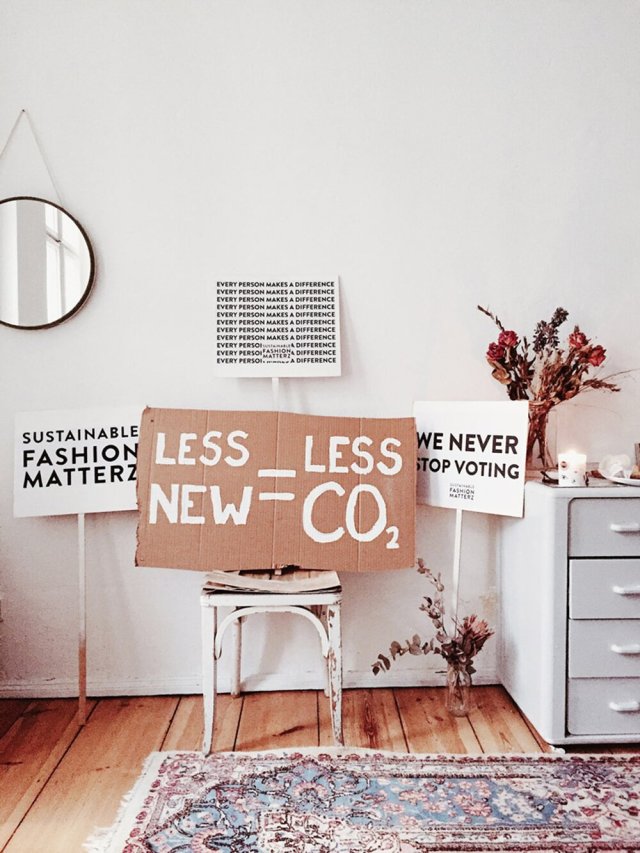
📷 @cheriebirkner
The fashion industry has quickly evolved to keep up with the culture of consumerism – we want to buy more and we want to buy it quickly. Unfortunately, haute couture is not accessible to everyone, so fashion retailers of big companies like H&M and Zara have found the perfect recipe to drastically increase their profits: using the latest high end trends to produce ridiculously cheap new collections as fast as possible. It comes without saying that these rhythms of production have an extremely negative impact on the environment, making textile production responsible for 1.2 billion tonnes of greenhouse gases emissions annually, which is more than all international flights and maritime shipping combined.
What is Fast Fashion?
By definition, the term fast fashion implies “inexpensive clothing produced rapidly by mass-market retailers in response to the latest trends”. It sounds awesome right? Well, think again.
The strategy behind fast fashion is emulating the newest trends that high end designers came up with, then reproducing the designs with cheaper materials and lower production costs; all of this while producing as fast as possible so that consumers are constantly drawn to buy their newest pieces. It makes sense, as consumers “we want the feeling of luxury without paying full price. We want to look expensive-ish”, Hasan Minhaj stated in an episode of the Patriot Act titled ‘The Ugly Truth of Fast Fashion’.
While buying a shirt for $2.99 or a dress for $5.99 sounds convenient, we all know that that’s not the only piece we’re going to buy for the rest of the year. Veteran fashion journalist Dana Thomas has estimated that the average American in the 80s would buy about 12 items of clothing a year. Today that number went up to 68 items a year.
Saying it a little louder now for the people in the back: 68 pieces a year.
We all know that we don’t need that many clothes, but brands such as FashionNova, H&M, Zara, Topshop, and others, aim to make us want them. And this constant desire for new clothes comes also from the fact that those clothes are produced with ridiculously cheap materials, which means that they’ll get in bad shape pretty quickly. In fact, the same average American who buys 68 new pieces every year, also dumps 80 lbs of clothing in the same period of time, creating a huge amount of unnecessary waste. And yet, as soon as a new Zara collection is released, we’re trained to think that we need it.
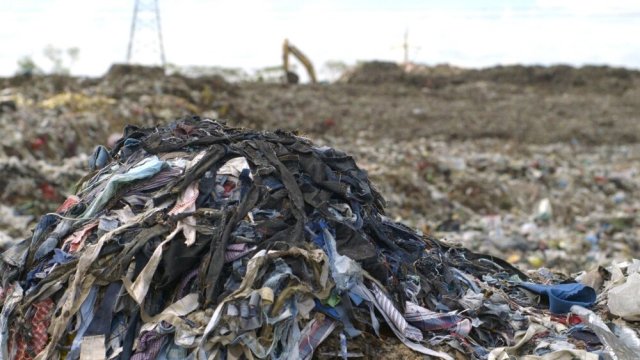
Still from “The True Cost” documentary.
The Impact on the Environment
Overall, the fashion industry as a whole is more harmful to the environment than the aeronautical and shipping industries combined. In other words, the clothes in our suitcase are contributing more to climate change than the plane we’re traveling with.
The average production period for a high end fashion brand’s new collection is around 2 years. The secret of fast fashion brands is to cut the production time down to 4 months, and release new pieces every week so that the regular 4 seasons of fashion becomes as many as 52 seasons. How do they keep up with these rhythms? Easy: cheap labor (*cough* exploiting their workers *cough*) and an additional complete disregard for the environment.
According to the calculations of the Intergovernmental Panel on Climate Change (IPCC), the fashion industry produces 10% of global carbon dioxide emissions every year, and uses around 1.5 trillion liters of water annually. Additionally, the production of synthetic materials such as spandex, nylon and polyester requires 342 million barrels of oil per year.
Furthermore, 150 million trees are logged every year and turned into cellulosic fabric (like rayon or viscose), and just 30% of the harvested wood ends up in the clothes that we wear, while as much as 70% is dumped or incinerated. To put that into perspective, if placed end to end those trees would circle the earth seven times. And if that wasn’t bad enough, there’s more: of all the fabric used for clothing, 87% ends up in a landfill or incinerated, and yes, that includes the clothes we donate.
At this point it’s hard to look at the composition of the clothes in our wardrobe and not feel personally responsible for destroying our planet.
The Alternative to Fast Fashion
Although it might seem like fast fashion is the only way to purchase clothes that are not as expensive as our rent, it’s not. Here are some alternative ideas:
1. Clear out your closet and re-discover the pieces you already have.
You’ll be surprised how many pieces of clothing come back in style through the years. We’re used to burying the stuff we don’t like anymore at the bottom of our closets, so we’re not always aware of the options we actually have. Also, don’t be afraid to experiment with your parents’ and grandparents’ wardrobe! There are some real gems in there.
2. Thrifting, thrifting, thrifting.
Turns out Macklemore had it all figured out. Thrifting is the most sustainable way of shopping: nothing produces less waste than secondhand clothing. Nowadays there are so many options to choose from when it comes to thrifting, and the most recent trend in fashion is actually vintage clothing. Nothing compares to finding a unique piece of clothing that nobody else has, and it is so cheap!

Thrift store music video – Macklemore & Ryan Lewis
3. Dive deep into a sustainable brands research.
There are always more truly sustainable brands around the world, which can be recognized by the transparency of their production methods and materials they use. It only takes a little bit of research, but we should always be informed about the products we spend our money on. On that note, we’ve done some research or you, and we created a list of many amazing responsible businesses. You’re welcome! 😉
4. Shop local and small.
Eco-friendly brands can be expensive sometimes, and not easy to find everywhere. So if none of these options are available to you, you can always support small and local brands instead of big corporations like H&M and Zara.
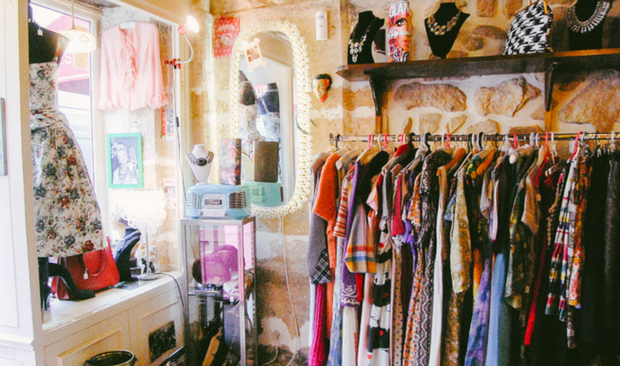
Source: Vintage Industrial Style
Beware of Greenwashing
Greenwashing is the misleading of green claims to reap the social and economic benefits of being perceived as “sustainable”. In other words, it’s a marketing strategy aimed to trick consumers into thinking that your company is environmentally conscious, while making extremely limited efforts to implement practices that are truly sustainable.
The fact that many brands are publicly commiting to make their businesses more green is a relief, but we can’t simply rely on their words. There is no legal definition for terms such as “green”, “sustainable”, “consciously-made”, so we need to look at the facts and make educated choices about the businesses we support.
Transparency is the key factor to recognize whether a product is actually green or not: what is the percentage of sustainable materials used in that product? How are they sustainable? Where are they sourced from? How clean is the production process? And, most importantly, are sustainable products just a small fraction of the company’s inventory?
What Can We Do During the Pandemic?
Staying home during the lockdown has given us too much free time, most of which we spend on our phones or laptops. Being bored with a phone in our hands is the perfect recipe for impulsive shopping, and, unfortunately for our wallets, shopping online has never been easier.
While purchasing clothes from our home instead of going to a physical store makes us amazingly responsible citizens, all of those packages that arrive at our doorstep have an incredibly negative impact on the environment.
The main problem is the CO2 emissions of delivery vehicles. In fact, according to environmental scientist Sadegh Shahmohammadi, shopping from online retailers causes the highest level of greenhouse gas emissions compared to in-person shopping and local-store deliveries; which is respectively 0.18 kilograms, 0.1 kilograms, and 0.07 kilograms of CO2 per item.
So if we really need to shop right now, the safest and most sustainable option is online thrifting, and if you’re having trouble finding some in your area, the most recent trend of online secondhand shopping (since ebay) is thrifting on Instagram. I know… what a world.
By searching for thrift stores on your Instagram you’ll find awesome local boutiques that will take your order and deliver it to your home. The best part is that some of them even personally deliver it through public transportation, drastically reducing their CO2 footprint.
So get to searching, and discover these amazing hidden treasures right next to you!
Want to learn more?
The Flawed Ways Brands Talk About Sustainability – Vogue
The Ugly Truth Of Fast Fashion – Patriot Act
Ecosystem Alert: Protecting Lands in Peril – Al Jazeera
A New Textiles Economy: Redesigning Fashion’s Future – Ellen Macarthur Foundation
Fast Fashion Speeding Toward Environmental Disaster, Report Warns – The Guardian
meet the author

Giuliana Gentile
Giuliana was born and raised in Sicily (an Italian island in the middle of the Mediterranean Sea), since then she’s been moving around the world to meet new cultures and discover new places. She has a degree in Political, Social and International Sciences. During her studies she became passionate about environmental protection, gender equality, and cultural identity. She loves traveling, petting dogs on the street, and swimming underwater.
 ecomadic