
.parent {
display: inline; position: relative; line-height: 30px; float: left; color: #82be41;
}
.parent a{
margin: 10px;color: #82be41;text-decoration: none;
}
.parent:hover > ul {
display:block;position:absolute;
}
.child {
display: none;
}
.child li {
line-height: 30px;width:115%;text-align:left;
}
.child li a{
color: #82be41;
}
ul{
list-style: none;margin: 0;padding: 0px; min-width:10em;text-align: center;float: right; font-weight: 550;
}
ul ul ul{
left: 100%;top: 0;margin-left:1px;
}
li:hover {
background-color: white;
}
.parent li:hover {
background-color: white;
}
.expand{
font-size:10px;float:right;margin-right:5px;
}
.parent a p{
display: inline; margin: 10px;color: #6e706b;text-decoration: none;
}
Why It’s Not Too Late To Save The Planet: The Case of Raja Ampat
written by Giuliana Gentile | February 23, 2021
📷 Stijn Dijkstra
Our oceans represent the biggest storage area of carbon dioxide of the planet, in fact, they’re our most valuable resource against climate change.
Historically, human-beings have always looked to the ocean as an unlimited source of life that could never be threatened by our presence on the planet. We’ve sourced food and materials from it, we’ve drilled its floors, we’ve polluted its waters, we’ve experimented with atomic explosions, we’ve hunted its inhabitants for sport… and yet, the ocean always felt infinite, immortal.
“Now we are facing the consequences: the seas are warming, rising, and becoming more acidic. It’s a sobering thought, that coral reefs may be lost within the next century,”
… says natural historian David Attenborough.
Now, when it’s almost too late, we’re realizing that we were wrong, and the ocean is, in fact, dying. So how can we redeem ourselves and give our oceans the chance to heal?
The Threats To Our Oceans
Underwater there are countless of ecosystems, full of life. Each one of their members plays a fundamental role in maintaining to keep its community alive. Yet, the continuous exploitation of our oceans has caused damage that is now verging into being irreversible.
The two main issues are: overfishing and coral bleaching. I know what you’re thinking, the name “coral bleaching” can be misleading. Nobody is dropping bleach on coral reefs… who would do that to Nemo after all he’s been through?
So what’s actually happening?
The color of corals comes from the micro-plants that live within them and give them their nourishment, which is also what makes them colorful. Now, with global warming and the temperatures of our oceans rising, these micro-plants are expelled from the corals because they become too acidic. Without this essential nourishment, the corals turn white and eventually dies. Currently, half of the shallow coral reefs worldwide have already died. That’s right… half.
And consequently, the whole ecosystem they were supporting dies with them.
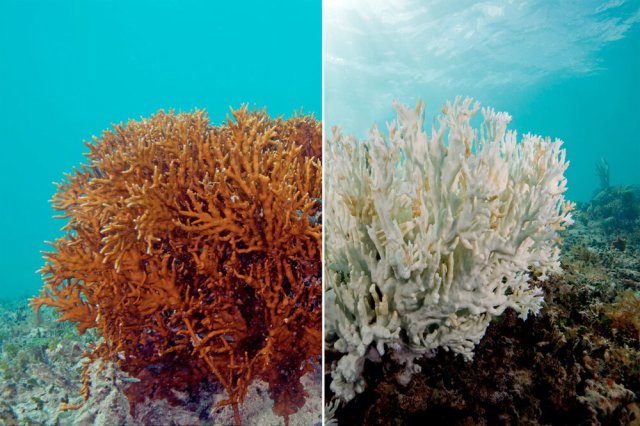
Coral Bleaching. Source: Vox
Coral reefs cover only 1% of marine floors but they’re home to a quarter of all marine species. The ecosystems within coral reefs are extremely intricate and interconnected, other than being beautiful to look at.
Even though they’re often portrayed as the villains of our oceans, sharks have a fundamental role in keeping these ecosystems healthy. They hunt the predators that feed on small grazing fish, which in return keep the corals free of parasites, and ready to feed other marine species. So without the sharks as top predators, the reefs would not be resilient, and each one of the cute little fishes won’t be able to fulfill its life purpose.
And if you think that’s sad, the shark population around the world has been reduced by 90%, while a third of fish stocks around the planet have already collapsed.
Shark finning and unregulated fishing are taking life in our oceans to the brink of extinction. A clear, worrying sign of the imbalance of our seas is the increasing number of jellyfish, which could become the only form of marine life in a few decades.
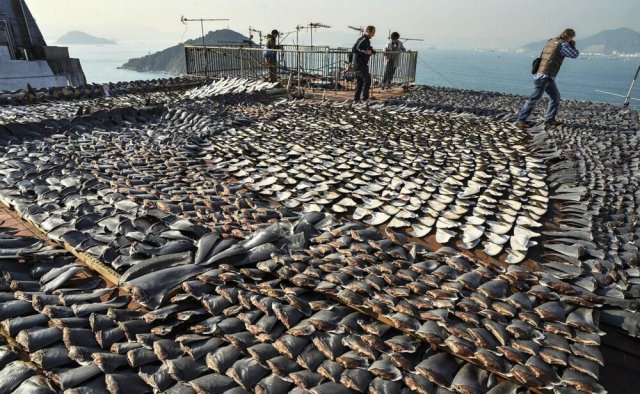
Shark Finning. Source: Forbes
Now, all of this might seem hopeless, but it’s not too late.
“The very last thing I would want people to take from this is that there is no hope,” says Julia Baum, a marine biologist at the University of Victoria, “This should serve as a really serious wake-up call.”
We need to take action against climate change, and we need to do it now. In fact, a very visual representation of how much time we have before the effects of global warming become irreversible, was installed last year in Manhattan’s Union Square: the Climate Clock, which now marks 6 years and 317 days… No pressure.
But don’t worry, here comes the good news.
The History of Raja Ampat
Source: Oceanic Society
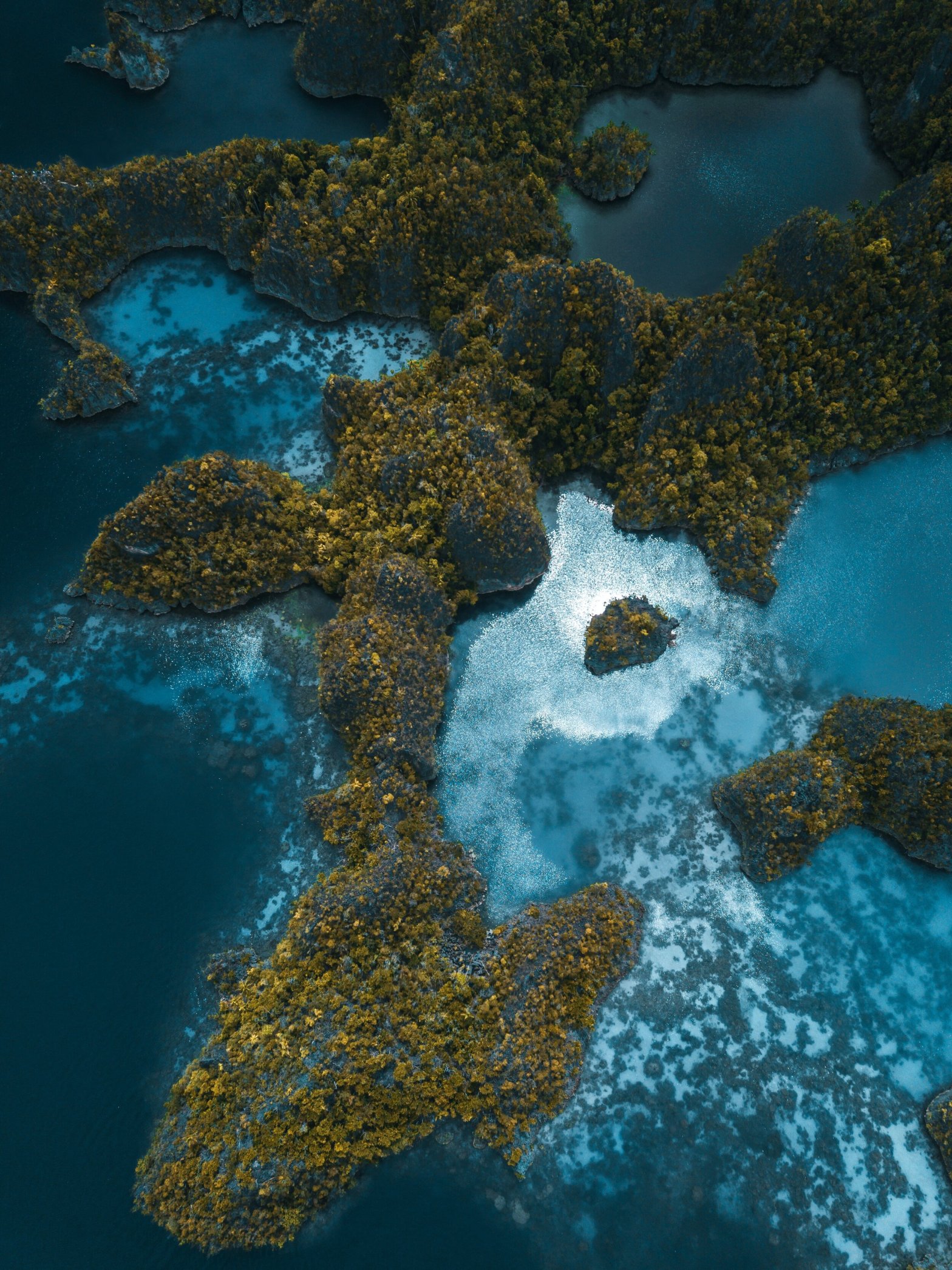
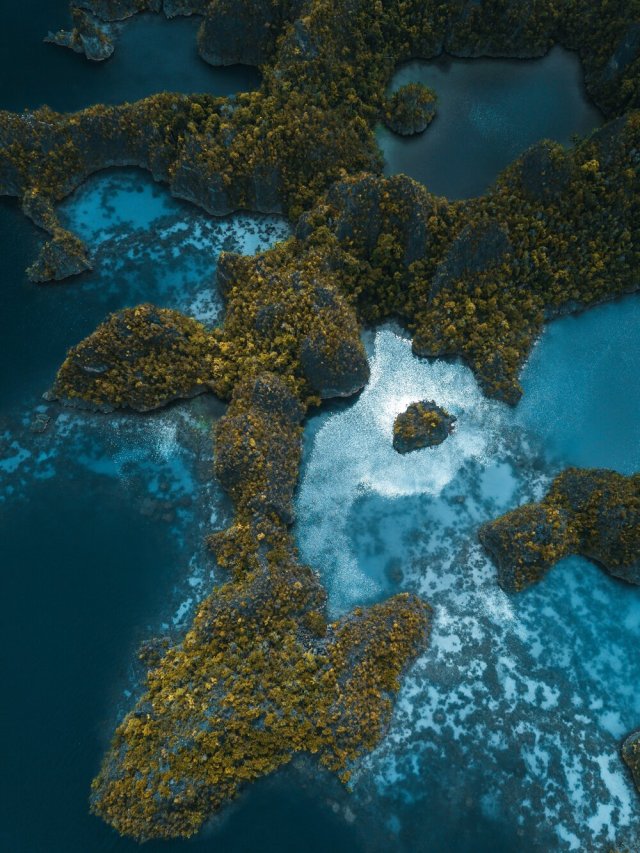
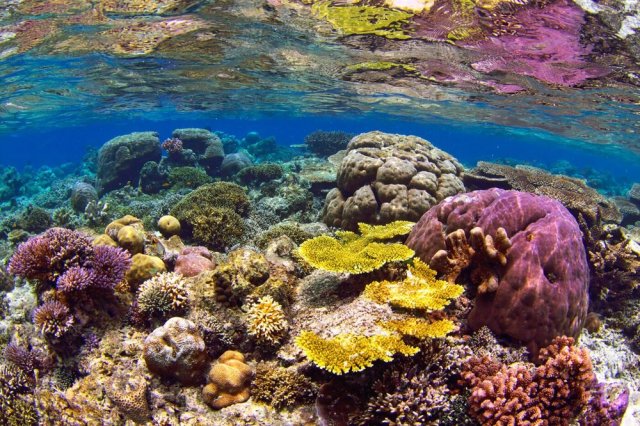
On many occasions, we have already witnessed nature’s capacity of regeneration and adaptability in the context of adequate protection measures. A striking example of this capacity can be seen in the Indonesian islands of Raja Ampat.
In the past, this area has lost a major part of its marine population, due to numerous years of limitless predatory fishing and shark hunting. The waters surrounding Misool (one of the main islands) became a protected marine area in 2007, as this region hosts more marine species than any other place on the planet, even with the constant increment of temperature in our oceans.
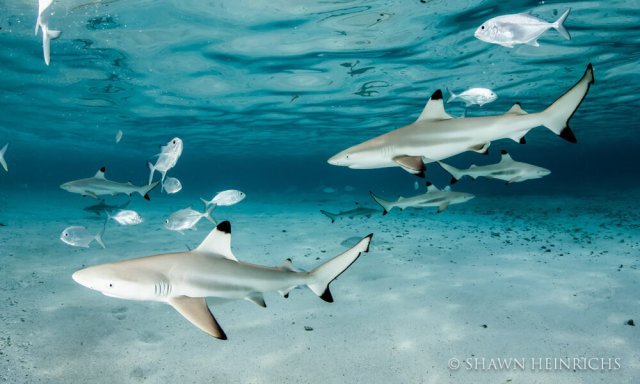
The Misool island is, in fact, one of the very few territories in the world where biodiversity is actually increasing. Today there are 25 times more sharks and 3 times more fish than only a decade ago. It has become a sanctuary for sharks and manta rays, additionally providing shelter and nourishment for marine turtles and other species that were almost disappearing from this area.
Furthermore, the local fisher-people gain profit from this marine abundance; proving that protecting fundamental ecosystems doesn’t necessarily conflict with a State’s economical interests. We can only imagine the concrete benefits that would come out of regulating more coastal areas on the planet… All we need is the political will to put in motion this mechanism.
Dr. Sylvia Earle & The Hope Spots
Dr. Sylvia Earle. Source: Scubazoo.tv
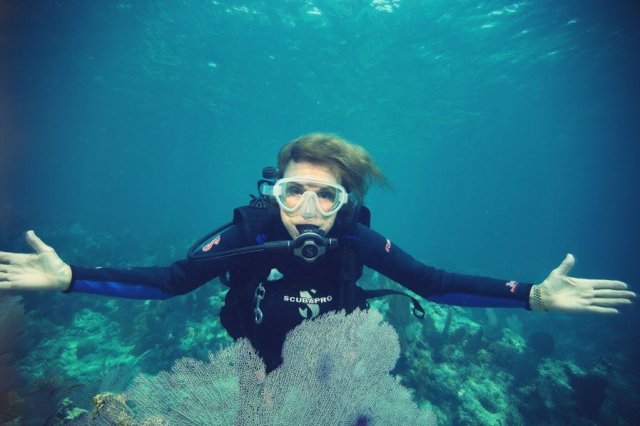
Dr. Sylvia Earle is a world-renowned oceanographer, explorer, author and lecturer. Also known as “Her Deepness”, Sylvia has dedicated her life to study and protect our oceans. In her documentary Mission Blue she talks about the “Hope Spots”, which are “special places that are critical to the health of the ocean”. These areas are explored, studied and protected under the leadership of Dr. Earle, aiming to create safe spaces for life in our oceans to heal and thrive. Some of them are already legally and fully protected, while others are still waiting for the implementation of adequate regulation.
By engaging communities and spreading awareness, we can all have an impact on policy making and legislation. Regulating and protecting only a third of our coasts is already enough for our oceans to recover, and restore marine life all around the world. So no, it’s not too late, but it’s about time.
Want to learn more?
Coastal Seas – Our Planet
Hope Spots – Mission Blue
Mission Blue – Netflix
Our Planet – Netflix
A Life on Our Planet – Netflix
meet the author
Giuliana Gentile
Giuliana was born and raised in Sicily (an Italian island in the middle of the Mediterranean Sea), since then she’s been moving around the world to meet new cultures and discover new places. She has a degree in Political, Social and International Sciences. During her studies she became passionate about environmental protection, gender equality, and cultural identity. She loves traveling, petting dogs on the street, and swimming underwater.
 ecomadic