
.parent {
display: inline; position: relative; line-height: 30px; float: left; color: #82be41;
}
.parent a{
margin: 10px;color: #82be41;text-decoration: none;
}
.parent:hover > ul {
display:block;position:absolute;
}
.child {
display: none;
}
.child li {
line-height: 30px;width:115%;text-align:left;
}
.child li a{
color: #82be41;
}
ul{
list-style: none;margin: 0;padding: 0px; min-width:10em;text-align: center;float: right; font-weight: 550;
}
ul ul ul{
left: 100%;top: 0;margin-left:1px;
}
li:hover {
background-color: white;
}
.parent li:hover {
background-color: white;
}
.expand{
font-size:10px;float:right;margin-right:5px;
}
.parent a p{
display: inline; margin: 10px;color: #6e706b;text-decoration: none;
}
Miami: The “Ground Zero” for Climate Change
Written by Jaclyn Yost | February 26, 2021
Designed by: Lucy McCulley
Miami is a beachfront metropolitan city known for its warm tropical weather, luxury properties, swampy parks, and coral reefs. With a prominent Latin American influence and streets lined with colorful murals, the city is known for its authentic and culturally-rich atmosphere.
Yet with the growing effects of climate change – such as rising sea levels & warming waters – the future of Miami may not be as glamorous. This in combination with tourism being one of the city’s main economic drivers (which is also particularly vulnerable to climate change) has led experts to refer to Miami as the “ground zero” for climate change.
Rising Sea Levels & Warming Waters
Miami is the most threatened area by rising sea levels in the continental US – projected to rise between 9 inches to 2 feet by 2060, and up to 3 feet by 2100. As global temperatures increase, glaciers and ice caps melt, adding water to the ocean; and as ocean waters warm, the volume of the ocean expands. These two factors create a chain reaction, consequently leading to eroded beaches, coral bleaching, mosquito-borne illnesses, seawater intrusion into freshwater drinking sources, and an increase in tropical storms and hurricanes. Just to name a few.
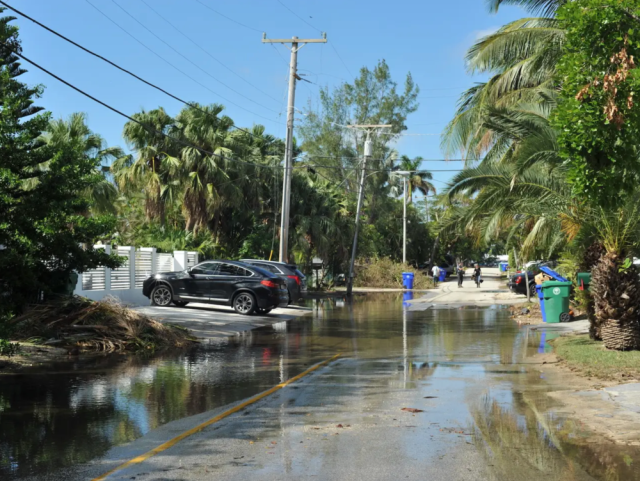
Sunny day flooding in Miami, FL. Source: Kevin Loria & Business Insider
Furthermore, due to Miami being built on a foundation of limestone, the city regularly experiences flooding. So much so that a record breaking number of tidal flooding events was recorded in 2019. Even on days without a cloud in sight, low-lying neighborhoods witness “sunny day flooding” as frequently as 35 days a year. While Florida has spent millions on installing pumps and raising roads and buildings, if trends continue, “sunny day flooding” could potentially occur as often as every 2 out of 3 days by 2045. This phenomenon has also been stranding marine animals on land (think: octopuses in car garages), and poses a risk of unearthing industrial waste and septic systems, which could ultimately lead to unsanitary conditions and disease.
As more than 85,000 people in the Miami-Dade county live less than 3 feet above sea level, cities and properties are starting to see the need to invest in upgrading their water and power systems; adopting stricter infrastructure and building measures; and instilling proper emergency response plans.
Climate Gentrification: A Socio-Economic Downfall
It’s not just natural hazards that communities in Miami need to keep in mind as socio-economic pressures also heighten in the face of the climate crisis. Because Miami is the second most unequal large metropolitan area in the country, it is inevitable that wealth gaps and racial inequalities will continue to escalate.
📷 Jaclyn Yost
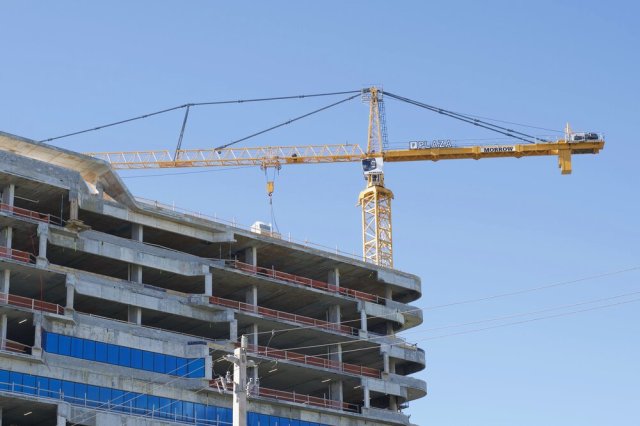
Miami is already witnessing neighborhoods slowly being pushed out by luxury properties and the climate only adds an extra layer of complexity to the mix. Climate gentrification has become a term to describe the “process of wealthier, often whiter populations moving to areas less exposed to the effects of climate change that were previously occupied by lower-income residents and communities of color, thus exacerbating displacement and disparities.” Specifically in Miami-Dade County, it is being estimated that nearly a third of the current population (~800,000 residents) will eventually be displaced.
This capitalist hypocrisy of prioritizing the economy over the well-being of low income communities and environmental disruptions will only fuel the destination into becoming more of an uninhabitable place overtime. Nonetheless, investors see the short-term profits of Miami Beach and luxury properties attractive, as they are likely to see their return before the brunt of the crisis hits.
Tourism Impact
In pre-pandemic days in 2018, Miami saw more than 23 million tourist arrivals, bringing in approximately US$18 billion to the region. Yet, referring back to the environmental and social issues highlighted above, it is clear that climate change will directly impact the multi-billion dollar sector and tourist activity. For reasons including a decrease in sand space for leisure, extreme high temperatures, high costs of waterfront restoration, and stressors on freshwater reserves.
Without visitors flocking to Miami’s famous restaurants, hotels, shops, and nightclubs, there is no doubt that a collapse in tourism would be detrimental to the local wellbeing of Miami and its residents. Ultimately having the ability to negatively influence social and political structures.
Looking Forward
Miami’s livelihood – from an environmental, socio-economic, and political perspective – is dependent on the long-term climate resilience measures that are put in place today by governments, businesses, organizations, communities, and individuals. & luckily, efforts are already being seen and heard.
In November 2017, Miami voters passed the US$400 million ‘Miami Forever Bond’ program in an effort to combat sea-level rise and flooding; about US$200 million of the funds has been dedicated to alleviate vulnerabilities via innovative infrastructure investments. Such as “learn[ing] the effectiveness of water outfall back-flow valves; understand[ing] how to best address bayside and river waterfront storm surge and sea-level rise; explor[ing] drainage solutions outside major drainage basins; install[ing] a traditional pump station and drainage systems in low-lying neighborhoods and us[ing] an advanced road design to provide enhanced mobility and meet resiliency requirements.” All in the deliberate effort to prevent sea-level rise and flood prevention, while encouraging engagement from citizen and advocacy groups.
The case of Miami is not standalone. While not completely identical, many coastal cities around the world face similar challenges. We can no longer afford to be disconnected with the reality of climate change. The fight for a more sustainable future may seem like a long, uphill battle, but there is still time to work and save the places that we know and love. It will just require global, collaborative endeavors, as our beloved seaside communities depend on it.
For those without voting power in Miami, the most effective way to make a change when visiting the destination is to make conscious decisions & be a sustainably-minded traveller. A few suggestions if you are traveling to the city…
-
Choose to support responsible businesses/organizations who are doing socially and environmentally good. Luckily for you, ecomadic put together ‘The Ultimate Sustainable Travel Guide to Miami’ in partnership with Debris Free Oceans. 😉
-
Leave no trace when visiting both urban and natural environments.
-
Continue to educate yourself and others on the increasing pressures of the climate crisis and how it is altering our world. Sign petitions, get out in the streets, email appropriate government officials and policy-makers – use your voice to advocate for the changes that you want to see in the world.
Want to learn more?
If Miami Will Be Underwater, Why Is Construction Booming? – How to Save a Planet Podcast
Adapting to Climate Change – NPR
meet the author

Jaclyn Yost
Jaclyn is the founder of ecomadic and editor of The Sustainable Seed. She is conscious creative passionate about shedding light on environmental and social sustainability issues through travel.
 ecomadic