

.parent {
display: inline; position: relative; line-height: 30px; float: left; color: #82be41;
}
.parent a{
margin: 10px;color: #82be41;text-decoration: none;
}
.parent:hover > ul {
display:block;position:absolute;
}
.child {
display: none;
}
.child li {
line-height: 30px;width:115%;text-align:left;
}
.child li a{
color: #82be41;
}
ul{
list-style: none;margin: 0;padding: 0px; min-width:10em;text-align: center;float: right; font-weight: 550;
}
ul ul ul{
left: 100%;top: 0;margin-left:1px;
}
li:hover {
background-color: white;
}
.parent li:hover {
background-color: white;
}
.expand{
font-size:10px;float:right;margin-right:5px;
}
.parent a p{
display: inline; margin: 10px;color: #6e706b;text-decoration: none;
}
Securing Healthy Food & Clean Water for All, Without Sacrificing the Earth
Written by Stephanie Stevens | March 21, 2021

📷 @_mrjn_esf
With the global population set to continue to rise over the next thirty years and reach nearly 10 billion by 2050, the question remains: how are we going to feed everyone without destroying the planet? The current way of feeding our planet is both unsuccessful and unsustainable, with nearly half of the world facing food scarcity and swaths of forest being transformed into inefficient agricultural land. The loss of forest is devastating to all forms of life, as our trees act as essential habitats and our planet’s lungs – absorbing carbon dioxide and providing us with the oxygen we need to breathe.
In addition to our issues relating to food security, we also have a major water problem. As “the water planet”, approximately 71% of the Earth is made up of water with over 96% of the planet’s water being held in our oceans. However, only 3% of the Earth’s water is freshwater and only 0.5% of that freshwater is available for drinking, growing crops, etc. – the rest of it is either polluted, or locked in the soil, glaciers, polar ice caps, and the atmosphere. This means that while we technically have a lot of water, we are actually very limited when it comes to water that we can use to drink and grow food.
In considering these mounting challenges, we can see that innovative solutions to providing healthy food and clean water have become more important than ever. It has also become evident that due to the importance of water in all aspects of life, employing sustainable strategies for managing water might bring the answers we are looking for when it comes to growing enough food to feed our growing population.
What Makes a Solution Sustainable?
For a solution to be truly sustainable, it must be maintainable without depleting nonrenewable resources. When considering our need for healthy food and water, a solution must not only supply these two products, but it also must contribute to the protection of our watersheds, forests, and ecosystems so that we can feed ourselves for years to come. In other words, these solutions must be viable for the long term and not just work in the short term. Finding ways to sustainably feed a growing population will take some persistence and ingenuity, but it can be done. Fortunately, there have already been many bright spots as many around the world have started to employ innovative solutions to secure our planet’s precious resources and provide the world with the healthy food and water it so desperately needs.
Providing Clean Water with ‘Water Funds’
As the water across our planet becomes increasingly more scarce, water as a commodity becomes increasingly more valuable. Nearly 700 million people already live with water scarcity in the world today and solutions to this issue must not only provide fresh, clean water, but they must also contribute to the future protection of water sources. One of the innovative solutions to meet this need for more water while protecting the planet is Water Funds.
A Water Fund is a localized initiative that supplies clean, healthy water to communities while generating funds for watershed conservation. Through uniting local cities, governments, communities, and other stakeholders, Water Funds are able to create positive impact through collective action. Through a Water Fund, municipalities collect money from those who consume the water (water users) and put it towards compensating those who take care of watersheds (water producers) and towards funding local watershed conservation efforts. The funds created through these initiatives enable communities to carry out important conservation projects and to offer financial incentives for farmers and ranchers (water producers) to be better stewards of the land. These localized initiatives offer a sustainable solution to our global water scarcity as they supply safe, clean water while safeguarding valuable water sources and protecting biodiversity.
Where Have Water Funds Been Effective?
Water Funds have found success in many regions of the world including Africa, Asia Pacific, North America, and Latin America, and are showing signs of promising growth. The Nature Conservancy currently has 26 Water Funds in operation and has many funds in development. In Latin America in particular, Water Funds launched by the Nature Conservancy have been tremendously successful. In villages near Quito, Ecuador and Bogotá, Colombia, these initiatives have funded community -wide reforestation projects and in Brazil, they have been able to provide financial compensation for farmers and ranchers who protect riverside forests on their land. Specifically, in Brazil’s Atlantic Forest – one of the most biodiverse regions of the world – cities and towns use the fees collected by downstream residents (water users) to compensate the conservation efforts of the upstream farmers and ranchers (water producers). Currently, water producers in this area of Brazil are being compensated $32 per acre for taking care of the riverside forests on their properties! Getting paid to take care of the environment? That sounds like a win, win!
The Nature Conservancy’s growing collection of these initiatives are currently working to provide steady funding for the protection of over 7 million acres of watershed which supplies drinking water for nearly 50 million people. Being able to financially compensate people for being good stewards of the environment is a crowning achievement of Water Funds and the ability of these initiatives to unite all water stakeholders has deemed them a viable solution for the future.

Munroe Island, Kerala, India. 📷 @mariekeweller
Regenerative Agriculture
The health of our planet’s forests directly impacts the health of our environment as a whole. Deforestation is a multifaceted problem as it destroys habitats and weakens one of our planet’s strongest defenses against air pollution. One of the biggest drivers of deforestation is agriculture, including cattle ranches, which might at first seem like a good thing given our current challenge of feeding a growing population – more food is what we need, right? Unfortunately, it’s not that simple. Our current agricultural systems are already using up nearly half of the world’s vegetated land and nearly 90% of the water used by humanity. On top of that, cattle ranches are one of the largest contributors to greenhouse gases, propelling climate change. For these reasons, and a host of others, our current methods of providing food to our planet are not viable for the long-term. This is where the need for sustainable solutions comes into play. The answers to feeding our growing population won’t come from doing what we have been doing, they will come from innovative solutions.
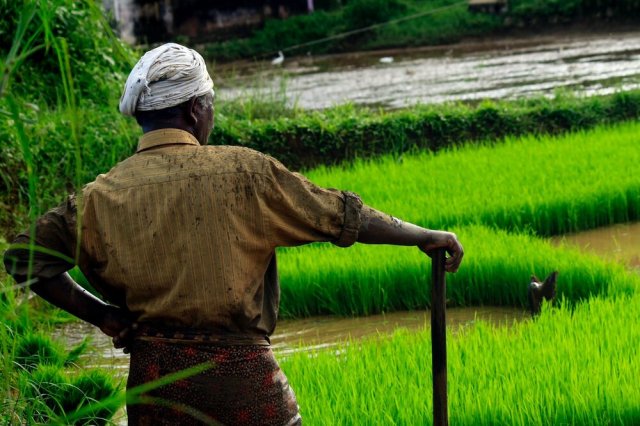
📷 @nandhukumarndd
So how do we keep our forests while providing the world with food? One compelling solution is regenerative agriculture. Created as a sustainable solution to traditional agriculture, regenerative agriculture is a practice that produces food while replenishing soil, conserving water, and protecting biodiversity. What makes regenerative agriculture so unique is its ability to supply healthy food while simultaneously contributing to the protection of our planet. This practice has huge implications for future growth and as the Nature Conservancy notes, regenerative agricultural practices have the potential to take the agriculture sector “from a greenhouse gas emitter to a climate change solution.”
Where has regenerative agriculture been effective?
As the most biodiverse region on the planet and the world’s largest net food exporter, there is perhaps no better place for a reimagining of agricultural practices than Latin America. The current outlook in the continent is grim, with studies showing that the region has become a leading global emitter of greenhouse gases and the World Bank reporting that two-thirds of the continent’s farmland is already degraded.
There have, however, already been improvements where regenerative agriculture has been implemented. One of the most effective methods of regenerative agriculture in Latin America has been silvopasture, which is the integration of trees, vegetation and grazing livestock operations on the same property. This practice has been crucial in a region that is a leading exporter of meat as it creates a way to maintain food production while maintaining biodiversity, protecting habitats, and minimizing environmental impact. The future is bright for restorative agriculture across the globe, but in order to make an impact these practices need to be implemented as soon as possible.
Protecting Our Oceans While Feeding Our Planet
Holding over 96% of the world’s water, our oceans are a major resource for life on Earth. While they provide a place for us to recreate and explore, oceans also provide a lifeline, supplying essential nutrients for over 3 billion people and jobs to nearly 12% of people on Earth. Oceans clearly need to be a central priority when it comes to feeding our planet as the health of our world’s oceans is directly tied to the health of our communities and economies. With the ocean being an extremely intricate web of ecosystems, it is imperative that we consider all life forms when devising solutions to our human problems. One of the ways that we can sustainably manage our oceans is through utilizing fish stocks.
A fish stock is a way to track and manage fish populations around the world in order to protect them from overfishing. When creating fish stocks, scientists take into account different factors such as fish size and reproduction rates to determine a maximum sustainable yield for each fish species or set of species. This number refers to the maximum long-term average catch that can be fished under current environmental and fishery conditions. When a stock is being harvested at a rate that is higher than its maximum sustainable yield it’s status gets labeled as overfishing. When a stock’s population is so low that it might be unable to bounce back it gets labeled as overfished. These statuses inform fisheries and also alert enforcement entities to closely monitor the fishing of certain stocks. The good news is that fish stocks have the ability to bounce back from overfishing and overfished statuses. When populations are able to rebound back to a target population size, they are labeled as rebuilt. The Fish Stock Sustainability Index created by the National Oceanic and Atmospheric Administration (NOAA) compiles this information to track the performance of certain fish stocks so that changes can be made depending on the stock’s status. When these metrics are taken into account by fisheries around the world, they have the power to protect fish populations and promote the biodiversity of our oceans.
How have fish stocks help to protect fish populations?
According to NOAA, the use of fish stocks has assisted in the rebuilding of both the Southern California Cowcod and the American Plaice. The cowcod in particular was under a 19 year rebuilding plan that included fishing quotas, large area closures, and the use of recreational fishing equipment that increased the survival rate of discarded cowcod. This rebuild of cowcod is the ninth stock to be rebuilt by the Pacific Coast Groundfish Fishery Management Plan and has now allowed for the reopening of thousands of square miles of fishing grounds, creating another sustainable option for seafood consumers. This successful rebuild is the result of the united efforts of fishermen, environmental groups, and fisheries managers, and provides a glimmer of hope for the future of rebuild efforts.
When we take care of our oceans, we take care of ourselves. Our world’s oceans provide so much to us in the way of recreation, nutrition, and jobs. By closely monitoring fish populations through fish stocks, global fisheries have the chance to protect biodiversity and provide an essential source of global nutrition – a consideration that becomes increasingly vital with a rapidly growing population. For these reasons, among many others, the sustainable management of our oceans is an essential component to feeding our growing planet.
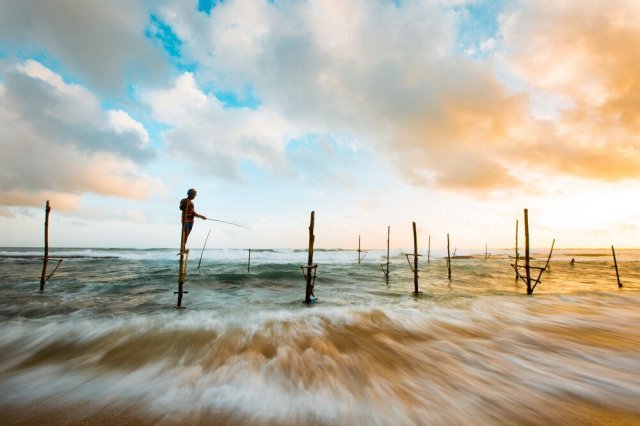
Hikkaduwa, Sri Lanka. 📷 @msaditya9
The Future of Sustainably Feeding Our Growing Planet
If we want to be able to take care of our growing planet, we need to be open to new sustainable strategies that contribute to the health of our bodies, ecosystems, and economies. 700 million people are already living with food and water scarcity and that number is expected to rise as the global population increases. This comes as greenhouse gases continue to rise and 85% of commercial harvested fishery stocks are said to be at their breaking point. Clearly, our global food systems need rethinking as we struggle to supply healthy food and water to a growing planet. Despite these complex challenges, the swift implementation of these and other promising innovations might give us a chance to meet our evolving needs while working to protect our planet rather than contribute to its demise.
Sources:
How to Sustainably Feed 10 Billion People by 2050 – WRI
Creating Water Funds for People and Nature – The Nature Conservancy
Water Scarcity – UN
Earth’s Freshwater – National Geographic
Status of Stocks 2019 – NOAA
All Hands on Deck for Fisheries – The Nature Conservancy
How To Feed the World Without Destroying the Planet – National Geographic
Transforming Agriculture to Unleash the Regenerative Power of Nature – The Nature Conservancy
meet the author

Stephanie Stevens
Stephanie is a writer and photographer passionate about sustainable living, mindfulness, and exploring the outdoors. She loves microadventures but her favorite part about traveling abroad is immersing herself in other cultures. When she’s not writing, you can find her drinking coffee, playing soccer, or backpacking.
 ecomadic