
.parent {
display: inline; position: relative; line-height: 30px; float: left; color: #82be41;
}
.parent a{
margin: 10px;color: #82be41;text-decoration: none;
}
.parent:hover > ul {
display:block;position:absolute;
}
.child {
display: none;
}
.child li {
line-height: 30px;width:115%;text-align:left;
}
.child li a{
color: #82be41;
}
ul{
list-style: none;margin: 0;padding: 0px; min-width:10em;text-align: center;float: right; font-weight: 550;
}
ul ul ul{
left: 100%;top: 0;margin-left:1px;
}
li:hover {
background-color: white;
}
.parent li:hover {
background-color: white;
}
.expand{
font-size:10px;float:right;margin-right:5px;
}
.parent a p{
display: inline; margin: 10px;color: #6e706b;text-decoration: none;
}
Tips for a Healthier and Greener City Life
written by Giuliana Gentile | March 26, 2021
Source: Megan Markham
Urban Life & The Consequences of Lockdown
With an analysis conducted by some researchers at the Vancouver School of Economics and McGill University, it was found that “life is significantly less happy in urban areas”. The goal of this study was to map the geography of wellbeing throughout Canada. The data collected through a survey shows that people living in areas with a lower density of population reported higher levels of happiness when compared to those living in more populated areas. Thus, individuals living in highly populated areas have reported to be less satisfied with their overall quality of life.
According to the WHO, the effects of the current pandemic (bereavement, isolation, loss of income and fear) are triggering mental health conditions and exacerbating existing ones. Experiencing the lockdown in a small enclosed environment, such as an average apartment in a big city, can have extremely negative effects on our mental health.
To escape from these frustrating conditions, we need to reconnect with nature and keep healthy habits inside and outside of our home.
How Can We Make Urban-Living More Sustainable & Healthy?
Walk & Exercise
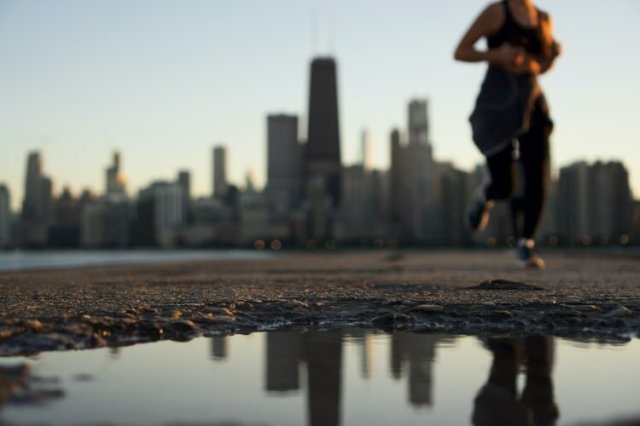
The easiest way to get some fresh air and keep our bodies in motion is to take long walks. Put on some comfy shoes and try to walk as much as possible throughout the week (best if it’s early in the morning to avoid crowds). It’s great exercise and will considerably improve your mood for the day. You can also find some trekking and hiking trails to visit in your free time. Walking is the best way to connect with nature and escape the pollution of the big cities. Additionally, you can always find some youtube videos for exercising from home. It’s important to get some extra movement during these strange times, not only to stay in shape, but to improve our mental health while keeping our bodies healthy.
Chicago, IL. 📷 @rvrmakes
Plants & Pets
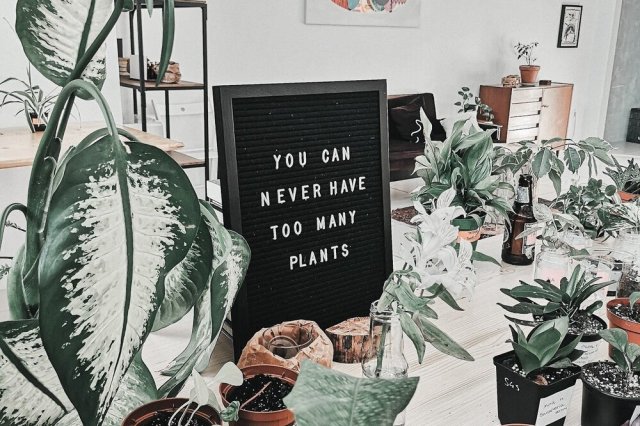
Especially when living alone, we feel the need for social interactions over text messages and virtual meetings. The best and safest way to remedy that is to get a pet; an inestimable source of joy and companionship. However, if you’re not able to, you can always fill your house with plants! It’s always gratifying to take care of living things, and it will make your environment green and full of life (but remember to make sure the plants are not toxic for your furry friends!). If you’re not so much of a plant expert, don’t worry, technology is here to help. Make sure to write down the name of the plant you’re buying, and then google it! There’s plenty of stuff to learn. Also, there are many apps to keep your plants healthy and well fed, you can check them out on this list.
Urban Jungle. Source: Miska Sage
Watch Documentaries
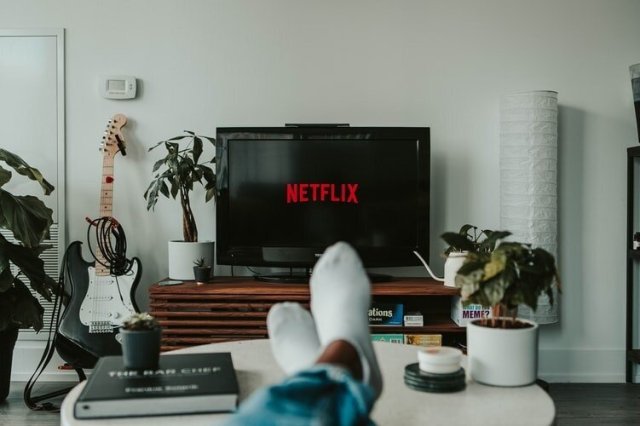
When you don’t have the possibility to go outside, you can always connect with nature online. Documentaries give you the opportunity to learn about the wilderness, and escape from the four walls where we spend most of our time. Those beautiful visuals will make your mind wander, and you’ll feel way more connected to the world around you.
Tip: Here are the best ones to watch on Netflix.
Source: Mollie Sivaram
Stimulate Your Creativity
Create, create, create! It doesn’t matter how, it doesn’t matter if you’re not “good” at it, just find a creative outlet. Take a piece of paper and draw, grab some paint and make an abstract painting, play an instrument, make up some choreography to your favorite song and dance around, redecorate your room, print some pictures and make an album, give yourself a makeover, create an outfit for your dog… literally anything works!

📷 @tim_arterbury
Visit Parks & Botanical Gardens
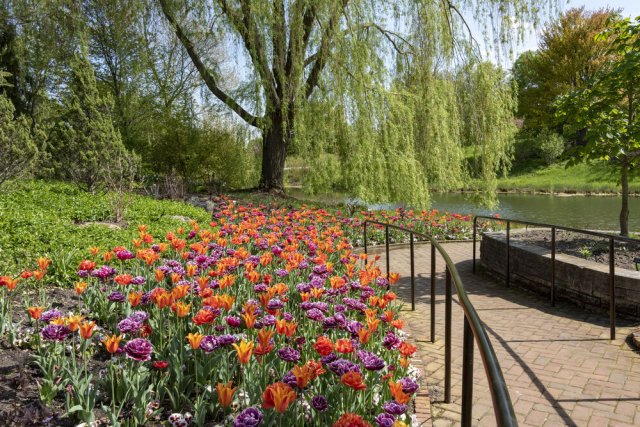
This might seem like an obvious one, but we’re often so overwhelmed by this feeling of isolation that we forget to appreciate the little things. Going to a park or a botanical garden could really give you that boost of energy you need, simply with a change of scenery. Honestly, it will also give you an opportunity to get out of your sweatpants and feel pretty again. It’s definitely worth a try!
Source: Chicago Botanic Garden
Healthy Food & Fresh Ingredients
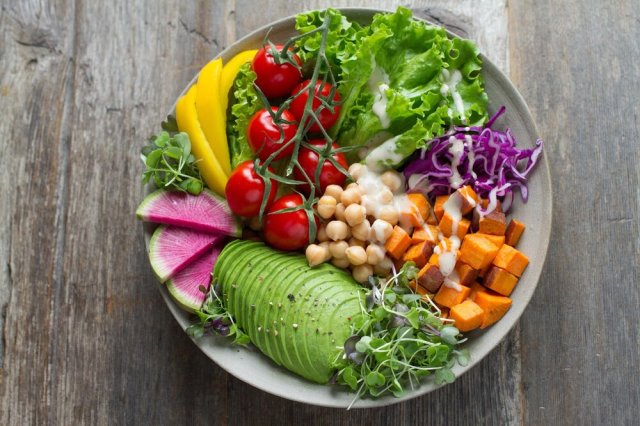
We all need some comfort food right now, but remember that delicious doesn’t necessarily mean unhealthy. Now more than ever we need to think about our wellbeing, and that implies giving our bodies the right nutrients. Avoid fried and highly processed food, unhealthy snacks in-between meals, and instead make lots of smoothies and fruit salads to snack on throughout the week.
Remember that we’ve considerably slowed down our daily rhythms, so our bodies require way less caloric intake. Don’t make yourself guilty stressing about your weight, just eat whatever feels right for you, as long as it’s good for your health.
📷 @annapelzer
How Can We Make Cities Greener?
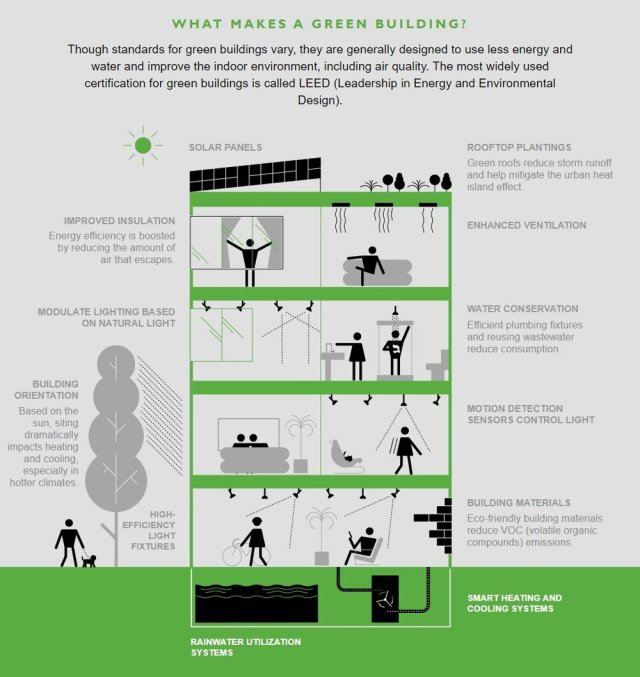
To live a greener city-life, we should be making our cities greener in the first place. So here are some ideas to share and reflect on:
Source: National Geographic
Alternative Construction Materials
The most common city landscape is a skyline of tall buildings made out of concrete… but is this really the best strategy for urban construction? Well, let’s start with the fact that the production of cement (key component of concrete) is responsible for 8% of all the CO2 emissions in the world. Do we need to find a futuristic, undiscovered material to change our current ways of construction? Not necessarily! Our ancestors already found the solution. Materials such as straw bales, rammed earth, bamboo, wood, clay and other natural mediums have been used for millennia in efficient and ingenious ways.
Architectural Design
Sealed, concrete buildings make us dependent all year long on heating systems and air conditioning to keep a comfortable temperature inside our home. Now, picture this: according to The Guardian “a small unit cooling a single room, on average, consumes more power than running four fridges, while a central unit cooling an average house uses more power than 15”. An alternative to this waste of energy is to change the architectural design of modern buildings; and again our ancestors have the answer. Buildings can be designed to allow ventilation in a natural and sustainable way. A great example is the Barjeel – or wind tower – in Dubai, which reimagines Emirati wind towers using 480 layers of recycled cardboard. An article by Dezeen explained that “with the first examples dating back to 3100 BC, historically the wind towers were built to accompany small houses and villas in the region, acting as natural, non-electrical forms of air-conditioning. Originally made from basic materials such as palm branches and leaves, the Barjeel gradually increased in scale and advanced in materials, eventually being made from mud, clay and bricks”.
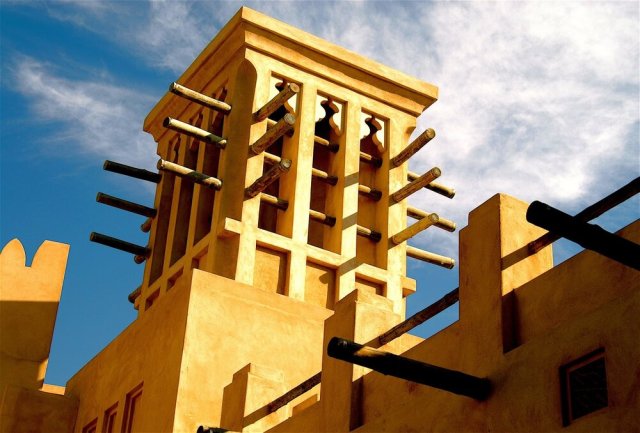
Source: Pinterest
Light Colors
Here’s another futuristic idea that will blow your mind: painting all the buildings white. That’s right, it’s that easy! Dull, dark-colored home exteriors absorb 70% – 90% of the radiant energy from the sun, warming our homes, while light colored surfaces actually reflect most of the heat away from the surface. Another good solution is to apply a reflective coating to our existing roofs and windows.
Introducing More Green
Surprisingly, one of the ways to make our cities greener is to introduce more green. Other than parks and botanical gardens, we can always add plants to our walls, roads, sidewalks, and rooftops. Plants, in fact, enhance shading and ventilation, absorb carbon dioxide, and improve air quality (they also look way prettier than concrete).
An innovative design first introduced in Milan, Italy, is the vertical forest, which consists in two towers entirely covered with vegetation. The concept behind this is to build a “home for trees that also houses humans and birds”.
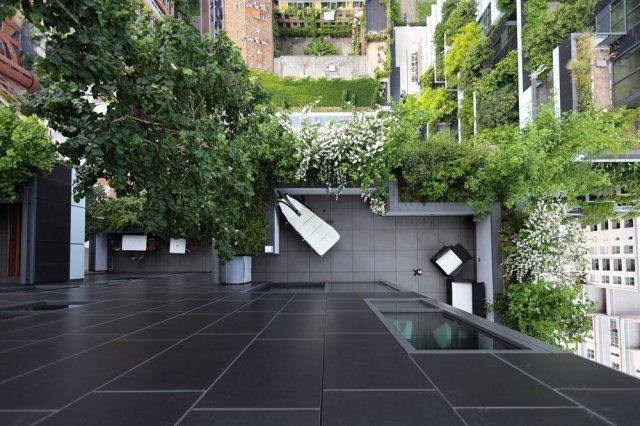
Source: Stefano Boeri Architetti
Alternative Energy
The Noor-Ouarzazate complex in Morocco, the world’s largest concentrated solar power plant, produces enough electricity to power a city the size of Prague; saving the planet from over 760,000 tonnes of carbon emissions. This is not science fiction, it really exists, and could be the future of the energy industry (if we’re smart enough to embrace it).
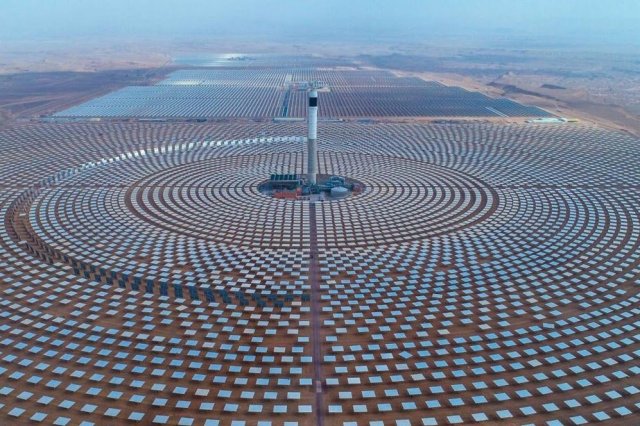
Source: Helioscsp, Dennis Dehaven
Potentially, our greatest source of energy is the sun: 430 quintillion joules of the sun’s energy fall on Earth every hour, that’s roughly equivalent to 2000 nuclear bombs every second. Of this energy, humanity only uses 410 quintillion joules in a year… how clever of us. In one year, we fail to use all of the energy the sun can provide in a single hour. But hey, let’s keep using fossil fuels instead, it’s destroying our planet and it has historically always been a source of international conflict. That’s way better! Right? Wrong. Other alternative and sustainable forms of energy are hydroelectric, wind energy, wave energy, amongst others; all of them wildly in disuse.
The Future of Civilization
These are just a few of the improvements that could be implemented in our cities within the next few years. There’s a million more things we could do as communities to improve urban life, such as fully switching to electric cars, funding campaigns and educational programs about sustainability, and completely eliminating single-use plastics. We could also start opening and advertising way more vegetarian and vegan restaurants, making vegetarian and vegan products more accessible in supermarkets, promoting the support of small businesses instead of big corporations, and so on. Just imagine the benefits and progress that would come from all of these implementations. There’s a lot to do, and we’re only getting started.
Want to learn more?
Green Buildings Could Save Our Cities – National Geographic
Cooling Your Home Naturally – Energy Efficiency And Renewable Energy
The air conditioning trap: how cold air is heating the world – The Guardian
meet the author

Giuliana Gentile
Giuliana was born and raised in Sicily (an Italian island in the middle of the Mediterranean Sea), since then she’s been moving around the world to meet new cultures and discover new places. She has a degree in Political, Social and International Sciences. During her studies she became passionate about environmental protection, gender equality, and cultural identity. She loves traveling, petting dogs on the street, and swimming underwater.
 ecomadic