
.parent {
display: inline; position: relative; line-height: 30px; float: left; color: #82be41;
}
.parent a{
margin: 10px;color: #82be41;text-decoration: none;
}
.parent:hover > ul {
display:block;position:absolute;
}
.child {
display: none;
}
.child li {
line-height: 30px;width:115%;text-align:left;
}
.child li a{
color: #82be41;
}
ul{
list-style: none;margin: 0;padding: 0px; min-width:10em;text-align: center;float: right; font-weight: 550;
}
ul ul ul{
left: 100%;top: 0;margin-left:1px;
}
li:hover {
background-color: white;
}
.parent li:hover {
background-color: white;
}
.expand{
font-size:10px;float:right;margin-right:5px;
}
.parent a p{
display: inline; margin: 10px;color: #6e706b;text-decoration: none;
}
What a Trip: Ayahuasca in the Andes
Written by Stephanie Stevens | April 4, 2021

They say that travel changes you – that as you experience new places and cultures your eyes are opened to new ideas and ways of thinking. Yet, even as travel gives us these transformative experiences, some seek greater highs and further avenues of transformation while traveling through the use of drugs.
In recent years, international drug tourism has blossomed, as many around the world take flight seeking drug experiences in faraway lands. From cannabis coffeeshops in Amsterdam to hashish in Morocco and full moon parties in Southeast Asia, the industry around drug tourism has continued to expand since it first gained traction in the 60s and 70s. One drug in particular that has recently gained considerable publicity in the Andes region, specifically in Peru, is ayahuasca.
One of the unique aspects about ayahuasca is the broad spectrum of people that are interested in using it. From backpackers to businessmen, the plant’s strong psychoactive effects and healing capabilities make ayahuasca appealing to a diverse group of people. Many seek out the plant for its reported success in alleviating anxiety and depression, while others seek it to help treat drug addictions and mood disorders. There are, however, also dangerous side effects associated with the drug and unfortunately, as interest in ayahuasca has increased across the globe, there have been a growing number of concerning incidents, which have raised questions about the morality and safety of its use.
Ayahuasca: Powerful Plant Medicine
Used by Indigenous communities in the Amazon for hundreds, if not thousands, of years, ayahuasca is a carefully concocted brew of the psychotria viridis shrub (known locally as chacruna) and the banisteriopsis caapi vine (also known as ayahuasca). Both plants are native to the Amazon, hence the extended history of their use in this region of the world.
There are many different Indigenous communities throughout South America that use ayahuasca in ceremony and the brew is known by many different names, depending on the community using it. One community that has long used ayahuasca in ceremony are the Quechua people, who are native to countries in South America, including Peru. The name ayahuasca actually comes from the Quechua language and translates to spirit vine (aya for “spirit” and huasca for “vine”).
There are many reasons as to why these communities use ayahuasca such as physical and emotional healing, communicating with ancestors and the spirit world, and expanding consciousness, just to name a few. To these Indigenous communities, ayahuasca is a revered plant medicine that deserves profound respect.
So, what is it that gives these plants their hallucinogenic properties? The psychotria viridis plant contains DMT, a naturally occurring psychedelic substance which is broken down by monoamine oxidases (MAOs) enzymes in the liver and gastrointestinal tract when orally ingested. The banisteriopsis caapi vine, on the other hand, contains psychoactive properties of its own as well as MAO inhibitors, which when combined with psychotria viridis, enable DMT to become active in the body. In other words, when these two plants are brought together the result is a powerful psychedelic brew.
To make the drink, a shaman (or curandero) boils the leaves of the shrub and stalks of the vine until the mixture reduces to a thick, strong concentrate. This process is repeated many times until the shaman is satisfied with the brew’s strength and consistency. The beverage is then strained to remove any solids and impurities. Shamans are also known to have their own recipes, adding different herbs and ingredients to aid the body in it’s detoxification process during what is affectionately known as “the purge.”
What is the Experience of Ayahuasca Like?
Source: Kahpi
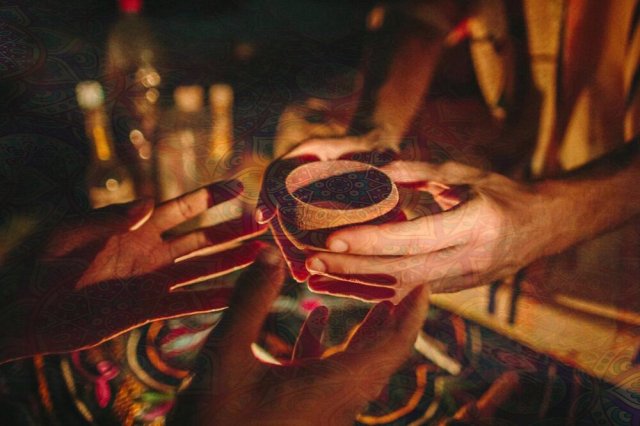
An ayahuasca ceremony is a specific ritual that can be described as mentally, physically, spiritually, and emotionally stimulating. The ceremony is typically held at night and begins with the shaman preparing and blessing the space. Each participant is supplied, at the very least, with a comfortable seat or mattress and a bucket, which comes in handy during the body’s purging process (more to come on that). Once everyone is situated, the shaman will start to administer the brew, sometimes through several micro doses.
Within twenty to sixty minutes, the powerful effects of this plant medicine start to take hold. The most common physical side effects include diarrhea and vomiting (grab your bucket!) which are said to be a way that ayahuasca helps the body to purge negative energies.
Along with these typical physical effects, there are a host of other symptoms that can accompany the consumption of ayahuasca. The reported positive effects are euphoria, greater sense of awareness, spiritual revelations, and feelings of enlightenment. While the more unpleasant effects are feelings of paranoia, fear, and auditory hallucinations. According to most accounts, the majority of people report experiences from both ends of the spectrum.
The experience is said to last anywhere from 4-8 hours and can result in major revelations about nature, the universe, and oneself, which is why journaling and processing once off the drug are essential components of the ayahuasca experience. This is also why it is essential to partake with an experienced shaman that can help you process your experience in a constructive and positive way.
Ayahuasca Tourism: Where it Goes Right & Where it Goes Wrong
As interest in ayahuasca has increased around the world, tourism associated with this drug has ballooned, especially in the past 20 years. In an effort to keep up with demand, lodges and retreat centers all over Peru have started to combine their jungle and nature tours with ayahuasca ceremonies, drawing tens of thousands of tourists from around the world eager to participate. The Iquitos region in particular, located in Northern Peru near the Amazon jungle, is estimated to have up to 100 different retreat centers with the primary selling point being the chance to participate in an ayahuasca ceremony.
With more mainstream use of the drug, there have been a number of uplifting anecdotes from people who have tremendously benefited from the ayahuasca experience. In addition to helping alleviate symptoms of anxiety and depression, ayahuasca is said to have the potential to help those suffering from post traumatic stress disorder, arthritis, diabetes, and drug addiction. There is also some compelling research that shows that DMT may benefit brain health by protecting brain cells from damage. Some of the brightest reports demonstrate the drug’s ability to help people understand themselves better and gain greater clarity on their life’s direction, purpose, and meaning.
The increase in tourism associated with ayahuasca has also led to the stimulation of local economies. The cost of an ayahuasca retreat can vary, ranging anywhere from $50 to $3000, which can help supply local shamans, healers, and community members with valuable income. There have also been reports, however, that the increase in ayahuasca tourism has led to the plant becoming too expensive for locals, potentially making it more difficult for Indigenous communities to maintain these spiritual practices that are an important part of their cultural heritage.
Unfortunately, the rise in popularity of ayahuasca has also led to some negative incidents, often stemming from the emergence of some bad characters. One of the most important parts of an ayahuasca ceremony is the role of the shaman, who are typically men that have been selected or have emerged as spiritual leaders of their communities. Given their authority over the group, shamans are awarded valuable power and influence and sometimes this power is abused. In the past decade, there have been numerous accounts of deceitful or fraudulent shamans who have been accused of taking advantage of participants’ sexual, mental, physical, and emotional health. Some shamans have even been exposed as liars, kidnappers, and rapists. As a result, many retreat participants, mostly women, have come forth with stories of abuse and manipulation by deceptive shamans, which has put ayahuasca in a negative light.
With the strong physical effects associated with the drug, ayahuasca is certainly not suitable for everyone. There have been several reports of international travelers responding very poorly to the drug, experiencing severe side effects, including extreme sadness, hopelessness, and even death. Given the drug’s strong hallucinogenic properties, some have even reported that the drug had opened a spiritual door that they felt they couldn’t close. This is why it is so important to do your homework before partaking in ayahuasca to ensure your safety and wellbeing; ayahuasca is not something that should be taken lightly or ingested on a whim while traveling.
Use Responsibly: Do Your Research & Plan in Advance
There is no question that this powerful brew results in healing experiences for many. If you are planning to travel to Peru or any part of the world to consume ayahuasca, proceed with caution. It is the advice of many in the ayahuasca industry that tourists should be clear about what their intentions are with an ayahuasca experience and that they should come with an open mind about what that experience might bring them. In fact, many centers are known to turn tourists away if they feel that their intentions for an ayahuasca ceremony are not pure.
The ayahuasca experience is different for everyone, but at the end of the day it is a drug that will alter your consciousness and likely your ability to control your physical body. With shamans playing such an integral role in the proceedings of an ayahuasca ceremony, it is essential that you do your research to pick an experienced shaman that you can trust. Most reputable retreat centers have comprehensive websites where you can read about the shamans and speak to someone about the experience prior to travel.
Since this drug is also said to heighten emotions, it’s wise to only consume ayahuasca when in a positive frame of mind. Being in a new place in itself can spark feelings of freedom, joy and even enlightenment and ecstacy. If you decide to take these feelings to new heights with ayahuasca, remember to do your research, be respectful of local customs, and to always show reverence for this plant medicine that has long been a prominent spiritual practice of Indigenous communities around the world.
Sources:
Peru’s Ayahuasca Industry Booms as Westerners Search for Alternative Healing – The Guardian
Ayahuasca: The Dark Side and Dangers – The Recovery Village
The Ayahuasca Phenomenon – MAPS
‘I Was Sexually Abused by a Shaman at an Ayahuasca Retreat’ – BBC
7 Destinations Where Drug Tourism is Thriving – Oyster
The Endogenous Hallucinogen and Trace Amine N,N-Dimethyltryptamine (DMT) Displays Potent Protective Effects against Hypoxia via Sigma-1 Receptor Activation in Human Primary iPSC-Derived Cortical Neurons and Microglia-Like Immune Cells – Frontiers in Neuroscience
meet the author
Stephanie Stevens
Stephanie is a writer and photographer passionate about sustainable living, mindfulness, and exploring the outdoors. She loves microadventures but her favorite part about traveling abroad is immersing herself in other cultures. When she’s not writing, you can find her drinking coffee, playing soccer, or backpacking.
 ecomadic