.parent {
display: inline; position: relative; line-height: 30px; float: left; color: #82be41;
}
.parent a{
margin: 10px;color: #82be41;text-decoration: none;
}
.parent:hover > ul {
display:block;position:absolute;
}
.child {
display: none;
}
.child li {
line-height: 30px;width:115%;text-align:left;
}
.child li a{
color: #82be41;
}
ul{
list-style: none;margin: 0;padding: 0px; min-width:10em;text-align: center;float: right; font-weight: 550;
}
ul ul ul{
left: 100%;top: 0;margin-left:1px;
}
li:hover {
background-color: white;
}
.parent li:hover {
background-color: white;
}
.expand{
font-size:10px;float:right;margin-right:5px;
}
.parent a p{
display: inline; margin: 10px;color: #6e706b;text-decoration: none;
}
Opinion: What’s Up With Vegans & Vegetarians?
written by Giuliana Gentile | April 9, 2021
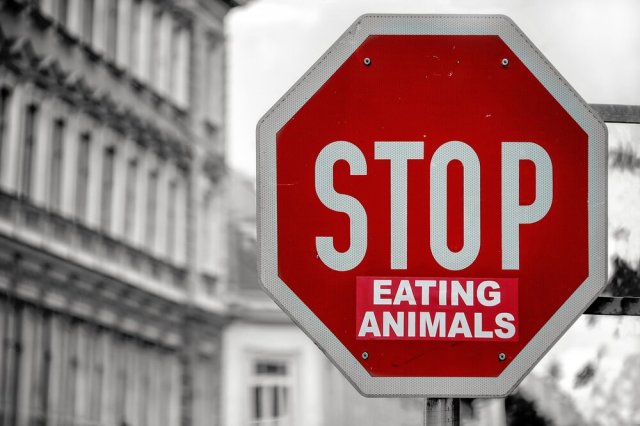
Source: Simon Berger – @8moments
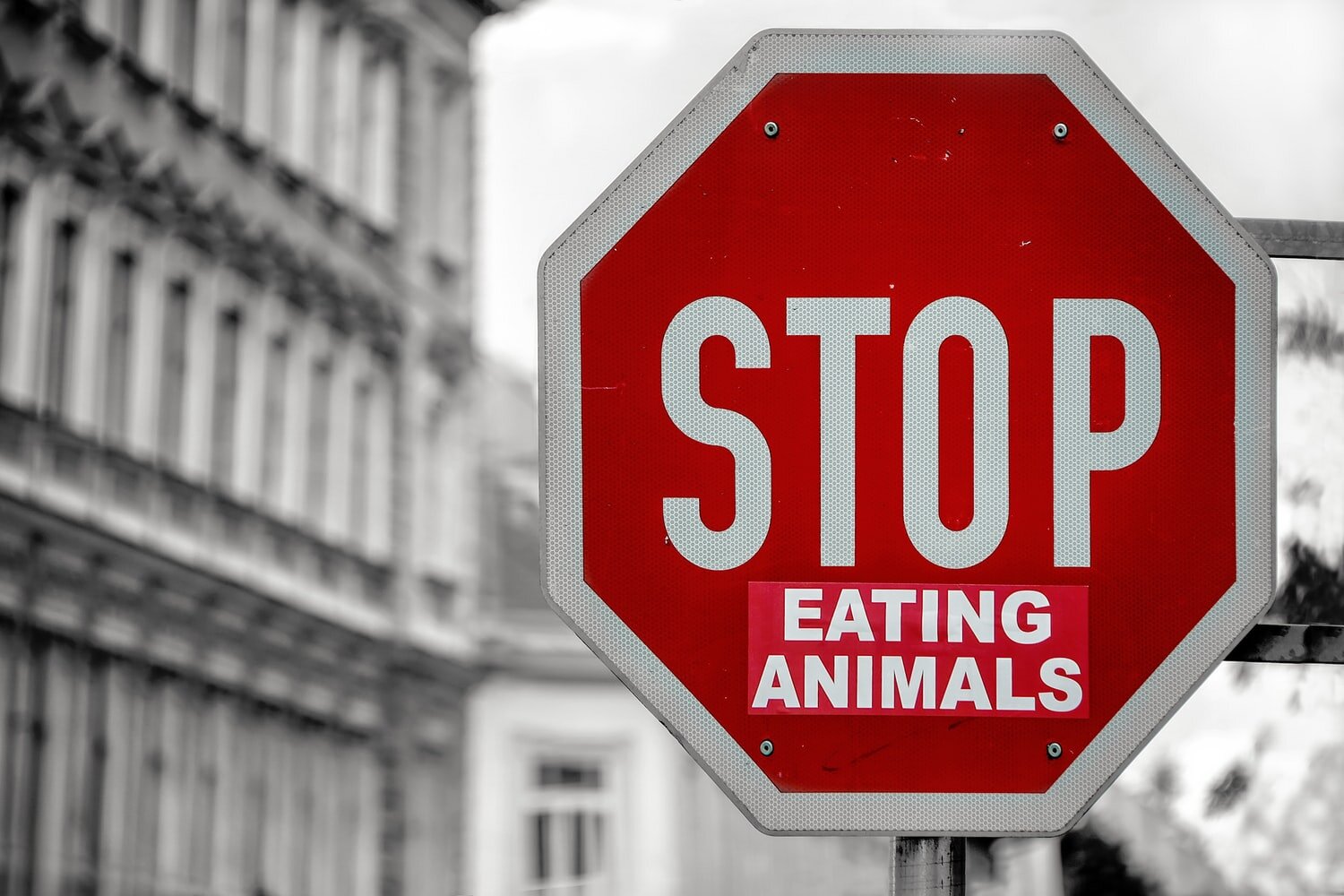
Vegetarianism and, even more, veganism are often seen as an extreme sacrifice not worth making, perpetrated by extremist people who oversimplify the issues of our society and make their diet almost their religion.
How can we reduce all of our system’s problems to the meat industry? How can we reduce all of the environmental crisis to the fish industry? How can we reduce all of the health issues to the dairy industry?
The answer is: we can’t.
Systemic Problems vs. Consumer Solutions
We live in a world where inequality and injustice are embedded in the structure of our society. Profit often has more value than human rights, mass production often has more value than environmental protection. There are all kinds of discrimination due to gender, sex, nationality, culture, disability, economical status, body shape, religion, language, skin color, and so on.
We need to change the very structure of our society to make the world a better place. The planet is overpopulated, most of our production, under the rules of capitalism, turns into mass production, which can very rarely be sustainable.
Systemic Problems
These types of problems can only be solved through regulation and law enforcement. Collective problems need collective solutions. Being politically active, raising awareness, exposing yourself by having uncomfortable conversations, signing petitions, donating to organizations, pushing our congress representatives to take measures… These are all great ways to contribute positively to society nowadays.
Consumer Solutions
These are the choices we make with our money. Increasing the demand of certain products instead of others can truly make a difference to the system itself, and we can all contribute to this evolution in our small individual realities. Some examples of consumer’s solutions are: supporting small businesses instead of big corporations, buying second hand products, making educated choices about the products we buy, choosing packages with minimal to no plastic, supporting environmentally friendly companies, supporting businesses that promote diversity and inclusion, ordering products with the shortest mileage possible, and so on.
Veganism and Vegetarianism fall into both categories; they’re a consumer solution and they address systemic problems. While the impact of meat, dairy, and fishing industries can only be mitigated by strict regulation and efficient policy changes implemented by our governments, we as consumers make up a crucial part of the problem and therefore we can also become part of the solution.
Environmental Impact
The meat, dairy, and fish industries are notoriously known to have a negative impact on the environment. The main issues they contribute to are: greenhouse gases emissions, deforestation, use of land, water waste, species extinction, coral loss, habitat destruction, and carbon release.
Let’s analyse all of them individually, shall we?
Meat & Dairy
Greenhouse gases: Global livestock production contributes an estimated 18% of anthropogenic greenhouse gas (GHG) emissions mainly in terms of methane and nitrous oxide, which is a gas with a global warming potential 296 times greater than CO2 per pound. For reference, while the emissions of all of Europe’s cars and vans combined sum up to 656m tonnes of carbon dioxide in one year, livestock in the European Union was responsible for the emissions of about 702m tonnes of carbon dioxide in the same year.
Deforestation: Cattle ranching is the leading cause of deforestation in the Amazon rainforest, and that’s because of the grazing land for the animals, and soy fields. Around 80% of the global soy production is destined to feed the animals, which then go through the industrial farming process.
Now, I know what you’re thinking: if soy is one of the main causes of deforestation, and we all turned vegan/vegetarian, wouldn’t we produce a lot more soy and still contribute to deforestation? The answer is, quite simply, no. That’s for two reasons:
-
There are sustainable ways to cultivate soy. For example, in Brazil the ProTerra Foundation owns the ProTerra Certification Standard, a set of sustainable indicators in line with the UN’s Sustainable Development Goals. This type of certification imposes some restrictions and requirements as a basis to help organizations develop, maintain and improve their sustainable production practices. Additionally, The Nature Conservancy set up a computerized rural land registry known by its Portuguese acronym, CAR. “This land registration mapped 100% of the municipalities rural land, identified existing forest cover versus agricultural areas and, in line with Brazil’s Forest Code, assisted in the environmental regularization of rural properties.”
-
There are 7 billion people on the planet, and if you think that’s a lot you won’t like to know that 70 billion farmed animals are reared worldwide every year. But the issue here is not only the human to animal ratio. Humanity drinks 5.2 billion gallons of water and eats 21 billion pounds of food each day; worldwide, cows drink 45 billion gallons of water and eat 135 billion pounds of food each day (and that’s just cows… no pigs, chickens, horses etcetera). Yet here we are striving to find a solution for world hunger, while also destroying our forests to cultivate more food for the animals we breed to eat, instead of directly cultivating it for ourselves.
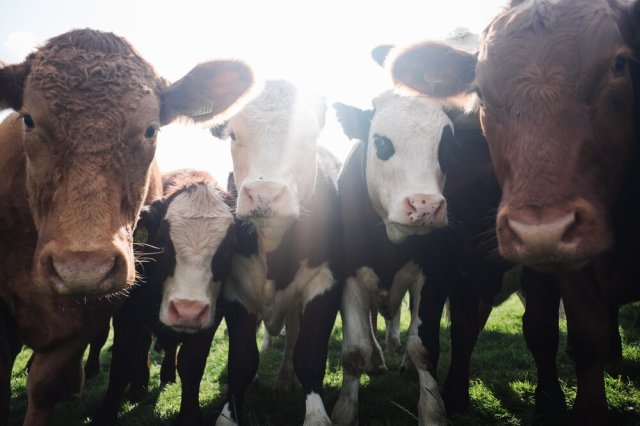
📷 @robertbye
Use of land: Livestock covers 45% of the Earth’s total land. To feed a person on a vegan diet requires just one-sixth of an acre of land. To feed that same person on a vegetarian diet that includes eggs and dairy requires three times as much land. To feed an average US citizen’s high-consumption diet of meat, dairy, and eggs requires 18 times as much land.
Water waste: Here are three fun facts:
1. One quarter-pound hamburger requires over 660 gallons of water to produce. In other words one single hamburger is the water waste equivalent of showering for two entire months.
2. Domestic water use is only 5% of what is consumed in the US versus 55% for animal agriculture.
3. It takes upwards of 1000 gallons of water to produce one gallon of milk.
& to be fair, some vegan alternatives for milk also have a negative impact on the environment. For example, a single glass of almond milk requires 130 pints of water to produce. The most sustainable option so far is oat milk, but you can consult this list to find out about the alternatives.
When only considering the consumption of meat and dairy, in just one day, a person who eats a vegan diet saves 1,100 gallons of water, 45 pounds of grain, 30 sq ft of forested land, 20 lbs CO2 equivalent, and one animal’s life. Let that sink in for a second.
Industrial Fishing
Species extinction: For every single pound of fish caught there’s up to five pounds of non targeted species trapped such as dolphins, whales, sea turtles and sharks, which is known as “bycatch”. Just for reference, six out of seven species of sea turtles are either threatened or endangered, while 250,000 sea turtles are captured or killed every year by fishing vessels. Additionally, half of the sharks the industry kills (more than 11,000 per hour) are killed as bycatch. In case that wasn’t clear enough, that means that they’re accidentally caught, then killed, and thrown back at sea like trash.
Coral loss: 90% of the world’s coral reefs will die by 2050. Other than the warming temperature of our oceans, the main cause of this is industrial fishing: in the first place because it kills the species that keep the ecosystem of the reefs alive, and secondly because of a fishing technique called trawling. Trawlers are giant boats that drag fishing nets as big as 13 jumbo jet planes across the ocean floor, wiping out all the living flora and fauna of the area. Here’s a terrifying fact: according to the FAO, land deforestation is estimated to wipe out 25 million acres per year, while seafloor deforestation wipes out 3.9 billion acres every year.
Carbon release: Per acre, marine plants absorb 20 times more carbon than the same area of forest on land. 93% of all the world’s CO2 is stored in the ocean, losing 1% of this ecosystem is the equivalent of releasing the emissions of 97 million cars. Additionally, a recent study reveals that bottom trawling releases as much carbon as air travel.
Habitat destruction: 46% of the Great Pacific Garbage Patch (a collection of marine debris in the North Pacific Ocean) is fishing nets alone, and another large majority are other types of fishing gear. So yes, plastic straws are bad, but we should also be addressing the destructive power of the fishing industry. To put this in perspective, in one day the fishing industry kills more marine life in the Gulf of Mexico than the Deepwater Horizon oil spill did in 3 months.
Accessibility
We’re all very aware of the fact that vegan and vegetarian products are often too expensive and hard to find. Even though the plant-based market is growing, the vegan portion of the world’s population is still extremely low compared to the omnivore population. It’s hard to find an accurate estimation, but according to a 2018 analysis, vegans make up only 3% and vegetarians only 5% of the world’s population.
Until the demand of these products reaches a higher level, the prices in the market will remain more or less the same.
In reality, the racial disparity and inaccessibility of healthy food in lower-income communities makes a fully vegan diet out of reach for some. Practices like fishing and farming are also often important parts of their cultures and traditions, and no one is trying to take that away from them… oh wait a second, that’s exactly what the meat and fish industries are doing.
The people who rely on these natural resources for their nutrition, also respect their environment and have very minimal impact on the natural ecosystems; but because of the cattle and fishing industries, these communities are deprived of their natural resources, their lands, and their coastal waters; all of this to profit the big corporations and put a stake or some tuna on our plate.
A very representative example of this can be found in the coasts of Somalia, which are wiped out by industrial fishing ships, leaving the local fishermen no fish for their families. These same fishermen ended up becoming pirates in those waters as a pure act of survival, trying to rob those ships that deprived them of their own food.
The fact that some people can’t afford plant-based products, or necessarily need to go fishing and farm animals to bring some food home, does not justify the existence of our fish and meat industry. On the contrary, we should do whatever we can to protect those communities from the very cause of their lack of food.
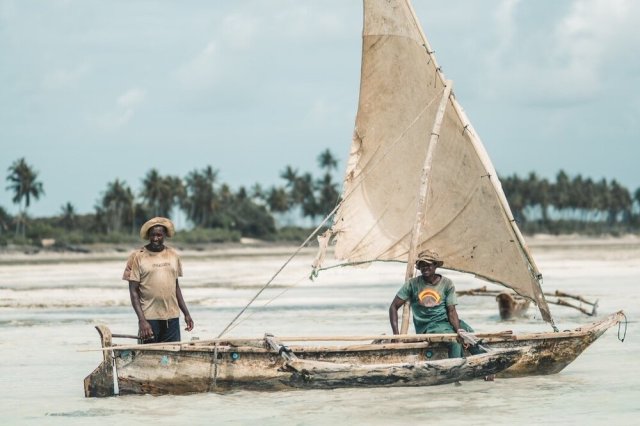
Local fishermen in Tanzania. Source: Taryn Elliot
While processed vegan and vegetarian products, which aim to imitate meat and dairy, are often unaffordable, the statistics say that the largest proportion of vegans fall under an average US$30k income bracket, and plant-based diets are rarer amongst people with higher annual incomes. Additionally, plant-based diets are often the norm in developing countries, due to religious practices as well as the lower costs of production needed to grow vegan food.
Source: Tijana Drndarski
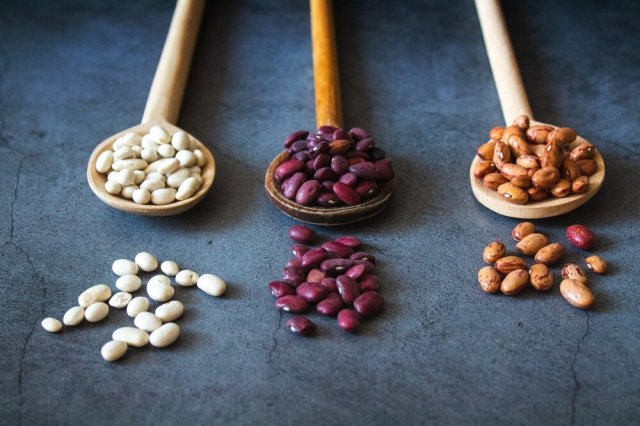
The countries with the highest percentage of people identifying as vegan or vegetarian are India (19% vegan and around 30% vegetarian), Taiwan (15% both combined), Brazil (14% both combined), and Israel (5% both combined). When it comes to vegan or vegetarian food that is not processed, but naturally rich in nutrients (such as lentils, beans, chickpeas, kale, spinach, nuts, seeds, and many others), the cost is not a problem anymore because they can be found everywhere and extremely cheap.
With this in mind, if you do have the possibility to try out these types of diets, there’s no reason not to. You can only do good to yourself and the planet.
The Protein Myth
Now, the most common question vegans and vegetarians get is “but where do you get your protein??”.
Dr. Milton Mills paints a pretty clear picture: “All protein is initially made by plants. All of it. And it is not necessary to eat animal tissue in order to get protein. Only plants have the ability to actually take nitrogen from the air, break those molecules apart, incorporate that nitrogen into amino acids, and then make protein. Any protein you get from an animal is simply recycled plant protein.”
Similarly, the Omega-3 that is so valued in fish, is not actually produced by fish, but by the algae cells that fish eat. So the most valuable nutrient we get from fish is actually the algae DHL, which we could get directly from the algae.
Human milk, which is naturally designed for human growth and development, has the lowest content of protein than in any species ever tested. Just for reference, the level of protein per 100g of milk produced by rats is 9g, while in human milk it’s only 1g. That means that a baby rat naturally requires more protein than a human baby. Just gonna leave this here.
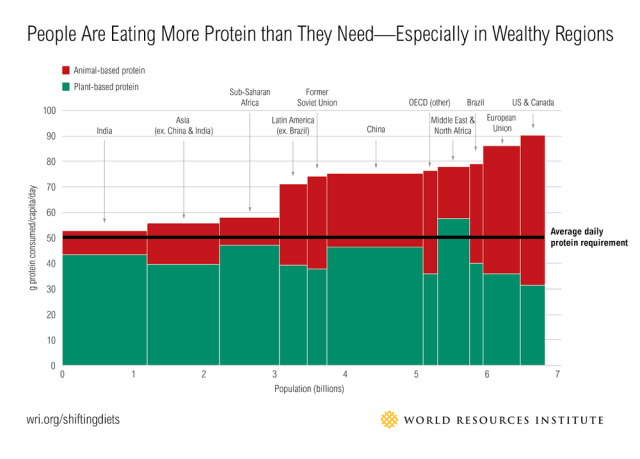
Source: World Resources Institute
Willpower
At this point, my question is what will it take? What’s going to be the tipping point or the wake up call that’s actually going to make us realize that this solution is within our reach and it will make an immense difference?
Everyone is free to do whatever they want, and the information in this article has been seen or heard before… But that’s the point: we all know about this. How can we knowingly accept and perpetrate the destruction of our planet, when one simple solution is sitting right there in front of us?
Yes, there are other problems; yes, it needs to become more accessible; no, it doesn’t need to involve every single person on the planet; no, it’s not hard at all… so why not start from yourself? Why not take that small step to make the world a better place?
Want to learn more?
Vegan and Plant-Based Diet Statistics for 2021 – Plant Proteins.co
Cowspiracy – Netflix
What The Health – Netflix
Seaspiracy – Netflix
Seaspiracy Review: Stream it or Skip it? – Green is the New Black
meet the author
Giuliana Gentile
Giuliana was born and raised in Sicily (an Italian island in the middle of the Mediterranean Sea), since then she’s been moving around the world to meet new cultures and discover new places. She has a degree in Political, Social and International Sciences. During her studies she became passionate about environmental protection, gender equality, and cultural identity. She loves traveling, petting dogs on the street, and swimming underwater.
 ecomadic