


.parent {
display: inline; position: relative; line-height: 30px; float: left; color: #82be41;
}
.parent a{
margin: 10px;color: #82be41;text-decoration: none;
}
.parent:hover > ul {
display:block;position:absolute;
}
.child {
display: none;
}
.child li {
line-height: 30px;width:115%;text-align:left;
}
.child li a{
color: #82be41;
}
ul{
list-style: none;margin: 0;padding: 0px; min-width:10em;text-align: center;float: right; font-weight: 550;
}
ul ul ul{
left: 100%;top: 0;margin-left:1px;
}
li:hover {
background-color: white;
}
.parent li:hover {
background-color: white;
}
.expand{
font-size:10px;float:right;margin-right:5px;
}
.parent a p{
display: inline; margin: 10px;color: #6e706b;text-decoration: none;
}
The Problem with Drugs in Laos: How Backpackers Behavior is Impacting the Country
Written by Lucy McCulley | April 10, 2021
Source: Jaclyn Yost
Laos has become a popular destination on many backpackers’ Southeast Asian itinerary – providing idyllic backdrops, cheap accommodations, and routes through to Vietnam, Cambodia, Thailand, Myanmar and China. Famous for its rich forests, crystal clear waterfalls, and mountainous terrain, another, more troubling appeal that has drawn in travelers from around the world over the past decade – its notorious drug culture.
It is of no surprise to anyone that has traveled the Southeast Asian circuit that drugs are extremely prevalent and accessible throughout the region, with a ‘magic pizza’ or ‘shroom shake’ being pretty easy to get your hands on. Just how readily available these substances are allows for travelers to experiment with more ease (and for a lot less money) than they might be able to in their home country. However, is this carefree attitude leaving the places we travel to in a worse state than when we arrived?
The Troubled History of Laos
Since the end of Sourigna Vongsa’s reign in 1694, Laos continuously struggled to maintain its independence from both the countries it borders and Western nations. For almost 100 years Laos was overrun by both Burmese and Siamese armies, dividing the Laotian people into three principalities.
After the Chinese Black Flag army attacked the city of Luang Phrabang in the late 19th century, French military intervention allowed for France’s power to expand from Cambodia into the region, marking the beginning of the French protectorate of Laos. It took 60 years, facing further occupation from Japan and influences from the Indochinese Communist Party, for Laos to gain full independence from French rule.
Despite the plethora of attacks on Laos since the 17th century, the country’s most devastating period was still to come during the Vietnam War. Unknown by many, Laos was relentlessly bombed by the US, and for 9 years the neutral country was victim to over two million tons of cluster bombs – making Laos the most bombed country in the world per person to date.
As a result of the US attack, 50,000 people died during this period; and since it’s end in 1973 a further 20,000 have died in the region. The war had catastrophic effects on the environment, wildlife and historic sites such as the Plain of Jars. To this day, unexploded bombs are continuing to kill and injure Laotian people. A silent tragedy that was internationally unacknowledged until recent years.
Today, Laos is governed by the Lao People’s Democratic Republic, a socialist one-party republic that openly endorses communism. The communist regime within the country has led to massive disparities between the elite and the poor. Described by the UN as a ‘least developed’ nation, many Lao people have little access to education and are illiterate, and for those living in remote locations it can be extremely difficult to gain any access to medical care. Ravaged by the wars of its past, much of Laos has been left in poverty.
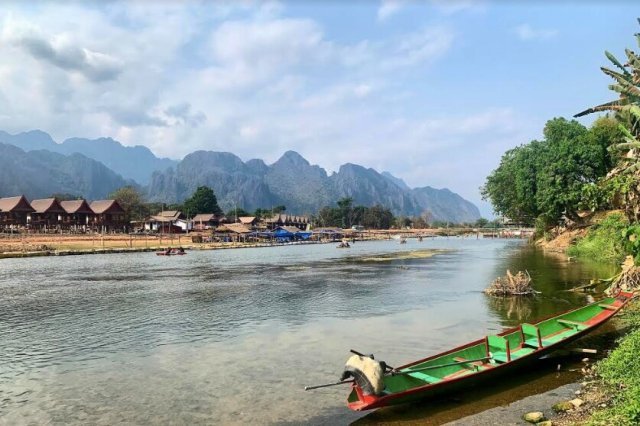
Nam Song River, Vang Vieng. 📸 Lucy McCulley
The Tourist Boom
Laos, slightly later in its tourism development than its neighbor Thailand, opened its borders to tourism in 1989, and launched the ‘Visit Laos’ campaign in 1999/2000. Since then, tourism in Laos has skyrocketed and contributed massively to the economy through providing new job opportunities and building cash flow within the country.
Due the success of the 1999 campaign, it was reprised again in 2018 to gain further attraction from the outside world. Over the last 30 years tourists continue to flock to the region year on year to immerse themselves in Laotian culture and experience its natural beauty first hand. When we consider the economic growth, need for greater transportation links and working infrastructure- the positive impacts of tourism in Laos are undeniable.
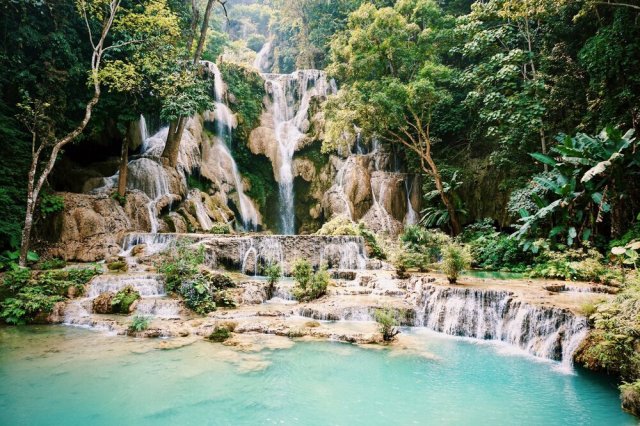
Kuang Si Falls. 📸 Jaclyn Yost
Drugs in Laos: What’s the Issue?
An inevitable effect that backpacking culture has in Southeast Asia is the use of illicit drugs. As travelers are experiencing probably the most carefree period of their lives during their backpacking experience, the unsurprising experimentation with substances has been capitalized on by host destinations. This phenomenon is no different in Laos, where marijuana, opium, and magic mushrooms are as easy to get ahold of as a cup of coffee; a dramatic contraction of the strict laws that prohibit them.
So what’s the big deal? Why is this any different to taking drugs in more developed nations? It’s common knowledge that all drug use poses a risk of danger, from unexpected reactions to being given the wrong substance in the first place. However, the risk you are taking with your health in Laos is far greater. Unlike its neighbor Thailand, Laos has very little access to medical care, and even if they were able to treat you in the country it could take days to get there – days that when you are having a bad reaction to substances, you just don’t have.
The city of Vang Vieng has become a focal point of such instances, known to some as a party town, and others as a backpacking ghetto; it has become a drug hotspot for travelers. Travelers know the Nam Song River, an ancient source of life that is cherished by the Buddhist people of Laos, as ‘the lazy river’. Tubing along the lazy river (the art of sitting on a rubber dingy and floating from bar to bar) has become a must on a backpacker’s itinerary. Foreseeably, sitting in an open river getting exceedingly drunk has proven extremely dangerous, resulting in many tourist deaths every year. These unfortunate deaths have also stopped the local people from washing in the river, an ancient practice they are now afraid of due to the spirits of the dead they believe to be lurking in there.
Aside from the more obvious health risks, a more complex issue arises from drug use in Laos – corruption. Laos is a communist state, where the rule of law is not fought in court, but in cash. The open advertisements of drugs outside bars and restaurants can fool travelers into thinking it’s a safe place to use them, however you risk being followed by a police gang upon leaving, or even being reported by the place that sold them. The police can issue you hefty fines on the spot, and if you are unable to pay you will be imprisoned until you do so – making policing the most profitable and powerful job aside from the governing elite.
The power of the police not only affects tourists, but is a huge issue for locals. From petty crime to hearsay, Laotians can face fines that result in lifelong debt or unfair imprisonment by the police. Without any independent media or legal system to turn to, there is little locals can do to escape this. As tourists, we can limit police corruption where possible by respecting the law and stopping the power we give to police with our tourism dollars.
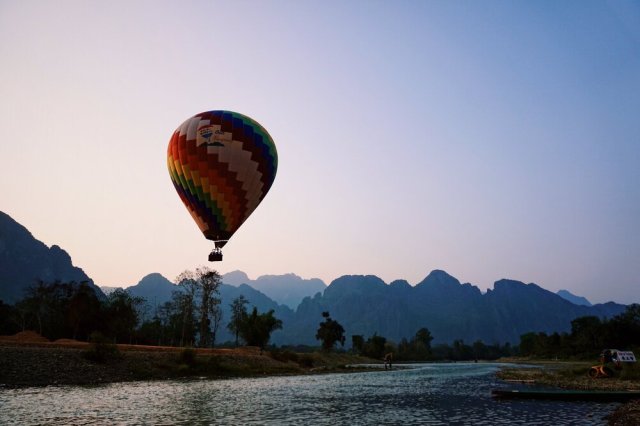
Vang Vieng. 📸 Jaclyn Yost
What Can We Do?
Laos is a beautiful and fascinating nation with so many memorable experiences to offer. There is no question as to why it is so popular, with friendly locals, a multitude of UNESCO heritage sites and stunning scenery; it deserves a place on everyone’s travel list. So, how can we be a conscious and respectful traveler in Laos? Educate yourself on its history and acknowledge the difficulties that are still faced today. By researching local businesses, homestays, and social enterprises beforehand, you can ensure that your money stays local and supports the communities that desperately need it.
meet the author
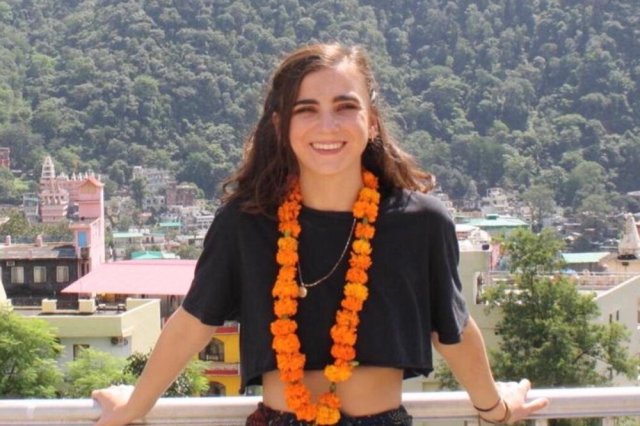
Lucy McCulley
Lucy is the Digital Marketing & Social Media Strategist at ecomadic. Graduating from university in 2017 with a BA in International Law, she has since developed her career in marketing. With a love for people and the planet, Lucy hopes to contribute to the sustainability movement through education and awareness.
 ecomadic
That’s a very good piece of work. I hope most of the tourists are thoughtful and more respectful after reading your article to make LAOS becomes a worry free place to visit.
LikeLike
Some serious exaggerations in this article. Rather one-sided and written with western blinkers on.
LikeLike