

.parent {
display: inline; position: relative; line-height: 30px; float: left; color: #82be41;
}
.parent a{
margin: 10px;color: #82be41;text-decoration: none;
}
.parent:hover > ul {
display:block;position:absolute;
}
.child {
display: none;
}
.child li {
line-height: 30px;width:115%;text-align:left;
}
.child li a{
color: #82be41;
}
ul{
list-style: none;margin: 0;padding: 0px; min-width:10em;text-align: center;float: right; font-weight: 550;
}
ul ul ul{
left: 100%;top: 0;margin-left:1px;
}
li:hover {
background-color: white;
}
.parent li:hover {
background-color: white;
}
.expand{
font-size:10px;float:right;margin-right:5px;
}
.parent a p{
display: inline; margin: 10px;color: #6e706b;text-decoration: none;
}
Writing Into Resistance: Literary Journals’ Place in the Eco Verse
Written by Jennifer MacBain-Stephens | April 14, 2021

📷 Hannah Olinger @hannaholinger
Hurricane seasons, power outages in Texas, and growing famine in developing countries: now more than ever we see Black & Brown communities suffer the effects of climate change. Five hurricanes per season was the status quo. The last hurricane season recorded over fifteen. In Louisiana, the more socio-economic poor areas, populated by mostly black families, had the most flood devastation from Hurricane Katrina. As stated in this article published in Slate, “they were there in a city, defined by decades of poverty.”
In Flint, Michigan, the mostly Black communities are still reeling from lead poisoning in water that officials did not treat with anti corrosive agents in 2014 (this treatment would have cost as little as $80 per day). These malignant actions were exposed in 2015 and 9,000 children under the age of 6 are at high risk for neurological damage. Furthermore, according to a breakdown of information in GreenAmerica.org, when a BP underwater oil well burst in the Gulf of Mexico in 2010, it leaked 94 to 184 million gallons of oil into the water. Private groups were hired to clean the sand from the 120 miles of coastal pollution. What is less known is that the waste was then driven to landfills into mostly Black communities throughout the South.
We can read about these atrocities in the news, but the last decade has brought a slew of environmental journals into the spotlight who publish diverse voices writing about justice, resilience, the beauty of nature, and the possibility of change. The editorial teams of these literary magazines showcase some of the most creative and powerful environmental writing there is today. Check out a few journals featured below.
Terrain.org
Source: Terrain.org
A beautiful intersection of writing and art about place, not only is Terrain.org devoted to issues of social justice, their tag line on their ‘About’ page states:
“Searching for the interface—the integration—among the built and natural environments that might be called the soul of place.”
Terrain.org publishes established writing giants and new talent, making the reader feel that poetry and science always belonged together. From two editors starting out together in 1997, Terrain.org now has more than fifteen editors and an international following. Publishing poetry, nonfiction, fiction, community case studies: a favorite section is “Unsprawl:” specific essays using urban planning to highlight certain cities or towns.
Stand out: “Soundscapes” – the podcast’s recent episodes discussed ideas surrounding democracy, conservation, and sustenance.
Split this Rock
Source: Blog This Rock
The name “Split This Rock” is from a line in “Big Buddy,” by Langston Hughes.
Don’t you hear this hammer ring?
I’m gonna split this rock
And split it wide!
When I split this rock,
Stand by my side.
Split This Rock, based in the Washington DC area, is different from other literary journals in that it calls on the public and artists and writers alike to nurture a national network of socially engaged individuals. Sitting smack in the middle of the nation’s capital, STR celebrates diversity and imagination. It holds festivals, workshops, youth programs, internships, and lists countless ways to get involved and use your voice.
Stand out: The Quarry – A Social Justice Poetry Database, linking voices together.
Ecotone
Source: Ecotone
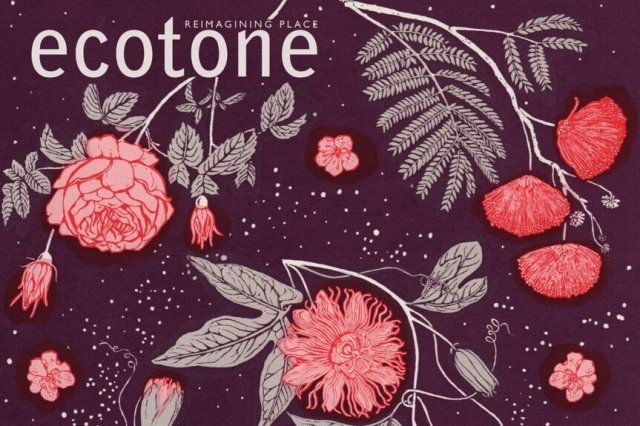
Celebrating being alive for a decade and offering free online issues to read this last pandemic year (vs. the regular gorgeous issues in print), Ecotone was founded at the University of North Carolina Wilmington in 2005. Ecotone’s theme is to “reimagine place.” An ecotone is “a transition zone between two adjacent ecological communities, containing the characteristic species of each. It is therefore a place of danger or opportunity, a testing ground.” The magazine explores the subtleties between land, genres, science, art, and thought.
Stand out: The Guides – Teachers can download guides to teach the journal’s work in their classrooms
Orion
Source: Orion Magazine
The first issue, then called the Orion Nature Quarterly, was published in 1982. The first Editor in Chief, George Russell, stated Orion’s value as thus:
“It is Orion’s fundamental conviction that humans are morally responsible for the world in which we live, and that the individual comes to sense this responsibility as he or she develops a personal bond with nature.”
Orion has since evolved as a bimonthly publication to focus on environmental and also cultural concerns. Orion publishes poetry, stories, essays, features, and book reviews. They also host live web events and environmental writers’ workshops.
Stand out: Orion features a section called ‘The Place Where you Live’ where writers can submit a photo of their community and write a short blurb about it. Orion also offers a free trial issue.
Flyway: Journal of Writing and Environment
Source: Flyway: Journal of Writing and Environment
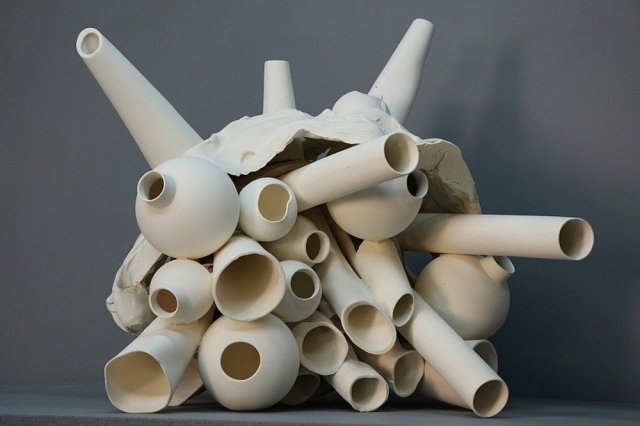
Whether in the fields of Iowa or urban centers, Flyway explores people’s relationship to their surroundings. Based out of Iowa State University, Flyway not only publishes poetry, fiction, nonfiction, and art, but also scripts. Each year they sponsor the “Sweet Corn” prize for poetry and fiction as well as the Notes From the Field Nonfiction award. The Senior Editor Debra Marquart, is the current Iowa Poet Laureate. Flyway publishes work that surprises the reader and focuses on natural and not so natural environments.
The Hopper
Source: The Hopper
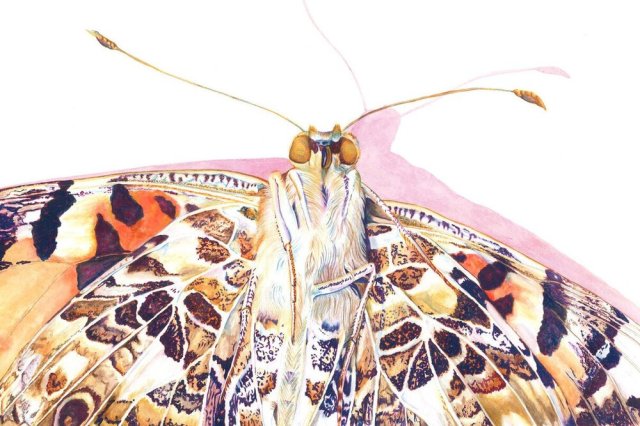
Aiming to be a leader in culture recentering, The Hopper wants it’s readers to reframe paradise, not as a destination but as an embodiment of life that is within all of us. Facing an environmental crisis in the world today, the editors of The Hopper admit to all of us doing some cultural heavy lifting: to weave new paths and start new conversations that help us grow and elevate all of us. A newer journal, the art is breathtaking and the words saturated with longing.
Stand out: An in depth list of Black Environmental Literature under the About/Black Lives Matter tab
For additional journals, check out:
meet the author
Jennifer MacBain-Stephens
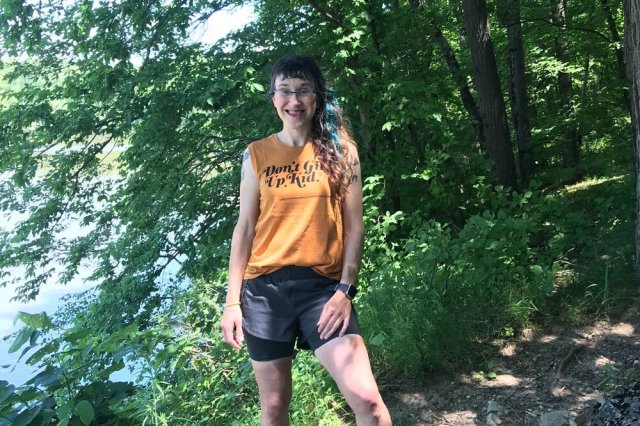
Jennifer MacBain-Stephens went to NYU’s Tisch School of the Arts and now lives in Iowa where she likes to rock climb, hike, and mountain bike. She is the author of four poetry collections and enjoys exploring how to blend creativity with nurturing the earth. She also hosts a free, monthly reading series sponsored by Iowa City Poetry called Today You Are Perfect.
Find her at: http://jennifermacbainstephens.com/.
 ecomadic