
.parent {
display: inline; position: relative; line-height: 30px; float: left; color: #82be41;
}
.parent a{
margin: 10px;color: #82be41;text-decoration: none;
}
.parent:hover > ul {
display:block;position:absolute;
}
.child {
display: none;
}
.child li {
line-height: 30px;width:115%;text-align:left;
}
.child li a{
color: #82be41;
}
ul{
list-style: none;margin: 0;padding: 0px; min-width:10em;text-align: center;float: right; font-weight: 550;
}
ul ul ul{
left: 100%;top: 0;margin-left:1px;
}
li:hover {
background-color: white;
}
.parent li:hover {
background-color: white;
}
.expand{
font-size:10px;float:right;margin-right:5px;
}
.parent a p{
display: inline; margin: 10px;color: #6e706b;text-decoration: none;
}
How to Recycle Your Used Batteries
written by Giuliana Gentile | April 15, 2021
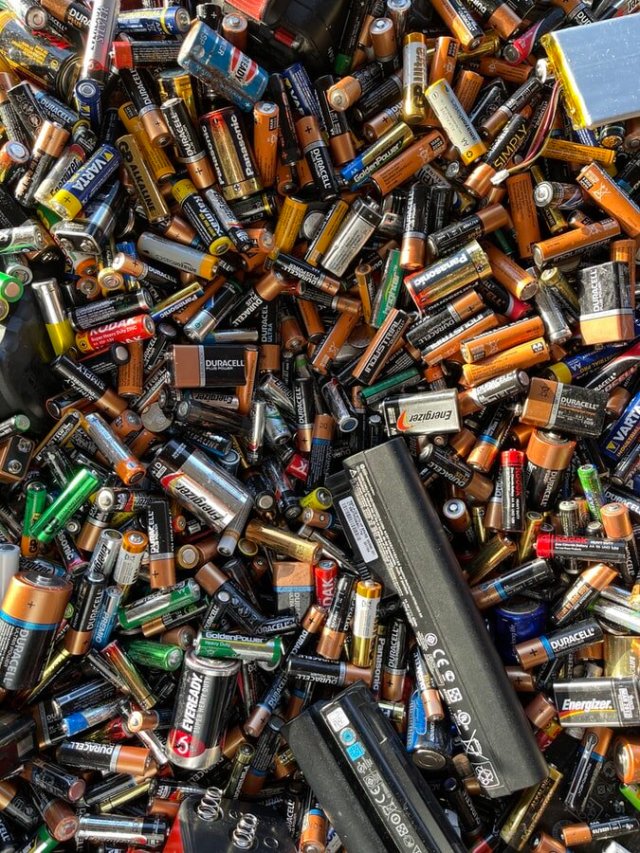
📷 @john_cameron
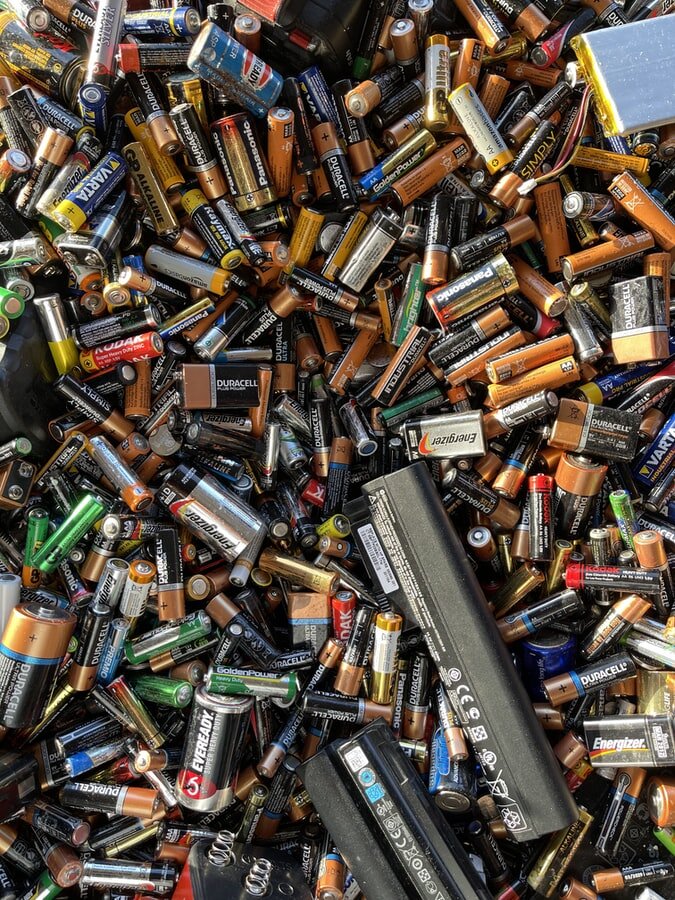
What happens to your batteries when you throw them out?
If you never thought about the consequences of throwing a couple of batteries out every once in a while, you’ll be surprised to know that each year Americans throw away more than three billion batteries, which is about a truckload every hour. When these batteries are thrown into landfills, they leak heavy metals (i.e. zinc, manganese, and copper) into the ground, contaminating the soil and the water flowing underneath the surface.
So how can we prevent this from happening?
Catalytic Innovations LLC is a cutting-edge recycling tech company, who came up with a solution: the discovery of a new technology to extract and purify zinc from secondary materials to produce high purity micronutrient fertilizers. They were able to apply this innovative solution to the recycling of used non-rechargeable batteries, and they’re now using it to reduce the environmental impact of the heavy metals contained in those batteries. This process allows the recycling of 95% of the materials from each battery, and the best part is that each of the polluting components later become fertilizing nutrients for the soil!
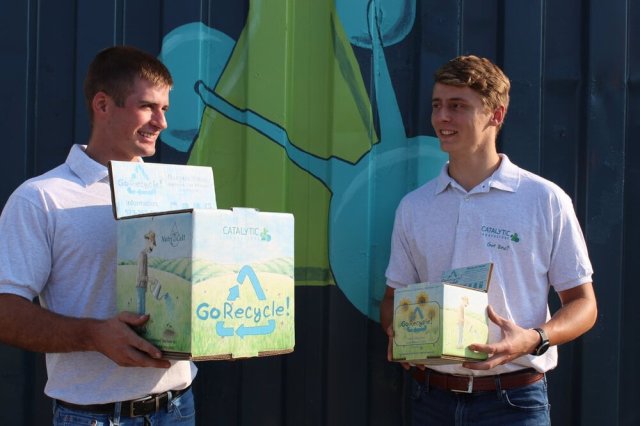
Source: Catalytic Innovations LLC
ecomadic’s Interview with Catalytic Innovations LLC
The founder of Catalytic Innovations LLC, Dr. Scott Volner, kindly agreed to an interview and told us more about his company:
1) What was the idea that led to the creation of Catalytic Innovations LLC?
As a metallurgical engineer I began my career mining large tonnages of very low grade minerals and discovered that so many of our society’s wastes contain higher concentrations of metals than we mine – such as alkaline batteries! Tackling problems like this is the new frontier in supplying society with the raw materials it needs.
The technologies for extracting metals from the ground have evolved over the last several thousand years – since the dawn of civilization. Recovering metals from industrial wastes is more complicated and will require new techniques to be developed. But we can’t wait hundreds of years to solve this looming crisis. I founded Catalytic Innovations in hopes of leading the way in this battle.
2) How would you explain the science behind your process to someone who’s not so fond of chemistry?
Before we came along the only way to recycle an alkaline battery was to find a use that needed a mixture of zinc and manganese. Unfortunately, there aren’t many of those. Since our process is able to separate the zinc and manganese they can be used in any application. In fact, our zinc and manganese is more pure than what is mined, smelted, and refined today and can be used in high purity applications such as pharmaceuticals.
3) Please tell us more about your micronutrient fertilizers.
Continuous row crop farming year after year will deplete the soil of micronutrients such as zinc, manganese and copper. To keep that from happening these metals are added back in the form of micronutrient fertilizers.
4) Where do you see Catalytic Innovations in 10 years? Do you have plans to expand worldwide?
I hope in 10 years we will by processing most of the alkaline batteries collected in the US and Canada as well as importing those collected in Europe! We are currently working on an extraction/recycling process for lithium ion and primary lithium batteries and should have a full scale production plant for those chemistries.
There are currently 150,000 tons of batteries reaching landfills in the USA annually, and we are working on expanding to meet that problem. We see potential for our technology in other parts of the world, but we hope to become the battery solution in the states as our first milestone in battery recycling.
5) If you had to imagine the future of the battery industry, what would it look like?
For the first time in history, our process generates recycled metals that are pure enough to go back into high performance batteries. We imagine a battery industry of the future that is a part of the circular economy and no longer dependent on consuming new resources!
6) In your opinion, why don’t the battery producers apply this solution directly to their production process?
To put it simply… it’s not their expertise. They’re going to be much better at making batteries than figuring out how to recycle them. That is where we come in!
7) Do you think there should be some kind of legislation when it comes to battery disposal?
With advances in technology it may not be necessary. Alkaline batteries are made of zinc and manganese which when separated into their individual constituents has value. However, current separation technology costs more than the metals are worth so someone has to pay to recycle them. Each incremental advancement in technology (such as ours!) gets it closer to breakeven and with time maybe one could get paid bringing batteries to the recycler. We are continuing to work towards this goal!
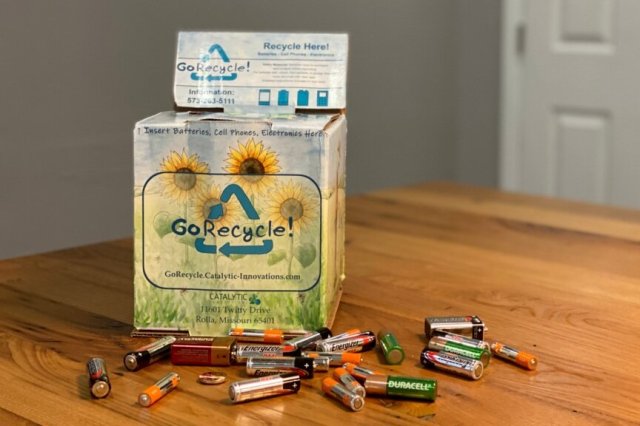
Source: thoughtfullysustainable.com
The GoRecycle project
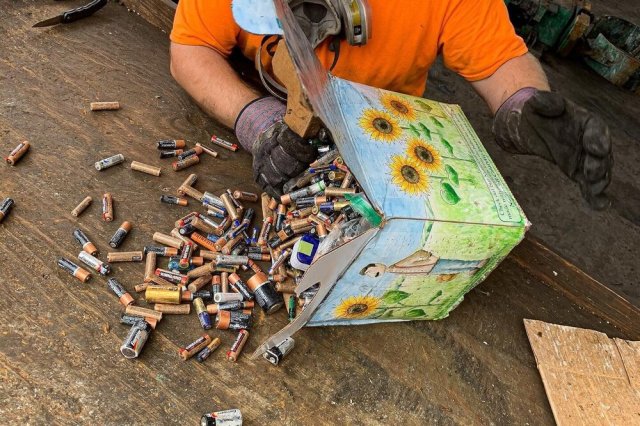
Catalytic Innovations is located in the Missouri Ozarks, but don’t worry, they found a way for you to send them your used batteries directly from home. The GoRecycle recycling project allows anyone a convenient, low cost way to recycle their batteries and electronics. They offer an annual subscription to consumers anywhere in the US, that takes care of all household battery and electronic recycling for as low as $3 per month, which covers shipping to and from the customer!
Follow this link for a discounted page where you can get your own subscription.
Dr. Scott Volner, founder of the company, explained to us exactly how it works:
“Once the batteries are collected and shipped to us, we sort them and begin the recycling process. Our recycling plant is EPA permitted and is currently handling battery recycling for several municipal waste centers in Missouri. You can also find our profile on the Missouri Department of Natural Resources as a Battery Recycler! We have some of the best battery recycling technology in the nation, and we are able to recover over 95% of the materials from each battery! We then create a variety of micronutrient fertilizers with much of the materials, while sending the rest off to other companies to be further processed into new batteries or other products.”
Source: Catalytic Innovations LLC
Want to show your support? See below for Catalytic Innovations social media handles:
Want to learn more?
Sustainable Brand Interview: GoRecycle USA – Ola Impact
How To Recycle Non-Rechargeable Batteries In The United States – Thoughtfully Sustainable
meet the author

Giuliana Gentile
Giuliana was born and raised in Sicily (an Italian island in the middle of the Mediterranean Sea), since then she’s been moving around the world to meet new cultures and discover new places. She has a degree in Political, Social and International Sciences. During her studies she became passionate about environmental protection, gender equality, and cultural identity. She loves traveling, petting dogs on the street, and swimming underwater.
 ecomadic