
.parent {
display: inline; position: relative; line-height: 30px; float: left; color: #82be41;
}
.parent a{
margin: 10px;color: #82be41;text-decoration: none;
}
.parent:hover > ul {
display:block;position:absolute;
}
.child {
display: none;
}
.child li {
line-height: 30px;width:115%;text-align:left;
}
.child li a{
color: #82be41;
}
ul{
list-style: none;margin: 0;padding: 0px; min-width:10em;text-align: center;float: right; font-weight: 550;
}
ul ul ul{
left: 100%;top: 0;margin-left:1px;
}
li:hover {
background-color: white;
}
.parent li:hover {
background-color: white;
}
.expand{
font-size:10px;float:right;margin-right:5px;
}
.parent a p{
display: inline; margin: 10px;color: #6e706b;text-decoration: none;
}
The History of Marijuana in the United States
written by Josefina Artigas |April 16, 2021
Source: Matthew Brodeur
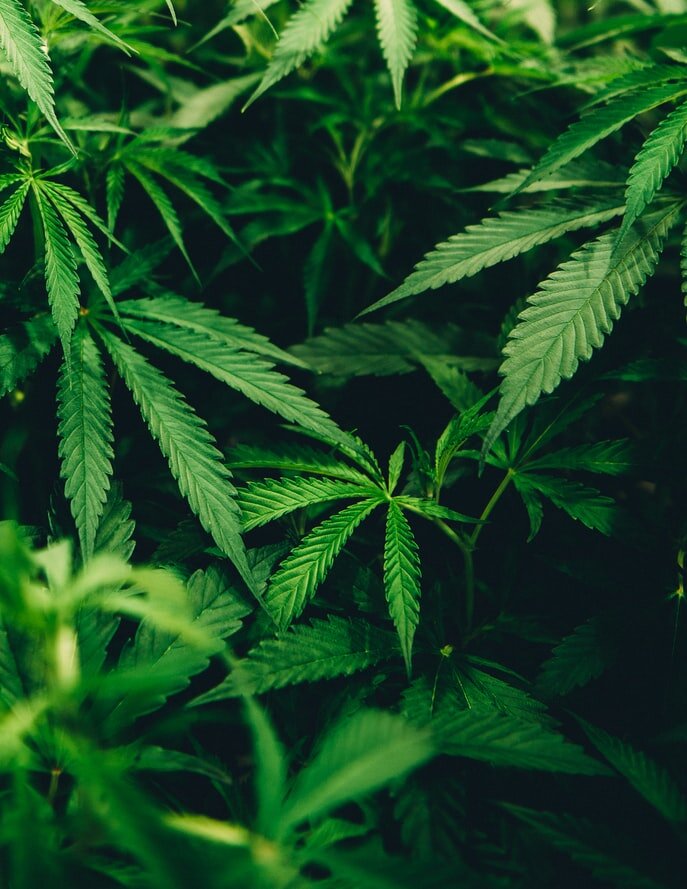
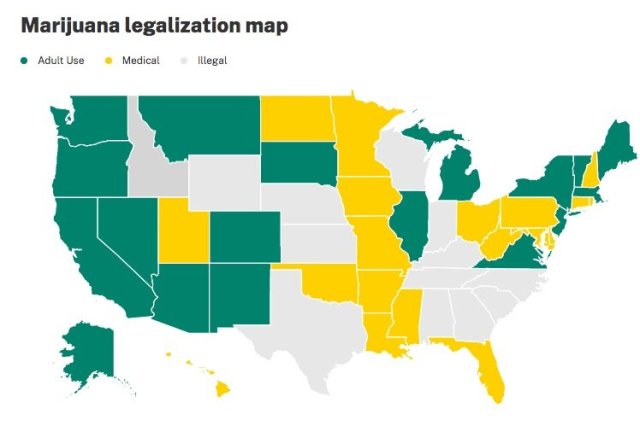
This past month, New York state has joined 15 other states and the District of Columbia in legalizing marijuana for recreational use. Now almost half of the country lives in a state that has legalized cannabis for personal enjoyment. As more people support the use of cannabis for medical, personal, and economic reasons, questions arise as to how marijuana became so heavily regulated in the first place. Looking at the history of marijuana in the United States, a convoluted past illustrates the changing perceptions cannabis has had in the United States and just which groups of people bore the burden of criminalization.
A Brief-ish History of Marijuana in the United States
Marijuana has had a long and tumultuous history within the United States. From the 17th century up until the early 1900s, the marijuana plant, known as hemp in the textile industry, had been popularly used to produce numerous products such as rope, fabrics, and clothes and openly sold in pharmacies for medicinal remedies. By the turn of the 20th century, public perception of the plant began to shift. The Mexican Revolution of 1910 led to an influx of Mexican immigrants into the U.S., searching for employment and stability. At first, this immigration was welcomed, especially as industries within the United States looked to fill labor demands caused by entry into World War I. Along with their labor, they introduced the culture of recreational marijuana use. Until this point, the U.S. had encouraged the growth and medical use of the cannabis plant but had stopped short at personal use. For these reasons, marijuana became associated with Mexican immigrants.
But as we know, the story doesn’t end there. As the Great Depression brought massive unemployment and economic downfall, fear and resentment towards Mexican immigrants began to escalate. Xenophobia and the increasing association of drugs with violent crimes began to be used as a narrative to denigrate immigrants from Mexico, as well as Chinese immigrants and Black folk. It’s important to note that arguments connecting cannabis and violence have been extensively researched and have been proven false, but these claims had already done the damage. The anxiety felt by lawmakers and the public majority led to a series of policies and legislation that heavily restricted access and personal use of marijuana. In 1930, we saw the creation of the Federal Bureau of Narcotics (FBN), and in the subsequent decades’ numerous bills being passed. Such as the Uniform State Narcotic Act, the Marijuana Tax Act, the Boggs Act, and the Narcotics Act. In short, these sets of laws both enforced and set stricter sentencing laws for marijuana possession.
Source: Filter
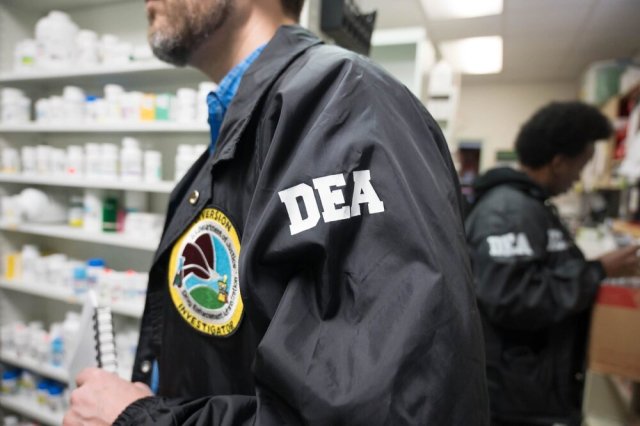
During the 1960s, there was once again a shift in public perception of marijuana. Government officials recognized that the strict penalties for drug-related offenses had done little to curb drug use and abuse and that the minimum sentence of 2 to 10 years had been harsh at best. But by the ’70s, once again, the pendulum swung. President Nixon rejected recommendations to decriminalize marijuana for personal use by the Shafer Commission, which was a bipartisan group that has been appointed by Congress at the direction of the president to investigate the potential dangers of marijuana. In 1973, we saw the creation of the U.S. Drug Enforcement Agency (DEA), which would help lead the 1980s War on Drugs alongside the National Institute on Drug Abuse. In 1986, President Regan signed the Anti-Drug Abuse Act, which instituted a mandatory sentence for drug crimes, increased federal punishments, and introduced a ‘three strike’ policy that required life sentences for repeat offenses.
The Criminal Justice System & Arrests Rates
Source: The Cannabis Reporter
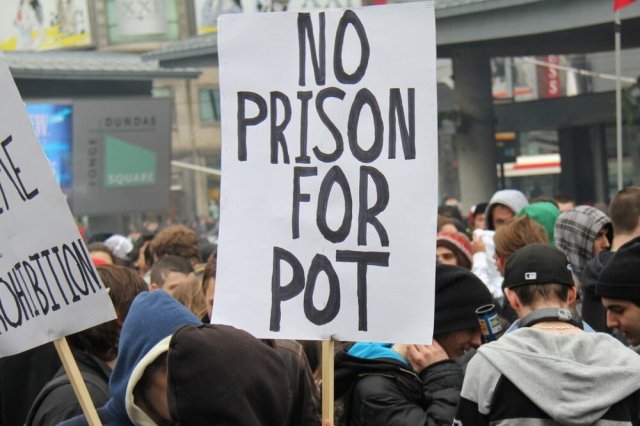
Where we left off in the history of marijuana in the United States is where the criminal justice system comes into the picture. In every year from the 1980s to the 2000s, arrests for marijuana possession made up 40% of all drug arrests. Between 2001 and 2010, half of all drug arrests were for marijuana, with 88% of those arrests being just for possession. Jumping to a decade later, according to the most recent FBI: Uniform Crime Reporting data, marijuana led to nearly a third of all arrests related to drug possession, with only 3% coming from sale and manufacturing. Although there has been a decline in marijuana possession arrests over the years, they still outnumber all violent crimes combined – 495,871 were for violent crimes vs. 500,395 for marijuana possession. Any way you cut it, the high amount of marijuana possession arrest is staggering given that ⅔ of Americans support legalization.
Impacts on BIPOC and Lower-Income Communities
Drug possession arrests carry far-reaching consequences, especially if there are multiple offenses and even in small amounts. It can make getting a job and housing more difficult, get your driver’s license suspended, cause child custody loss, and trigger deportation. The ACLU reported in 2018 that Black folks were almost four times more likely than white people to be arrested for marijuana possession, even though consumption rates are pretty even across groups. People of color face disproportionate arrest rates in every state, even those that have legalized and decriminalized marijuana.
Additionally, there are numerous economic barriers and punishments that go along with an arrest. According to the Prison Policy Initiative, “a criminal record and time spent in prison destroys wealth, creates debt, and decimates job opportunities.” When it comes to marijuana possession, payments for bail, fines, lawyer fees, and court fees can quickly add up. There are also consequences outside of jail time, such as losing employment and housing. The uneven arrest rates perpetuate a cycle of poverty and exacerbate racial inequalities.
The Case for Legalization
Source: Rolling Stone
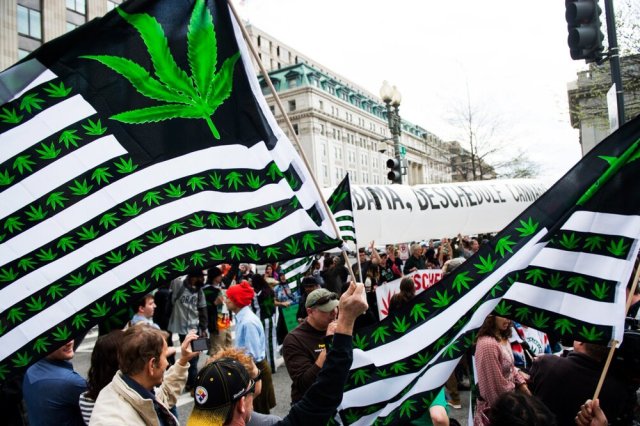
The legalization of marijuana would benefit numerous areas of our communities, the environment, and the economy. The medical uses of marijuana have been reported to help varying diseases and conditions. From alleviating chronic pain to treating PTSD, it has even been shown to help trigger cancer cell death. Although medical uses of marijuana are promising, the research is limited due to its classification as a Schedule I drug. Numerous scientific groups have contested its classification and have tried to repeal this designation. Legalization would reduce research barriers placed on marijuana.
When it comes to safety and supporting our communities, legalization can provide a safer product to consume and a means to fund schools and public health services. Additionally, it can reduce the burden that children bear when their parents are arrested and incarcerated. An incredible 2.7 million children in the United States have one or more parents detained, with a majority of them in prison for drug offenses. Losing a parent’s income and support can have devastating effects on their children that further ripples throughout the community.
The legalization of marijuana could additionally have benefits for the environment. Before the legalization of marijuana in California, reports claimed that unregulated cultivation had destructive and polluting effects on its land and water. Legalization provided both regulations that can be enforced as well as funding to remediate damages. Federal marijuana legislation must ensure that it addresses ecological concerns and protects resources and the environment.
Lastly, legalizing cannabis can have positive outcomes on job growth and the economy. According to a study done by Leafly in collaboration with Whitney Economics, between 2017 and 2019, the total full-time jobs in the legal cannabis industry doubled to more than 211,000. At the time of this report, only ten states and the District of Columbia had legalized marijuana for adult use and excluded indirect employment from the cannabis industry, such as accountants and marketing firms (the number gets closer to 300,000 jobs).
Legalizing marijuana is just one of the many steps needed to end the long-lasting legacies of the war on drugs and cannabis prohibition in the United States. Change in federal law, although highly encouraged, would only prevent future arrests from occurring but not necessarily help those who are currently incarcerated or suffering from non-violent drug possession charges on their records. Marijuana legislation must specifically and directly help those most marginalized by decades of strict drug policy that has not decreased drug use or kept communities safer.
So what can you do to help the legalization process?
Get Educated
Understanding the history of marijuana prohibition in the United States is just one of the many ways to learn more about cannabis. Just like with any controlled substance, learning about the benefits of marijuana consumption and its potential risks can ensure that you’re aware of the conversation surrounding legalization. If your state has not legalized, read up on its current legislation, and look out for any current and future ballots revolving around legalization and decriminalization. Leafly has a great overview of legalization essentials, as well as a state-by-state breakdown of policies and laws.
Take Action
If you’re ready to be part of the movement, countless national and local organizations have worked tirelessly to make legalization happen for decades. The Marijuana Policy Project is one of the leading organizations with tons of resources to stay informed and connected online. NORML has local chapters all across the United States that can be a good starting point for advocacy. Drug Policy Alliance has a great guide on calling and talking to federal legislators regarding marijuana policy.
Source: Leafly
If you currently live in a state that has legalized weed recreationally, make sure you’re also supporting our most marginalized folk, as marijuana prohibition has had devastating effects on BIPOC communities. Check out The Floret Coalition and BIPOCANN, two organizations highlighting the importance of supporting BIPOC cannabis businesses. Lastly, we must address the harm caused by criminalization by supporting nonprofits like Last Prisoner Project and Code for America fighting to overturn federal cannabis convictions and expunge marijuana records.
meet the author

Josefina Artigas
Josefina is a content writer at ecomadic. They hold a BS in Biochemistry and a minor in sociology. Their interests include cooking, anime, and coding. They are passionate about the intersection of sustainability and social justice.
 ecomadic