
.parent {
display: inline; position: relative; line-height: 30px; float: left; color: #82be41;
}
.parent a{
margin: 10px;color: #82be41;text-decoration: none;
}
.parent:hover > ul {
display:block;position:absolute;
}
.child {
display: none;
}
.child li {
line-height: 30px;width:115%;text-align:left;
}
.child li a{
color: #82be41;
}
ul{
list-style: none;margin: 0;padding: 0px; min-width:10em;text-align: center;float: right; font-weight: 550;
}
ul ul ul{
left: 100%;top: 0;margin-left:1px;
}
li:hover {
background-color: white;
}
.parent li:hover {
background-color: white;
}
.expand{
font-size:10px;float:right;margin-right:5px;
}
.parent a p{
display: inline; margin: 10px;color: #6e706b;text-decoration: none;
}
The Issues Behind Voluntourism
written by Giuliana Gentile | May 20, 2021
Source: Quartz
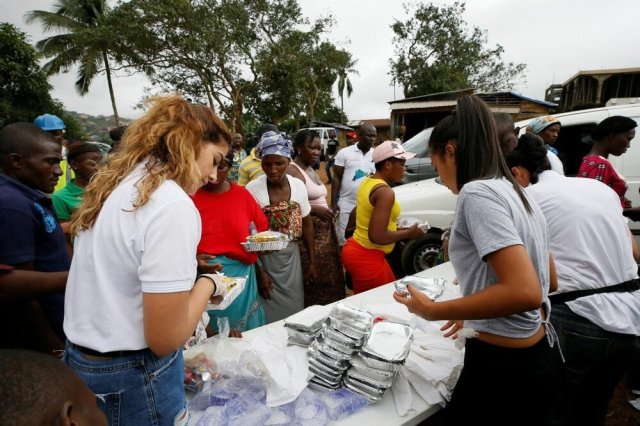
While volunteering comes from noble intentions, it can sometimes end up being problematic. This stems from the abundant amount of volunteers from Western countries eager to partake in said volunteering. In return, the overall concept has developed into a business, provoking ethical and practical issues such as unskilled labor, and the imposition of Western values. A study from 2008, surveyed 300 organizations whose target audience were would-be volun-tourists, and found that 1.6 million people volunteer while on vacation, spending around $2 billion annually.
We’ve broken down below where volunteering becomes voluntourism, which is the act of traveling to developing countries with the false intention of “doing good”, while spreading Western ideas, offering unnecessary help, and inflating your own ego.
Where To Draw The Line
Source: Matador Network
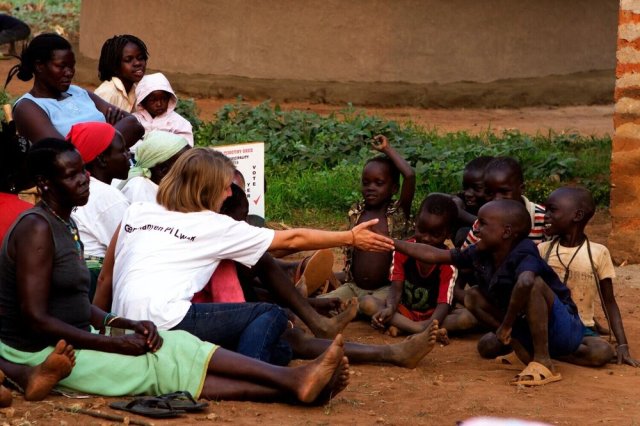
The topic of voluntourism is defined by blurry lines, it leads to difficult questions, and it can be tricky to discuss. Can any kind of volunteering actually be considered bad?
To understand this concept better, let’s analyze each of these issues individually.
Unskilled Labor
Building homes in communities affected by natural calamities, can only be helpful when the volunteers actually know what they’re doing; especially if the local people wouldn’t prefer building the homes themselves in the end. An account of an American volunteer in Tanzania stated: “We … were so bad at the most basic construction work that each night the men had to take down the structurally unsound bricks we had laid and rebuild the structure so that, when we woke up in the morning, we would be unaware of our failure.”
A 1998 study on 162 Americans who travelled to Honduras with a goal to build homes after Hurricane Mitch, found that the price of the homes built by volunteers ended up being $30,000 apiece, while local Christian organizations could have built them for just $2,000. In this case, if the volunteers stayed home and donated money, instead of their unskilled labor, the locals could have built 15 times more homes for the communities.
Additionally, in developing countries, there are plenty of locals looking for a paid job, so if the organizations who claim to help the community actually wanted to help, they would hire these people by paying them with the money the volunteers donated; therefore supporting the local economy while also building well constructed homes. This is just one example that shows a reality in which the local communities, in some cases, would easily live without the abundant and unskilled labor offered by foreign volunteers, and could actually benefit more from simple donations.
Imposing Western Values
Volunteers who come from Western countries are often involved in activities related to teaching and/or religious missions. While not inherently negative, these kinds of activities can become problematic when they translate into the imposition of Western values and ideals. The interaction between people from different cultures can bring forth benefits to all the parts involved, but only as long as this exchange is reciprocal and productive. The one-sided spreading of ideas and teaching of values, can end up reinforcing toxic concepts such as imperialism and white saviorism.
This issue also arises when it comes to the implementation of Western technologies in those communities where the local people don’t have the means to maintain them. Instead of being helpful, this behavior simply creates short-term solutions and leaves the levels of poverty and inequality unchanged, while encouraging dependency from Western institutions and organizations. The aim of these missions should be quite the opposite; that is providing useful resources and knowledge to give the local people the means to improve their quality of life.
The Intentions Behind Your Actions
Whether or not volunteer work has a positive or negative impact ultimately depends on the individual intentions of each volunteer. If you really intend to help the local people of the places you travel to, please do your research first. Asking yourself questions like…
Which association or organization will you be working with? How do they use their funds? Which kind of project will you participate in? Do you have the right skills? Will you help the community in the long run? Will you share valuable knowledge that will be useful to those people? Are they even interested in that information? Is your help truly needed? Is it better to stay home and make a donation?
It goes without saying that it is utterly unfair to generalize. If you are, or were, a volunteer anywhere, don’t feel obligated to explain your motive. Just ask yourself why are you doing it? There’s nothing wrong with feeling good about yourself for helping others, and there’s nothing wrong with wanting to enrich your resume with some valuable experiences abroad. But make sure those are not the only reasons, and that your work will actually benefit the people you’re doing this for.
Want to learn more?
The business of voluntourism: do western do-gooders actually do harm? – The Guardian
What is Voluntourism? – globalteer
The Voluntourist’s Dilemma – The New York Times
meet the author
Giuliana Gentile
Giuliana was born and raised in Sicily (an Italian island in the middle of the Mediterranean Sea), since then she’s been moving around the world to meet new cultures and discover new places. She has a degree in Political, Social and International Sciences. During her studies she became passionate about environmental protection, gender equality, and cultural identity. She loves traveling, petting dogs on the street, and swimming underwater.
 ecomadic