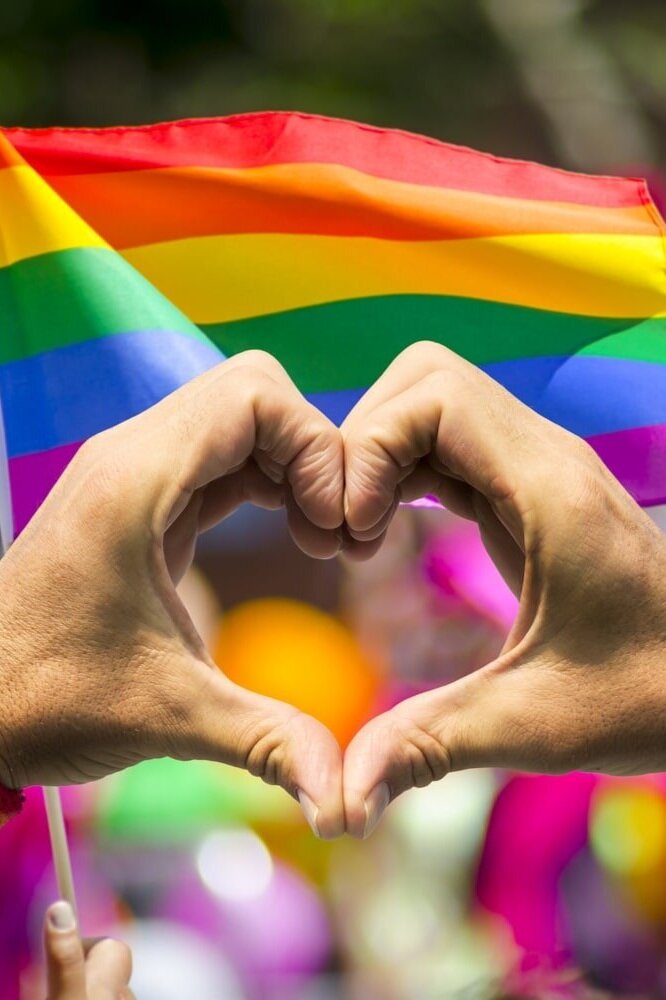
The History Behind the Rainbow Flag & Its Inherent Intersectionality
written by Giuliana Gentile | May 26, 2021
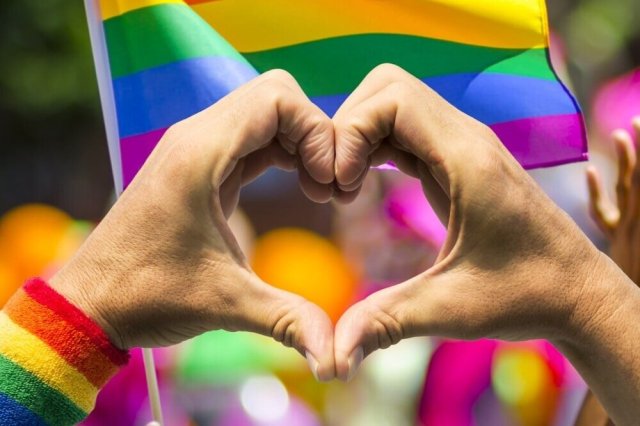 Source: National Today https://platform-api.sharethis.com/js/sharethis.js#property=5f0bbd9ab9410d0019e80af3&product=inline-share-buttons
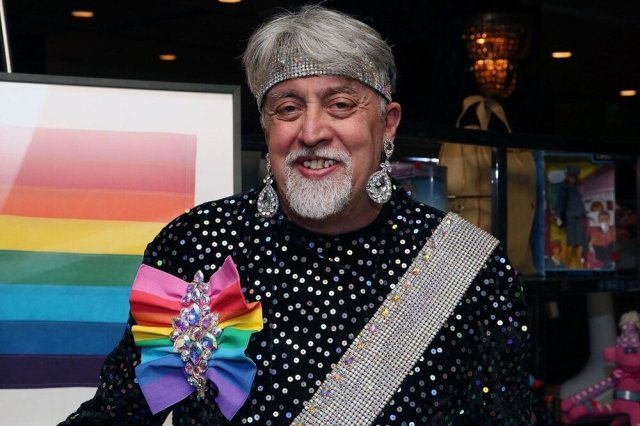 Gilbert Baker. Source: Artsy
 As a child, Baker was always drawn to fashion, but having grown up in a conservative environment, he was forced to repress his creative instincts; which only increased after being drafted into the US Army. Due to this, he then decided to become a medic, and was stationed in San Francisco, CA where he found a far more inclusive environment as an openly gay man – thanks to the counterculture movement of the post-Stonewall era. It was there where he made life-changing friendships, such as those with writer Cleve Jones, filmmaker Artie Bressan, and rising queer activist Harvey Milk.
With their help, Baker found the inspiration to create a new, revolutionary symbol for the LGTBQ+ community: the Rainbow Flag. The original Flag had 8 colors, each containing their own meaning, hand-dyed, and stitched by thirty volunteers for the San Francisco Gay Freedom Day Parade celebration on June 25, 1978. A new version was then created with six colors instead of eight, to simplify the making of the flag as well as lower the cost.
The Idea That Started It All
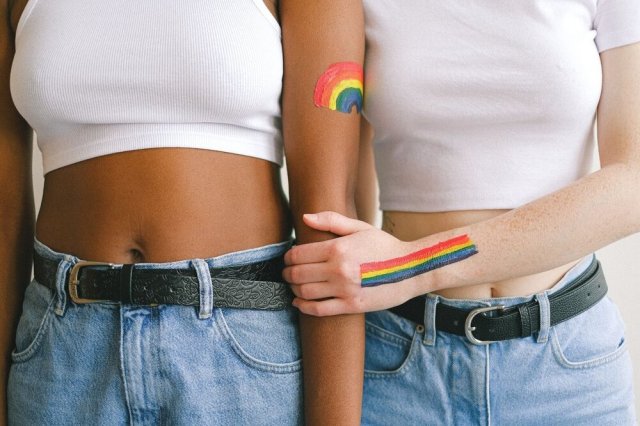 📷 @sh.vets
 Baker remembered the moment when he first had the idea for the Rainbow Flag: he was dancing at the Winterland Ballroom. There, he looked at the extremely diverse and colorful crowd consisting of “long-haired, lithe girls in belly-dance get-ups, pink-haired punks safety-pinned together, hippie suburbanites, movie stars so beautiful they left you dumbstruck, muscle gayboys with perfect mustaches, butch dykes in blue jeans, and fairies of all genders in thrift-store dresses”. Gilbert thought “we were all in a swirl of color and light. It was like a rainbow. A rainbow.”
He then explained that “a Rainbow Flag was a conscious choice, natural and necessary. The rainbow came from earliest recorded history as a symbol of hope. In the Book of Genesis, it appeared as proof of a covenant between God and all living creatures. It was also found in Chinese, Egyptian and Native American history. A Rainbow Flag would be our modern alternative to the pink triangle. Now the rioters who claimed their freedom at the Stonewall Bar in 1969 would have their own symbol of liberation.”
Intersectionality & The Meaning Behind The Colors
 Source: TriPride
The Rainbow Flag was intentionally created as intersectional. Baker described it as follows: “What I liked about the rainbow is that it fits all of us. It’s all the colors. It represents all the genders. It represents all the races. It’s the rainbow of humanity.” The original eight colors found throughout the flag each have a meaning behind them: hot pink for sex, red for life, orange for healing, yellow for sunlight, green for nature, turquoise for magic and art, indigo for serenity, and violet for spirit. Baker thought of the rainbow as a “natural flag in the sky”, and admired its universality. That’s why his Rainbow Flag resides in the public domain, to be owned by all the people.
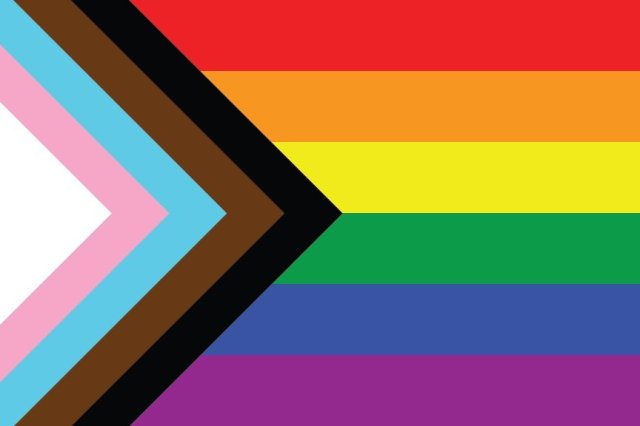
Throughout time the Flag developed into various versions; the latest ones being the Progress Pride Flag, and the Queer People Of Color Pride Flag. The first one was created by Daniel Quasar with the aim to be more inclusive. It overlays the traditional six-striped rainbow flag with a chevron design that has the black and brown stripes from the Philly Pride flag, as well as white, pink, and blue from the Trans Pride flag.
 Source: TriPride
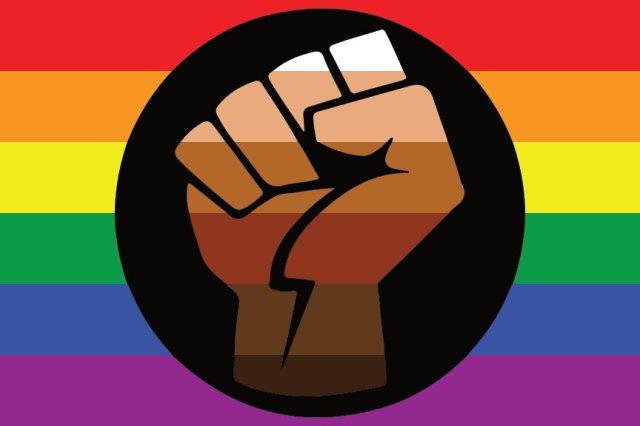
The QPOC Pride Flag represents Queer People of Color (QPOC). Historically, the raised fist symbolizes solidarity and support while also representing expression of unity, strength, defiance, and resistance.
The Green Stripe & The Link With Environmental Activism
The green stripe takes its meaning from the concept of nature as refuge: nature creates you and accepts you exactly as you are. The choice of including nature amongst the colors of the original Flag symbolizes the fact that being queer and living a queer life is just as natural as anything else that lives in nature. We know so little about sexuality in nature, especially because of the hetero-normative and gender-binary perspective we’ve been adopting thus far. Fully understanding the complexity of sexuality and accepting its fluidity means understanding nature and appreciating it in its entirety.
Now, you might wonder how this beautiful concept translates into environmental activism.
As Alex Carr Johnson (from the U.S. National Parks Service) elegantly puts it, people in the LGBTQ+ community know better than anyone what it means to defend their inherent right to exist, which is the very principle behind being an environmentalist: defending our planet’s inherent right to exist and thrive. The LGBTQ+ community is an extremely diverse group of people who not only strive to change the status quo, but also provide a wonderfully inclusive alternative, and are naturally inclined to empathize with other causes that aim to the same goal.
In the words of Loren Othon from the Seattle Office for Civil Rights, “thinking queerly is about imagining different possibilities (…) living a queer life is actively living a different possibility (…) Queer encourages us to reimagine what is or can be, and it challenges the status quo”.
Want to learn more?
Pride Flags – TriPride
About Gilbert Baker – Gilbert Baker Foundation
Rainbow Flag: Origin Story – Gilbert Baker Foundation
meet the author

Giuliana was born and raised in Sicily (an Italian island in the middle of the Mediterranean Sea), since then she’s been moving around the world to meet new cultures and discover new places. She has a degree in Political, Social and International Sciences. During her studies she became passionate about environmental protection, gender equality, and cultural identity. She loves traveling, petting dogs on the street, and swimming underwater.
 ecomadic