
5 Ways to Practice Self Care While Stuck in One Place

.parent {
display: inline; position: relative; line-height: 30px; float: left; color: #82be41;
}
.parent a{
margin: 10px;color: #82be41;text-decoration: none;
}
.parent:hover > ul {
display:block;position:absolute;
}
.child {
display: none;
}
.child li {
line-height: 30px;width:115%;text-align:left;
}
.child li a{
color: #82be41;
}
ul{
list-style: none;margin: 0;padding: 0px; min-width:10em;text-align: center;float: right; font-weight: 550;
}
ul ul ul{
left: 100%;top: 0;margin-left:1px;
}
li:hover {
background-color: white;
}
.parent li:hover {
background-color: white;
}
.expand{
font-size:10px;float:right;margin-right:5px;
}

.parent a p{
display: inline; margin: 10px;color: #6e706b;text-decoration: none;
}

5 Ways to Practice Self Care While Stuck in One Place


Written by Kayla Christian | July 28, 2020

https://platform-api.sharethis.com/js/sharethis.js#property=5f0bbd9ab9410d0019e80af3&product=inline-share-buttons


As a solo traveler who spent 3 months on the go at the beginning of 2020, I can definitely say my mental state & overall well-being have not been the same since being stuck in isolation. If you’re someone who also thrives on adventure, loves to travel and experience new cultures, and had to cancel or postpone your travel plans, keep reading– this is for you. 

 There’s a reason the flight attendant says “you must put on your own mask before helping others”. Caring for yourself is essential!

Self-care is something that is often misunderstood. It is not just treating yourself to a manicure and calling it a day. It’s prioritizing yourself and incorporating activities in your day that will boost your physical, mental, and spiritual wellbeing. We all should integrate self-care into our daily routines. 


So, here are five ways to practice it while you’re feeling stuck in one place.


1. Bring Your Destination to You

 Leisure is a big factor in your health, happiness, and life satisfaction.

 A few months ago, my sister and I started a restaurant night once every week, some of which featured a particular destination’s cuisine. For example, we made air fried tostones to honor our Puerto Rico theme.


I learned about tostones while in Puerto Rico for a duration of my solo travels. My housemates and I, who are from Puerto Rico themselves, often enjoyed what are fried plantains along with spicy mayo ketchup.I learned about tostones while in Puerto Rico for a duration of my solo travels. My housemates and I, who are from Puerto Rico themselves, often enjoyed what are fried plantains along with spicy mayo ketchup.

I learned about tostones while in Puerto Rico for a duration of my solo travels. My housemates and I, who are from Puerto Rico themselves, often enjoyed what are fried plantains along with spicy mayo ketchup.

Food gives people the opportunity to share culture, and although you might not be able to experience it authentically, making the food yourself can be a great way to learn more about a culture and combat your travel bug.

Who knows, maybe you’ll find the cooking part therapeutic and form a new hobby. 


2. Move Your Body

Moving everyday has significantly improved my own health. My top three are: yoga/stretching, walking, and biking. Pick something you enjoy, or try out something new!

Also, getting outside is like free entertainment, therapy, and a good source of vitamin D. If this is an option for you, get outside and move your body. If it’s not, find an area in your home and designate it as your movement spot.


3. Journal Journal Journal

Journaling has been known to reduce stress and provide mental clarity. It gives you the opportunity to recognize your thoughts and emotions, change your perspective, clarify your wants and needs- and there are a plethora of ways to go about it.

Here are a few different prompts that have helped me the most. 


– Gratitude –

Every morning, write down 3 things you’re grateful for. These can be anything from your past travel experiences to little things about everyday life.

Doing this right when you wake up completely shifts your mindset for the rest of the day. After doing this consistently, I noticed an extreme decrease in my irritable and negative tendencies. 

I like to say: you might not feel happy everyday, but CHOOSE to be grateful and kind everyday.


– Control the Controlables –

I learned growing up you can only control two things, your actions and your attitude.

When we have little control over what’s happening around us, we tend to try and control things we simply cannot, and it can lead to more stress and feeling overwhelmed.

Make a list of the things you Do & Don’t have control over. Afterwards, reflect on the list. Practice reminding yourself to let go of the things you can’t control, and focus on what you can.

– Mind Dump –

No order, no rules, just thoughts and emotions. Write down everything you’re feeling all over the page. This tactic is very releasing, and I know from personal experience it leads to lowering stress levels.

The mind is a powerful place. Our thoughts become our words, our words become our actions, and our actions become our habits. If we bottle things up and don’t release our stressors, we can convince ourselves of anything and form habits detrimental to our health.


4. Create a Morning Routine

Create something you can look forward to every morning!

My morning routine consists of having a glass of water, making my bed, gratitude journaling, and a quick stretch. I sometimes add in something new just to keep it interesting, since traveling usually doesn’t involve a very stringent routine.

I have been doing this for over 2 years, and I accredit it to making the biggest difference for my mental health.


5. Practice RESTING 

We all know that traveling takes a toll on us. All the planes, trains & automobiles… it drains your energy & it must be replenished!

Sleep more, meditate more, practice more yoga, watch your favorite movie, read.

When did we come up with the idea that just being wasn’t enough?

It’s so hard for us to feel content doing nothing, but in reality the need for the human body & mind to rest is inevitable. Think of it this way, the more you rest up now the more energy you’ll have for your next travel experience.


  •  


Tackling self-care can be daunting and it’s hard to know where to start, but now you know some ways to incorporate self-care while being stuck in one place. Start with one thing that makes the most sense for you, and if you don’t like it, try something else!


All it takes is having the courage to start.


meet the author


Kayla Christian - Kayla is passionate about health and wellness and runs a beautiful account @havinghealthyhabits. She’s based in Charleston and if she’s not active outside, she’s cooking new recipes at home. She is redefining what it means to be “healthy”. Follow her for everyday motivation, recipes, and tips on how to live a balanced lifestyle.

Kayla+Christian.jpg

Kayla Christian

Kayla is passionate about health and wellness and runs a beautiful account @havinghealthyhabits. She’s based in Charleston and if she’s not active outside, she’s cooking new recipes at home. She is redefining what it means to be “healthy”. Follow her for everyday motivation, recipes, and tips on how to live a balanced lifestyle.


 

Reducing Plastic Use During a Pandemic

.parent {
display: inline; position: relative; line-height: 30px; float: left; color: #82be41;
}
.parent a{
margin: 10px;color: #82be41;text-decoration: none;
}
.parent:hover > ul {
display:block;position:absolute;
}
.child {
display: none;
}
.child li {
line-height: 30px;width:115%;text-align:left;
}
.child li a{
color: #82be41;
}
ul{
list-style: none;margin: 0;padding: 0px; min-width:10em;text-align: center;float: right; font-weight: 550;
}
ul ul ul{
left: 100%;top: 0;margin-left:1px;
}
li:hover {
background-color: white;
}
.parent li:hover {
background-color: white;
}
.expand{
font-size:10px;float:right;margin-right:5px;
}

.parent a p{
display: inline; margin: 10px;color: #6e706b;text-decoration: none;
}

Reducing Plastic Use During a Pandemic


Written by Emily De Sousa | July 29, 2020


https://platform-api.sharethis.com/js/sharethis.js#property=5f0bbd9ab9410d0019e80af3&product=inline-share-buttons


In recent years, we have all become increasingly aware of the damage that plastic is doing to our planet. Plastic pollution has quickly become one of the world’s largest environmental crisis. Its captured media headlines around the world; everywhere you turn people are sharing videos of sea turtles fending off plastic straws and governments around the world are trying to keep up by banning plastic use.

While it was a little bit more straightforward to get into good, plastic-free habits pre-COVID19, it’s now increasingly challenging to reduce plastic use. From the single-use plastic cups at more and more restaurants to the increase in takeaway, bans on BYO bags and disposable masks, it can sometimes seem impossible to avoid plastic, but with a little bit of careful planning, you can get closer to a low waste life.

As travelers, we have a responsibility to be critical of our own consumption and work to be better so that we can continue to explore this beautiful planet of ours. 

Here are some ways that you can reduce your plastic consumption and be more mindful about your impact.

Embrace Cooking at Home

Depending on where you’re located, restaurants may or may not be open– or are only doing takeout. Most restaurants have started using excess plastic and single use due to health concerns. An eco-friendly solution is to choose to cook at home as often as you can. Choose local ingredients and try new dishes! Some grocery stores have also banned bringing your own reusable bags to prevent germs spreading. It’s important to be more forgiving of yourself during this time as there’s only so much we all can do. However, you can repurpose the bags they give you and see if you can choose stores that use paper over plastic. While eating out isn’t totally unavoidable (and of course you want to keep your local businesses going) remember to say no to bags if you don’t need them, BYO cutlery, BYO straw, and say no to any extra plastics– sometimes this can mean saying no to a lid!

Carry a reusable water bottle

Save yourself a lot of time and money by purchasing a reusable water bottle to bring with wherever you go. Hard plastic and steel water bottles can be re-used for years and usually do a way better job of keeping your water cold than plastic bottles. Water fountains are more accessible than ever in most public spaces, but if you happen to be in a region where it’s not safe to drink the tap water, you can still minimize your plastic use with tools like Life Straw and Water to Go. These bottles filter tap water, so you’ll always have safe water, no matter where you are in the world. 

Purchase a Reusable/Washable Mask

Masks are crucial to overcoming this pandemic and protecting ourselves. Unfortunately, most disposable masks are made from a non-woven fabric based on polypropylene, the second most widely distributed plastic in the world. It breaks down slowly, taking around 20-30 years. We can combat this by wearing reusable face masks and luckily some brands have taken this seriously and created beautiful sustainably made masks

Say no to disposable straws

Over 500,000,000 straws are used every single day in the United States alone. These straws inevitably end up in landfills once you’ve finished your drink, and often go on to find a home in the ocean where they pose a huge risk to marine life. If you’re ordering a drink, ask for it without a straw or, if you absolutely need to use a straw, invest in a reusable one that you can bring along with you. 

Say no to Single-Use Plastic 

Disposable plastics come in all shapes and sizes and in many aspects of our lives. Plastic packaging, bottles, straws, containers, cups, cutlery… the list goes on. Start with one single-use plastic and master saying no to it. Then move on to the next! Furthermore, when we’re able to travel again, you can still continue your plastic-free habits while on the road. Minimize your plastic consumption before your trip even begins by declining beverage and meal service on the plane. Aircrafts serve their meals and drinks in disposable plastic containers that are responsible for a tremendous amount of waste. You can avoid single-use plastics on your flight by bringing your reusable water bottle and pre-packed snacks on board.

Invest in eco-friendly Toiletries 

With a bit more time on our hands, it’s a great time to switch out your products to more eco-friendly options considering components of our beauty routines contribute to plastic pollution. Luckily, there are plenty of eco-friendly alternatives that exist and are worth investing in, both to have on the road and at home. With 3.6 billion plastic toothbrushes ending up in landfills every year, investing in a bamboo toothbrush is a great place to start. Eco-friendly razors like safety razors from Rockwell Razors are another great investment and switching to more eco-friendly period solutions like a menstrual cup can drastically reduce your plastic waste from sanitary pads and napkins. Another great plastic-free toiletry alternative is using shampoo bars instead of their liquid counterparts. LUSH sells a variety of shampoo bars that you can store in a reusable tin. Just one of these mighty bars can last up to 80 washes, far longer than the liquid equivalent, and they’re also packed with essential oils to keep your hair looking shiny. 


Most importantly, remember that this time in history is completely unprecedented. Forgive yourself if you can’t be plastic free 100% of the time. Right now, it’s essential to prioritize your own health and well-being, so go easy on yourself if it means using plastic once in a while. You can still avoid single-use plastic in some ways like using a reusable mask and buying hand sanitizer in bulk. 

And don’t fret. This will not undo all the progress we’ve made on the issue of plastic pollution. We were moving in the right direction before the pandemic and we will come out of this stronger, more resilient, and more dedicated to protecting our planet than ever before. 


For more tips on how to reduce your plastic consumption, check out these posts:

10 plastic items you can give up right now 

How to live plastic free this year 

Unexpected sources of microplastics to avoid if you want to save our oceans 

8 plastic items to ditch in 2018 


meet the author


Emily De Sousa - Emily is a Canadian beach bum on a mission to see the world and save it at the same time. She’s a sustainable travel and seafood blogger, a fisheries researcher, and a PADI Divemaster. She helps people travel more meaningfully and eat seafood more sustainably by producing online educational content tailored to the coastal, eco-conscious traveller. Check out her blog– Seaside with Emily and her TedTalk on plastic pollution.
Emily+De+Sousa.jpg

Emily De Sousa

Emily is a Canadian beach bum on a mission to see the world and save it at the same time. She’s a sustainable travel and seafood blogger, a fisheries researcher, and a PADI Divemaster. She helps people travel more meaningfully and eat seafood more sustainably by producing online educational content tailored to the coastal, eco-conscious traveller. Check out her blog– Seaside with Emily and her TedTalk on plastic pollution.


What’s Greenwashing? & Why is it Happening?

.parent {
display: inline; position: relative; line-height: 30px; float: left; color: #82be41;
}
.parent a{
margin: 10px;color: #82be41;text-decoration: none;
}
.parent:hover > ul {
display:block;position:absolute;
}
.child {
display: none;
}
.child li {
line-height: 30px;width:115%;text-align:left;
}
.child li a{
color: #82be41;
}
ul{
list-style: none;margin: 0;padding: 0px; min-width:10em;text-align: center;float: right; font-weight: 550;
}
ul ul ul{
left: 100%;top: 0;margin-left:1px;
}
li:hover {
background-color: white;
}
.parent li:hover {
background-color: white;
}
.expand{
font-size:10px;float:right;margin-right:5px;
}

.parent a p{
display: inline; margin: 10px;color: #6e706b;text-decoration: none;
}

What’s Greenwashing? & Why is it Happening?


Written by Jaclyn Yost | July 24, 2020


IMG_0394.JPGIMG_0394.JPG

https://platform-api.sharethis.com/js/sharethis.js#property=5f0bbd9ab9410d0019e80af3&product=inline-share-buttons


While the rising concern about sustainability within the hospitality and tourism space was most likely intended to create good practices, more recently it has been seen that green claims do not always translate into genuine green behaviors. With the wide range of varying measures, indicators, and definitions of sustainability present within the hospitality industry, green execution can vary greatly between enterprises as it is next to impossible that every scheme upholds the same standardization. Moreover, because there is no one size fits all model for green practices within an accommodation, the degree of ambiguity makes it significantly harder for consumers to recognize green indicators. The shift in the market environment has caused it to become more and more frequent to see businesses turning to sustainability as a marketing tool in order to attract customers. This phenomenon is known as greenwashing, or the misleading promotional claims of responsible green business practices.

Greenwashing Triggers

Whilst some companies follow a green agenda because they are genuinely concerned about issues surrounding sustainability, other companies have been purposefully using greenwashing to reap the socio-economic benefits of being perceived as “sustainable”. Such as competitive edge, profit advantages, and higher perceived Corporate Social Responsibility (CSR). Furthermore, because there is a lack of attention and technical competency over the matter, from both businesses and stakeholders alike, heavy confusion within the industry has generated and allowed room for greenwashing to occur. Greenwashing has become a centralized phenomenon within organizational environments, which has developed due to growing signals from both internal and external bodies. 

Externally, the main greenwashing trigger seems to be societal pressures. This mainly refers to the relation between the growing environmental movement and the immense pressure that has been called on accommodations to transform to greener practices — from regulators, NGOs, consumers, investors, and even competitors. With the growing global demand for green consumerism, it is no surprise that this arising concern has extended into the hospitality and tourism field; yet, it is extremely difficult for stakeholders to evaluate the sustainable performance of the business from the outside, which has allowed for greenwashing to evolve. 

As for internally, firstly, there is voluntary or solicited disclosure. Which is the practice where companies will selectively disclose only positive information in order to leave out negative aspects when attempting to shape their company image. Selected disclosure without obvious evidential reports regarding the environmental impacts has fueled justifiable skepticism between what firms say and do on environmental issues. Thus, it can be assumed that lack of transparency and failure to disclose information can be concluded as admitting to poor performance. 

Secondly, marketing and communications can trigger greenwashing as there are times where it seems that, instead of using company expenses on green business transformations, funds are allocated towards heavy green-focused advertising and marketing instead to enhance their sustainability positioning. A common tool to promote accommodation’s green practices are certification schemes; which is a voluntary way for a company to undertake an educational procedure in order to better comprehend proper standards and criteria focused on sustainability. However, the oversaturated certification scheme market has led to the overall lack of credibility and legitimacy as they do not all follow the same degree of strictness over sustainable responsibilities. One side of the argument states that the motivation to undergo certification training is due to responsible intentions, while the other side of the argument claims that gaining competitive advantage and positive company image are the major driving incentives behind obtaining a green certification label. But with no question, the mass amount of labels is creating the murky legitimacy behind sustainable tourism-related attractions. 

Thirdly, managerial issues can spark greenwashing as there can be a disconnect between a manager’s green plan declarations versus their commitment levels to actually follow through with the stated practices. Meaning, that although a manager may declare a green agenda, if they do not enforce the practices then it is less likely that lower-level positions will follow through with the new green procedures if it is not mandatory. 

The last internal driver, on a bigger picture level, is policy and regulation. Relaxed and uncertain government regulations is arguably the biggest driver of greenwashing as there is a low chance of being punished for being guilty of this practice, which results in manipulation from firms. 

Overall, the hospitality & tourism sector in terms of sustainability is highly unregulated and thought to still be far-reached. In order to achieve concrete clarity over greenwashing, policy-level regulatory steps are needed to be taken. It is necessary for stricter environmental regulation because, as of now, accommodation-level sustainability policy statements are easy to make, there is stakeholder demand for them, implementation is hard to control, and some companies do not have serious intentions. 

Local vs. International

Aside from the root causes of greenwashing, it seems that there is also a disconnect in relation to greenwashing between the Smaller-to-Medium Sized Enterprises (SMEs) and Multinational Corporations (MNCs). This is likely because MNCs are able to afford heavy marketing and public relations (PR) to grant them the upper hand as ‘sustainable market leaders’ and mask their disingenuous green declarations, when in reality they could be using greenwashing as a strategy to capture more market share. This can be especially unfavorable to SMEs, as they are unable to compete with large tourism focused MNCs, monetarily speaking. 

Furthermore, MNCs are mostly the organizations who can afford educational training and undergo highly recognized eco-label certification that enables them to be endorsed as industry “eco-leaders”. This matter makes it more unlikely that SMEs can compete with MNCs if they can’t afford certification labels or educational training, although they are particularly prevalent in the grand scheme of supplying accommodations. 

Moreover, implementing a sustainability plan in SMEs can also be a challenge as it can initially cost a large amount of capital, which is particularly seen in developing countries when wanting to make a greener transformation. For example, in developing countries, focusing on the engagement in environmental measures can be delayed for reasons such as putting economic priority in other core aspects of accommodation operations; saving resources (i.e. energy, water) only can take place on a limited basis without impacting the quality of service, meaning the cost savings may be too insignificant to consider during slow periods; and because of the longer time period that it takes to see returns, this may be off-putting to some accommodations. In fact, it is believed that the financial position of the firm is the strongest internal factor that could influence a firm’s decision to green itself. 

Aside from high cost factors, SMEs have also noted that limited knowledge, high levels of bureaucracy, lack of expertise, and seeing certification schemes/training sessions as PR exercises deter the enterprises from undergoing the process. This could be a contributing factor as to why SMEs, particularly in developing regions, have begun to endeavor into the green space, yet never proceed with eco-labelling or a standardization scheme. This can be noted and seen in the rise in businesses who label themselves as “eco” yet do not have access to resources or knowledge which creates sustainability imbalances. Moreover, when self-regulated, this poses to be more problematic in regards to regulating the industry as there are no trustworthy outside accreditors ensuring the green practices. However, even when recognizing this, in the developing world, monitoring capabilities of local organizations is less likely to occur. Therefore, with respect to the above, it can be seen that declaring green practices in SMEs is seemingly a more complex and difficult topic. Nonetheless, it is doubtful that these growing issues will be resolved without increasing regulatory pressures and until smaller scale organizations have ensured access to imperative resources to leverage a more fair and crucial position within the marketplace.  

So What Now?

Without these measures in place, greenwashing discrepancies will continue to evolve. Greenwashing can be seen as highly unethical as not only can it impose long-term damage on the environment and society, but the businesses who engage in greenwashing may not realize that they can also be undermining the trust of government agencies and corporate environmental impacts. 

Furthermore, they can also leave travel consumers overwhelmed and confused when trying to dig deeper into discovering business motives and CSR claims. While highly prevalent, as well as receiving major attention recently, greenwashing can still be considered a less focused area in the mainstream hospitality and tourism field. 

Conceptualizing a solid idea of sustainable tourism is crucial in the pursuit of the United Nations 2030 Sustainable Development Goals. However, with such an unregulated market, concrete clarity regarding sustainable tourism is still far-reached and in desperate need to take steps in seeking regulation.

But do not be discouraged 🙂

What Actions Can I Take?

As you can see there are many levels to the issue of sustainability in the hospitality and tourism industry and while we don’t want to overwhelm you, education and awareness is the first step. So we applaud you for digging into the information 😊 While you may not be able to change the entire industry overnight, we do believe you can play your part! Now that you have gained more clarity on the topic, what actions can you take?

BEFORE you travel

Research to ensure you book with eco-accommodations and ethical tour companies.

Route your trip to produce the least amount of carbon & buy offsets!

Familiarize yourself with local customs/traditions.

DURING your travels

Spend your money locally to support the people both socially and economically.

Respect the local culture and heritage.

Be conscious of where you dine and shop. Buy only ethically sourced products or locally made souvenirs/handicrafts.

Opt for locally sourced food & lots of plants 🙂

Protect wildlife – do not remove any objects from their natural habitat or purchase any animal related souvenirs.

AFTER you travel

Leave constructive reviews.

Report any human rights or wildlife exploitation.

Educate others on sustainable travel.

RIGHT NOW

Commit to learning about the issues of sustainability and travel, especially while we have some down time & aren’t traveling as much.

Join our ecomadic community and become a more sustainable traveler– we’re here to help you feel supported while you navigate changing your travel habits for the better. We’re here to answer questions and provide content that can influence a shift in a behavior and consciousness.

Join our Facebook community here


meet the author

Jaclyn Yost

Jaclyn is the founder of ecomadic and editor of The Sustainable Seed. She is conscious creative passionate about shedding light on environmental and social sustainability issues through travel.


Sustainability in the Tourism Industry

.parent {
display: inline; position: relative; line-height: 30px; float: left; color: #82be41;
}
.parent a{
margin: 10px;color: #82be41;text-decoration: none;
}
.parent:hover > ul {
display:block;position:absolute;
}
.child {
display: none;
}
.child li {
line-height: 30px;width:115%;text-align:left;
}
.child li a{
color: #82be41;
}
ul{
list-style: none;margin: 0;padding: 0px; min-width:10em;text-align: center;float: right; font-weight: 550;
}
ul ul ul{
left: 100%;top: 0;margin-left:1px;
}
li:hover {
background-color: white;
}
.parent li:hover {
background-color: white;
}
.expand{
font-size:10px;float:right;margin-right:5px;
}

.parent a p{
display: inline; margin: 10px;color: #6e706b;text-decoration: none;
}

Sustainability in the Tourism Industry


written by Jaclyn Yost | July 13, 2020


IMG_0536.jpegIMG_0536.jpeg

https://platform-api.sharethis.com/js/sharethis.js#property=5f0bbd9ab9410d0019e80af3&product=inline-share-buttons


Pre COVID-19, international hospitality and tourism was receiving the most positive growth since the worldwide economic crisis of 2009. In fact, tourist receipts reached up to 1.8 billion international tourism arrivals in 2018; increasing over 6% from the previous year. 

Airlines, restaurants, tour companies, accommodations, amongst others, are examples of tourism businesses that fall into this particular international sector — making up for 10.4% of all global economic activity and providing 1 in every 10 jobs worldwide. Without a doubt, the sector is a major international industry, and according to the United Nations World Tourism Organization’s (UNWTO) long-term forecast, this growth is only expected to continue. The high presence of tourism proves that it is one of the most necessary sectors for global economic development and job creation, as well as being a key driver in the development, well-being, and prosperity of ever-increasing destination locations. Yet, whilst many positive aspects can arise from the field, there has been controversy over the negative stressors that can be imposed on the environment, host communities, and host countries. This has been directly linked to “mass-tourism” or “over-tourism” — which is the term used to describe the millions and millions of more travelers each and every year; coming in at great volumes and relying on local infrastructures. 


Java, Indonesia. 📷Jaclyn YostJava, Indonesia. 📷Jaclyn Yost

Java, Indonesia. 📷Jaclyn Yost

With such a large reach, it is obvious that the overall industry has the potential to be socially and environmentally detrimental if not managed correctly. Recognizing this, consumers, governments, non-governmental organizations, stakeholders and so on, have put escalated pressure on communities, destinations, and tourism-related companies to conform to more sustainable methods. Taking sustainable tourism development into perspective, the field is effectively meant to holistically offset the negative side effects of mass tourism and positively reach across various focus areas. If applied correctly, sustainable tourism can support inclusive and sustainable economic growth; social inclusiveness, employment, and poverty reduction; resource efficiency, environmental protection, and climate change; cultural values, diversity, and heritage; and mutual understanding, peace, and security; acting as a channel to bring out good social, cultural, and economic aspects, whilst removing the negative environmental and social impacts. Moreover, in the midst of the climate crisis, the global sustainability movement has gained immense momentum. A major instigator of this growing awareness was due to the UN Intergovernmental Panel on Climate Change (IPCC)’s 2018 report warning to limit global warming to 1.5°C. 

Research suggests that sustainability is becoming a defining issue due to rising populations and increasingly scarce resources, which in return will be problematic for hospitality and tourism environments. Some researchers have even referenced the travel industry and the climate situation by stating that a clear understanding of the issues surrounding climate change, global warming, air and water pollution, ozone depletion, deforestation, the loss of biodiversity, and global poverty is essential for every future manager to consider. Therefore, alluding to the fact that sustainability plans need to be embedded within the industry in an attempt to mitigate relative issues.

Furthermore, aside from being “the right thing to do”, from a business standpoint, adopting green practices and a sustainability strategy can bring cost savings, competitive advantage, customer loyalty, awards and recognitions, increased brand value, employee retention, regulatory compliance, and risk management.

Consumer Trends

Taking into consideration the significant environmental impact, the hospitality field has been unable to extricate themselves from this eco-friendly trend due to their large international presence. It has even been suggested by researchers that, as society as a whole tends to progress towards the adoption of more sustainable lifestyles, sustainable innovations in accommodations will become imperative in order to ensure their long-term economic growth and to maintain their place within the market. 

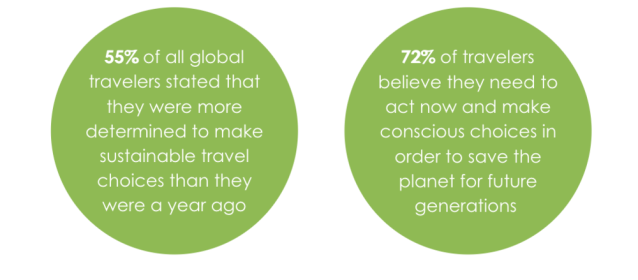
Furthermore, it can be seen that the number of travelers putting green accommodation practices as a top priority has grown significantly. In fact, according to Booking.com’s 2019 Annual ‘Sustainable Travel Report Key Findings’––


Screen Shot 2020-07-11 at 3.36.03 PM.pngScreen Shot 2020-07-11 at 3.36.03 PM.png

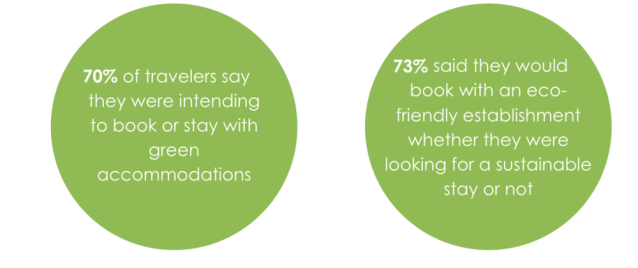
It also showed that eco-accommodations are growing in popularity. So much so that––


Screen Shot 2020-07-11 at 3.40.27 PM.pngScreen Shot 2020-07-11 at 3.40.27 PM.png

And because of the hospitality sector’s strong focus in customer service, the demand for green accommodations from the market environment has caused establishments from all around the world to quickly react to this change and seek green practices in order to satisfy consumers and stakeholders; especially as the overall impression of environmentally friendly practices has been found to positively increase and induce higher customer loyalty.

Eco-Accommodations

But what exactly qualifies as a green accommodation? With over 300 certification bodies within the hospitality & tourism industry with differentiating guidelines and standardizations, it seems that the general concept of a green accommodation is to reduce their energy and water consumption, provide local and non-durable goods, and take into account the emissions that are released into the air, water, and soil… all while finding an appropriate balance between visitor satisfaction, green projects, and effective operations. 

Furthermore, it is important to note that the concept of sustainability expands beyond just the environment. Officially, it should also take into account management practices, as well as social, cultural, and economic matters too. Meaning, sustainable accommodations should also consider economic growth goals, social justice, intergenerational equity, and cross cultural understanding between local individuals and guests; in addition to their environmental policies. Especially as an accommodation is strongly connected to the local destination, it should be heavily rooted to assist the surrounding community in all positive ways. In fact, it is thought to believe that the social and economic dimensions of sustainable accommodation management are becoming significantly more important in affecting a consumer’s satisfaction, outside of purely environmental concerns. 

*

With sustainability coming to the forefront of the minds of businesses and consumers, we’re hoping to see an increase in sustainable travel and tourism. ecomadic is here to support your journey and connect you with credible & responsible businesses.


meet the author

Jaclyn Yost

Jaclyn is the founder of ecomadic and editor of The Sustainable Seed. She is conscious creative passionate about shedding light on environmental and social sustainability issues through travel.


Design a site like this with WordPress.com
Get started