.parent {
display: inline; position: relative; line-height: 30px; float: left; color: #82be41;
}
.parent a{
margin: 10px;color: #82be41;text-decoration: none;
}
.parent:hover > ul {
display:block;position:absolute;
}
.child {
display: none;
}
.child li {
line-height: 30px;width:115%;text-align:left;
}
.child li a{
color: #82be41;
}
ul{
list-style: none;margin: 0;padding: 0px; min-width:10em;text-align: center;float: right; font-weight: 550;
}
ul ul ul{
left: 100%;top: 0;margin-left:1px;
}
li:hover {
background-color: white;
}
.parent li:hover {
background-color: white;
}
.expand{
font-size:10px;float:right;margin-right:5px;
}
.parent a p{
display: inline; margin: 10px;color: #6e706b;text-decoration: none;
}
Eco-Friendly Snacks While Traveling
Written by Kristen McKenna | February 16, 2021
📷 @tgirasolmom
Finding a list of healthy snacks for your body can be quite easy to find. However, to find a list of snacks healthy for your body and the planet is another story. Nearly all the food we buy comes pre-packaged. Normally, this packaging is of plastic material and is designed for single-use purposes – rarely reused or recycled. According to the US Environmental Protection Agency (EPA), food and food packaging materials make up half of almost all municipal solid waste. Fortunately, there are companies out there willing to dedicate research and financial resources to combat the solid waste crisis we are currently facing.
Traveling can be accomplished seamlessly nowadays due to the convenience of food. Anything you crave could be easily sought out thanks to convenience and grocery stores. Choosing to live a more environmentally conscious life requires a more in-depth thought process for many day to day activities and habits. Just like falling in the routine of bringing your reusable water bottle and straw, thinking ahead of time and planning out what snacks to take with you is now on the agenda. Few companies practice eco-conscious business methods. Thankfully there are some in circulation willing to take the road less traveled and prioritize the effects their products could have on our environment long after they are purchased and consumed.
Bring From Home/Make Your Own
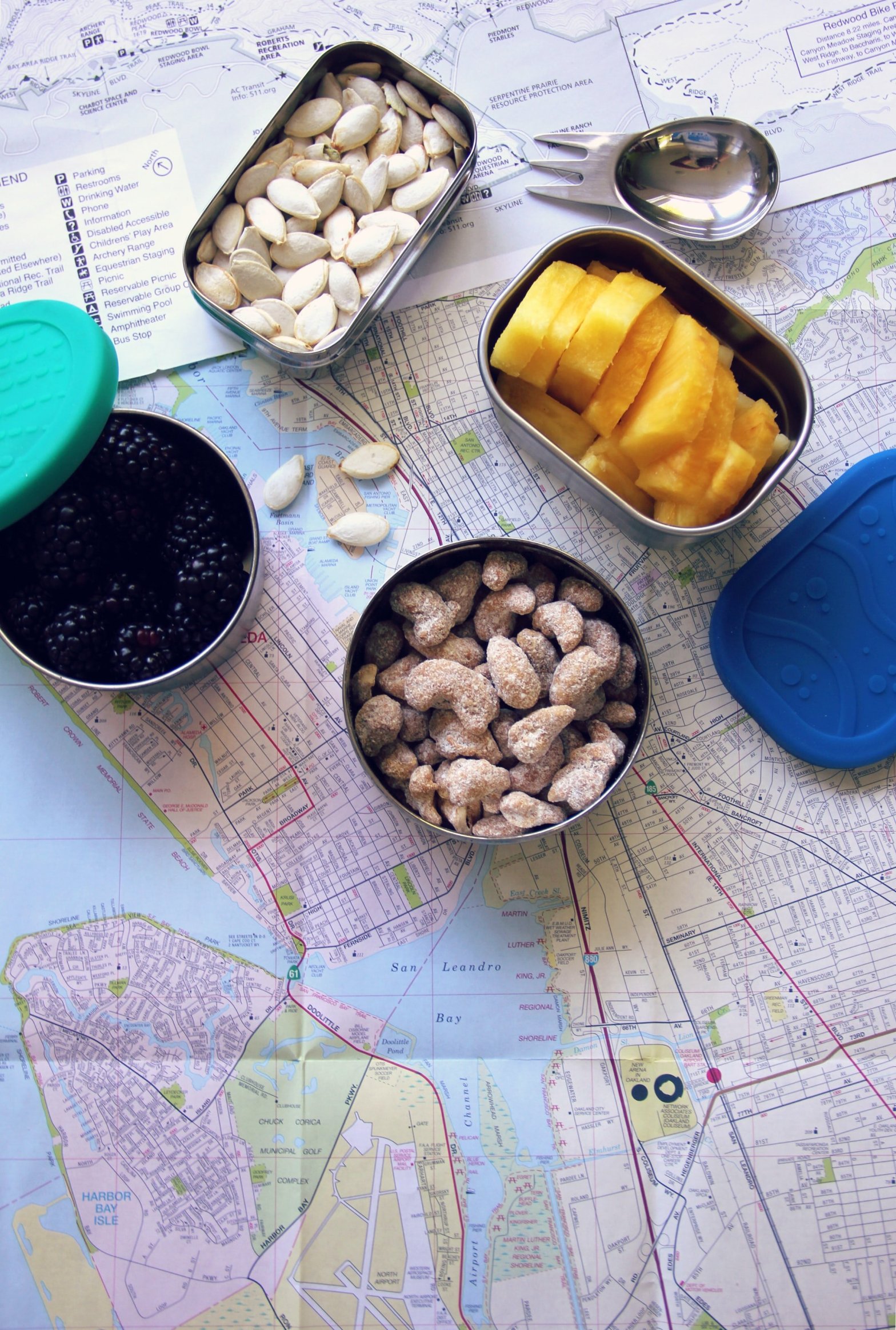
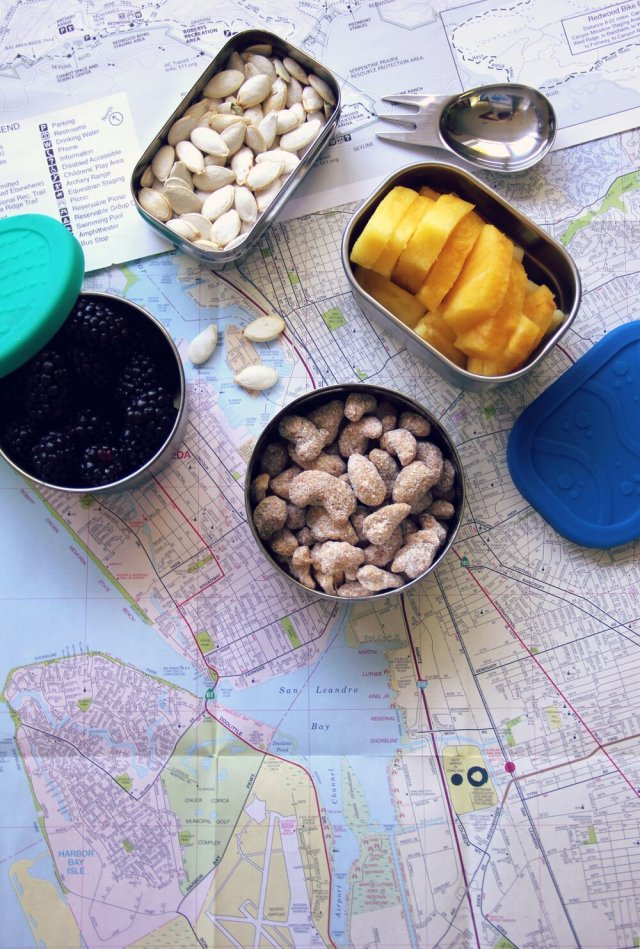
One of the most economically and environmentally efficient ways to satisfy your snacking needs while out and about is to fill up your reusable bags and containers and bring from home. Simple options like fruit or cut up vegetables in a container are quick and easy to think of on the spot. Another option is to get creative in the kitchen and make your own. The possibilities are endless – cookies, muffins, pastries, granola, protein balls, even your own chips! DIY dehydrated fruit are within range if you’re willing to take the extra time. Moral of the story: when you shop from your own refrigerator and pantry, you are not subject to buy individual processed items that are over priced and over packaged.
📷 @open_photo_js
Bulk Bins
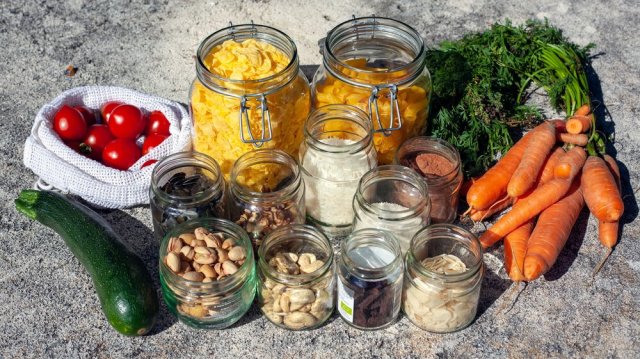
If you have the privilege of bulk bins in your grocery store, this may not be as much of a challenge for you. Or maybe you are traveling in an area that has bulk bins and you are trying to utilize them as best you can. Depending on how expansive the grocery store you are in is, the bulk bin department could have a vast assortment of options. Candy, chocolate, dried fruit, granola, pretzels, nuts and seeds – you can get really lucky sometimes! When you buy in bulk you are able to customize the amount you wish to have – taking as little or as much as you desire. Eliminating the need to throw away “extra” when your trip comes to an end. Whether you are filling up for the day’s, or week’s adventure, you have that option when buying in bulk.
LivBar
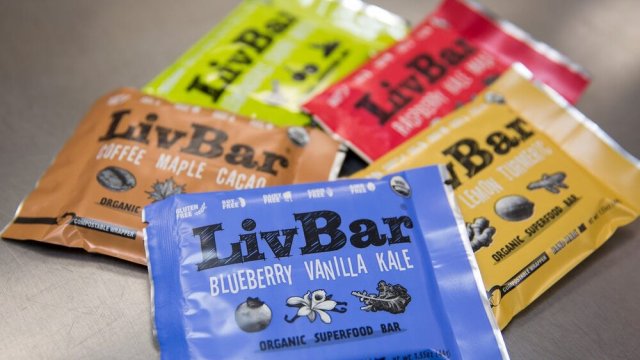
Source: Statesman Journal
Everything a granola bar should be. Not only are they organic and contain low-allergen ingredients, the wrappers are home compostable, and the bars are baked in a solar powered facility. I believe a round of applause is in order for this small business for their determination to change the way food is produced. Truly suitable for anyone, their bars don’t contain gluten, soy, dairy, or nuts. These bars were developed to provide balanced, sustainable energy with healthy fats, carbs, fiber, and protein. However, any granola bar can be organic and contain incredible ingredients. What makes this brand stand out from others is the compostable packaging. Having been a hyper consumer of granola bars when I was growing up, I understand the amount of waste granola bar wrappers can add up to. They recognized that food wrappers are the fourth most common single-use plastic found in the environment. This company also uses the most sustainable natural resource to power their factory: the sun! By doing so, they are lowering the demand for conventional electricity sources while lowering their carbon footprint.
Sun & Swell Foods
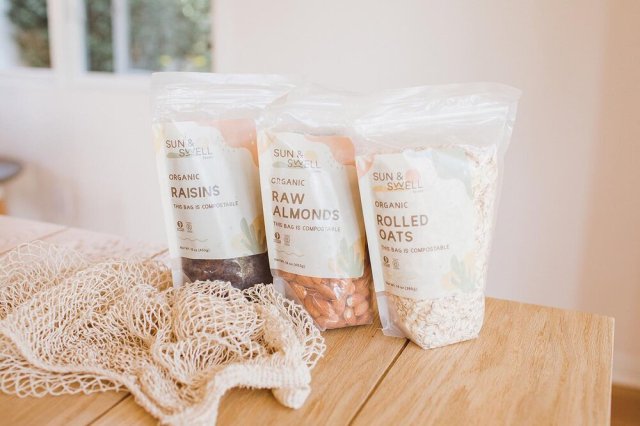
Source: Sun & Swell Foods
This small family-run business should be what other companies strive to resemble. Making sure to put the environment and customer well-being above all else. They are transparent when the topic turns to environmental sustainability, ingredient sourcing, and employment practices. Sun & Swell is determined to be a leader in fixing the broken system that surrounds the culture of single-use plastics. Over 75% of their products come in packaging that is 100% compostable. Their goal is to help slow the rate of single-use plastic consumption. They also contribute to the sustainability of local businesses by sourcing their ingredients from nearby farmers. The bulk of their products are pantry staples – ranging from items simple as organic rolled oats and ground cinnamon to products that can be harder to find in bulk like date syrup and cashew flour. They do have a few more “snacky” items as well – dried fruit like mango, dates, pineapple rings, and figs, and assorted nuts, like almonds, walnuts, and pistachios. Sun & Swell also carry “cookie bites” that come in six different varieties. Originally the packaging for their bites were compostable along with their pantry staples. Unfortunately they had some bumps in the road and are temporarily resorting to Recyclable #2 packaging. They provide a link on their website to locate the nearest drop off location for this type of plastic since #2 packaging is not curbside recyclable. The length this company goes to to guarantee their brand is amongst the highest quality in all aspects is truly astonishing. Pioneers for the movement to kiss single-use plastics goodbye, Sun & Swell Foods is passing milestones few companies can relate with.
AlterEco
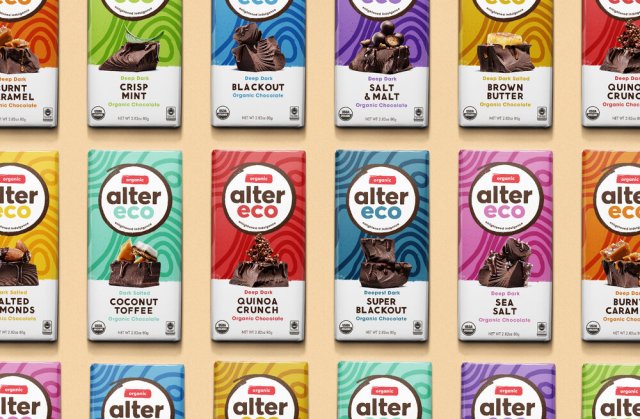
Source: Cory Uehara
If you have a mega sweet tooth like me, then chocolate is on your radar at most times. AlterEco aims to create a complete loop when it comes to eating, farming, and business. With goals like theirs, the first step is to always have clean ingredients. They want to make sure their customers can recognize and pronounce the ingredients listed on their bars, truffles, and clusters. By partnering with small-scale farmers, they can ensure the quality of their raw materials is of the highest grade. AlterEco also laid the walkway for being the first company to have a compostable, non-GMO, non-toxic candy wrapper. What other brand can say that?! Literally no one! With six mouth-watering truffle flavors, there’s an option for everyone. By disposing your AlterEco wrappers alongside your fruit and vegetable scraps in compost, you can sleep well knowing you didn’t further aid in the build-up of thin, filmy plastics.
Three Foragers Bee Co.
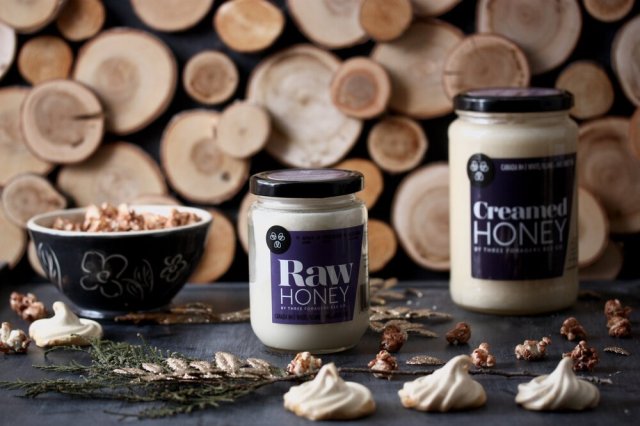
Source: Three Foragers
Chocolate may not be everyone’s thing, luckily, there’s another small business hailing from Canada looking to fulfill your sugar needs. Three Foragers Bee Co. specializes in you guessed it, honey products. They are not only dedicated to the growth and health of their bee population, but their harvesting standards, minimal processing procedures, and sustainable packaging all put together how ethical this company is. Three Foragers recognizes that bees are a fundamental part of our ecosystem and intend to not get in the way of their essential contributions. Bees “are responsible for pollinating approximately 70% of the world’s leading crops for human consumption”. Their beekeepers only take the honey not essential to the bees survival – moving forward with the honeycomb, it is minimally filtered and then packaged for their customers enjoyment. Their website only ships within Canada – thankfully, they recently launched an Etsy shop to reach more clientele. But we’re not here to just talk about honey – I’m more interested in their Honey Caramels, containing no white sugar or corn syrup, and packaged in compostable bags and wrappers! Three Foragers goes the extra mile and dedicated a blog post to explain how these sweet little treats are made. When you choose to support a small business like Three Foragers Bee Co. and stand behind their practices, the unity shows this is what the future of the agriculture industry should resemble.
Sustainable Snacks & Traveling
Thanks to innovations of the twenty-first century, sustainable swaps exist for nearly everything nowadays. As we’ve seen, the agriculture industry and food packaging techniques are among the most polluting in the world. Forward-thinking people have developed ways to not take away the simple pleasures of snacking.There are multiple options to make your food consumption be as low waste as possible. Whether at home or traveling, we have gone through different ways to leave behind as faint of a carbon footprint wherever you may roam.
meet the author

Kristen McKenna
Kristen was born and raised on Long Island, New York. After spending her childhood and teenage years exploring New England, she is now ready to see what else the world has to offer. Through her blog Tip Toe the Globe, she hopes to share her intimate adventures while at the same time spread awareness of environmental sustainability and lower waste living. If you can’t find her on a hike, she’s probably looking for a bakery or ice cream shop.
 ecomadic